
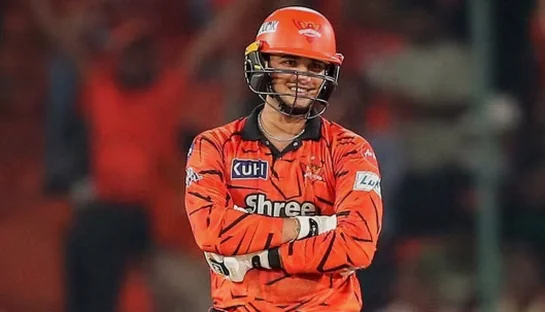
Sunrisers Hyderabad batter Abhishek Sharma said a clear message from assistant coach James Franklin helped shape his unbeaten 135 against Delhi Capitals, an innings that powered SRH to a 47-run victory and delivered one of IPL 2026’s most memorable performances at home.
Key takeaways
- Abhishek Sharma’s unbeaten 135 was the defining factor in SRH posting 242/2.
- He credited assistant coach James Franklin’s guidance for pushing him to bat through the full 20 overs.
- The innings helped SRH win by 47 runs over Delhi Capitals.
- Abhishek said the wicket was not straightforward, requiring sound technique rather than reckless hitting.
- He highlighted Heinrich Klaasen’s finish and the work by Travis Head and Ishan Kishan earlier in the chase.
- SRH’s bowlers, with Eshan Malinga standing out, ensured Delhi fell short of the chase.
Abhishek’s plan: patience first, acceleration later
Abhishek’s knock was not just about what he scored, but how he built it. While he is often linked with explosive starts, this time he maintained his composure for the entire innings and gradually altered the tempo of the contest.
At the post-match presentation—where he was named Player of the Match—Abhishek explained that his approach was deliberate. He said he had a plan in conversation with “Franky” and that the intent was to keep him batting for the full duration. He also stressed that this was the first time he had batted for the full 20 overs, and pointed out that the surface did not play as an easy one.
He further described why the innings felt different from a typical Abhishek surge. Instead of racing out of the blocks and then running out of steam, he paced the innings, adjusted to the demands of the pitch, and then accelerated decisively toward the end. His 135 not out off 68 balls formed the centrepiece of SRH’s 242/2, a total that proved far too big for Delhi to chase.
Abhishek also made it clear that the opposition’s attack and the pitch required proper batting. He said that if you play good cricket, the bowling unit still has talent and you must execute the right plans to defend totals successfully. In his view, the innings had weight because it wasn’t merely powered by raw hitting on a batting-friendly track.
How SRH built pressure: technique, late momentum and a big finish
Despite acknowledging that the wicket was not entirely straightforward, Abhishek praised the way he managed control during the middle phases before exploding late. The result was a transformation: he adjusted early, took control later, and then released the pressure at the end.
There was also an emotional element to the knock. Abhishek said it was always special to perform in front of the “orange army” and described the support he receives throughout the tournament, even when the team is back at the hotel. He added that his family was part of the moment as well, noting that his parents were present, while his sister was unable to be there due to an infection. He said the century celebration was therefore for her too.
Abhishek revealed another aspect of his batting: he is not typically described as a death-overs batter, yet he stayed long enough to become one in this match. That late shift mattered because it turned a strong score into something far more threatening. He commented that the way Delhi bowled in the final overs showed they were sticking to their plans, and he admitted he had not practised specifically for death-overs batting much. Still, he said Klaasen’s approach helped SRH reach the big total.
That finishing burst from Heinrich Klaasen provided fresh momentum at the end, while Travis Head and Ishan Kishan had already ensured Delhi never truly settled in the chase. Even with those contributions, Abhishek remained the key force throughout—anchoring, stretching the innings, and then detonating it when the time was right.
When asked about his celebration after reaching his century, Abhishek said he has been doing the “L” gesture for a long time. He described it as love for the stadium and for the way fans back the team throughout the season. He reiterated that he wants to contribute for SRH and show appreciation to the crowd, then added again that the moment carried extra meaning because his parents were there, and his sister was missing from the ground.
Delhi Capitals did show fight in reply, with Nitish Rana and Sameer Rizvi helping them push back. However, the chase was always too demanding, given the size of SRH’s total. Eshan Malinga then played a standout role with the ball as SRH wrapped up a comfortable win.
In the end, Abhishek’s own description summed up the innings best: it was built on a plan, shaped by patience, and finished with violence. For a batter known for early impact, this was a more complete performance—less about just lighting the fuse and more about staying long enough to watch the whole sky burn.
