
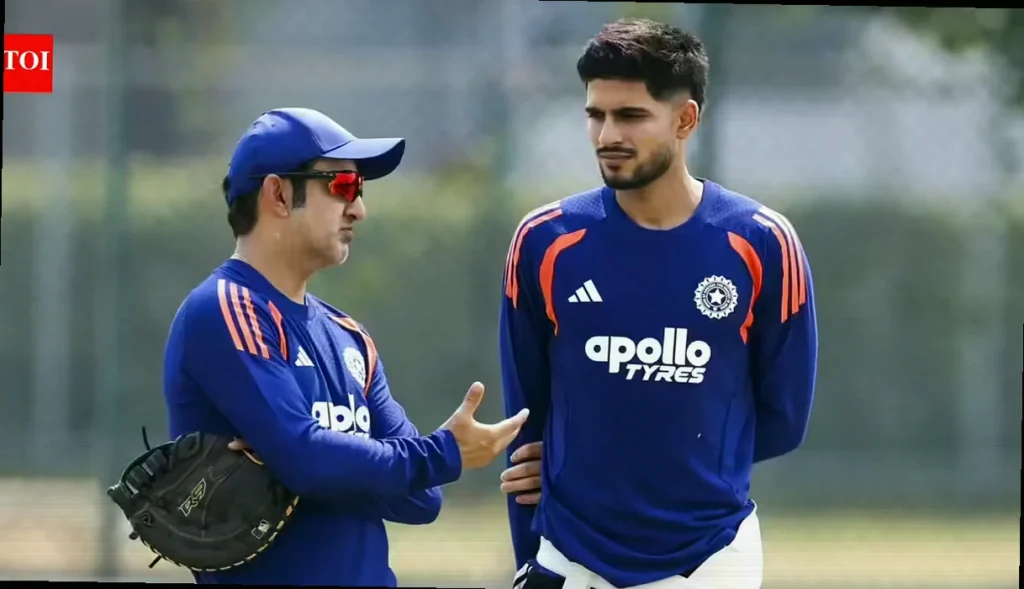
Afghanistan arrive in India’s one-off Test in Mullanpur, New Chandigarh, as outsiders in the betting but with a clear mental edge: there is little pressure on them to justify their presence, while the hosts carry the weight of expectations and uncertainty. The visitors’ recent development against established sides suggests they will not simply be participants—they will look to test India’s transition and demand answers from a team still trying to find its long-term balance.
Experience gap sets the tone
One of the biggest storylines leading into this match is the difference in Test exposure between the two teams. Since Afghanistan’s maiden Test against India in 2018, they have played only 11 additional Tests, while India have been involved in 67 matches over the same span. The contrast becomes even more striking when individual participation is considered: Rishabh Pant has featured in 49 Tests since that opening meeting, highlighting how much more frequent red-ball action India’s core has had compared to Afghanistan.
Who remains from the 2018 meeting?
Selection continuity adds another layer to the narrative. From India’s squad that toured in 2018, only KL Rahul is still part of the current setup. On Afghanistan’s side, captain Hashmatullah Shahidi and Rahmat Shah are among the few players who also survive from that first encounter with the hosts.
The numbers reinforce how different the teams look now. Afghanistan’s full batting group carries a combined total of nine Test centuries, while this India side—reshaped in the years since—has compiled 39 hundreds in Test cricket.
Preparation, but with a reality check
Afghanistan’s camp in Jalalabad was designed to sharpen their approach ahead of the contest, though practice can only replicate so much of Test cricket’s demands. Even so, the visitors have shown in recent seasons that they can stand up to stronger opponents, and they will be keen to demonstrate that their Test journey has moved forward meaningfully since the heavy defeat in Bengaluru.
India’s transition: No. 3 and the search for Jadeja’s successor
While Afghanistan’s development is central to their motivation, India’s internal questions are equally prominent. A key focus for the home side is settling the No. 3 batting role and identifying a long-term replacement for Ravindra Jadeja in red-ball cricket—two decisions India’s management would like to firm up before the two-Test tour of Sri Lanka in August.
Extended opportunity for Sai Sudharsan
The race for the No. 3 position has largely narrowed to Sai Sudharsan and Devdutt Padikkal. However, on Friday, the message was clear: Sudharsan will receive a longer run. The team leadership believes the left-hander deserves a sustained chance to build consistency and establish himself in the role.
Debate over Jadeja’s bowling impact
Jadeja’s absence has opened another discussion as India look ahead. His batting effectiveness abroad remains a major asset, but concerns about his current ball-working returns have pushed the management to plan for what comes next. Rajasthan left-arm spinner Manav Suthar and Vidarbha all-rounder Harsh Dubey have risen as prominent options in the conversation.
- Suthar’s classical approach and the ability to generate drift have drawn attention during training.
- Dubey’s batting gives him a more complete profile as an option beyond just bowling.
- The selection possibilities could indicate how India are thinking long-term about their red-ball core.
Match context: India under pressure to respond
India enter the one-off Test after a disappointing home season that ended with a humiliating 0-2 loss to a well-prepared South African unit. That outcome exposed multiple weaknesses and forced the management to revisit combinations and roles. With that fresh in mind, Afghanistan should not be treated as a side that can be managed through reputation alone, even though the experience and resources are clearly uneven.
Against this backdrop, the contrast with the earlier meeting between the teams could hardly be sharper. In Bengaluru in 2018, Afghanistan’s resistance lasted barely two days. India wrapped up the contest with impressive control, taking all 20 wickets in just two sessions on the second day. Eight years on, Hashmatullah Shahidi’s group will want to make India work harder, while the hosts—still searching for stability—will be hoping to answer their questions before tougher assignments later in the year.
