
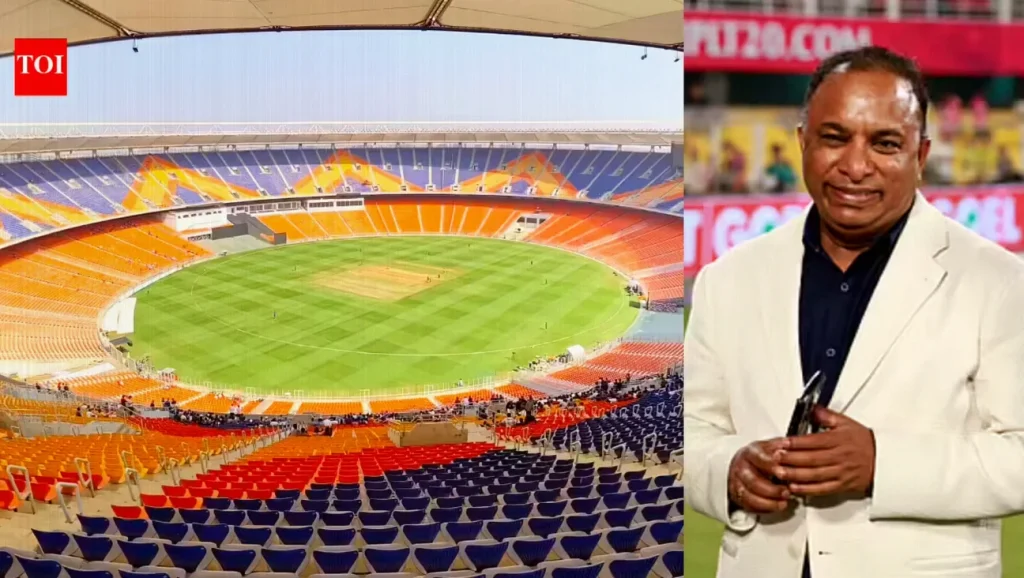
Ahmedabad has been chosen to stage the IPL 2026 final on May 31, and the decision is closely linked to an International Cricket Council gathering scheduled to take place in the city around the same time, with BCCI secretary Devajit Saikia pointing to both international scheduling and match-day logistics as key drivers.
Key takeaways
- IPL 2026’s final is set for May 31 at Narendra Modi Stadium in Ahmedabad, not Bengaluru or other potential hosts.
- An ICC meeting is planned in Ahmedabad during the final window, with foreign delegates expected to be in the city then.
- The ICC discussion was previously slated for March 25–27 in Doha before being delayed due to the US–Israel–Iran conflict.
- Saikia cited venue capacity, weather considerations for the May-end period, and ticket-revenue maximisation as major factors.
- Claims that the final was moved from Bengaluru for political reasons were countered by pointing to additional playoff allocations in Punjab (New Chandigarh) and Himachal Pradesh (Dharamshala).
Why Ahmedabad, and why that timing?
Devajit Saikia explained that a significant ICC meeting is scheduled in Ahmedabad around the same period as the IPL final. He said the agenda originally called for that meeting to be held in Doha, Qatar between March 25 and March 27, but it was postponed amid the continuing conflict involving the United States, Israel and Iran. With the change in plan, Saikia added that the foreign delegates will be in Ahmedabad during the final timeframe.
He further noted that the ICC meeting will run during the same period as the IPL final, creating a practical overlap between international participation and the tournament’s showpiece match.
Logistics, stadium capacity and the May-end weather window
Saikia also emphasised that decisions behind the venue choice were not based solely on international scheduling. He pointed to “logistical and weather issues,” along with the goal of maximising BCCI revenue through ticket sales, as central to the final selection.
In that context, he highlighted Narendra Modi Stadium’s infrastructure, saying it is among the best equipped venues in India. Saikia stated that the ground can accommodate 1,32,000 spectators, which he believes will help the BCCI generate higher income from ticket sales for the final.
For comparison, he pointed out that Bengaluru’s Chinnaswamy Stadium has a capacity of roughly 32,000 fans, making Ahmedabad the more advantageous option from a scale perspective.
He also drew a distinction in responsibility for different stages of the tournament. Saikia said that, unlike league matches in the IPL—typically organised by state associations in partnership with the BCCI—the playoffs and the final are handled exclusively by the BCCI.
On the weather angle, Saikia said the BCCI had considered whether other Indian venues could host a playoff match, but the likelihood of pre-monsoon showers around May-end reduced the appeal of those alternatives. In his view, the seasonal pattern plays a major role when planning fixtures of such importance, and Ahmedabad remains the most convenient and comfortable location for the final during that time of year.
Responding to claims about Bengaluru being singled out
Saikia’s explanation came amid allegations that the BCCI shifted the IPL final away from Bengaluru because it is a Congress-ruled state. However, another BCCI source pushed back on the claim, arguing that politics is not the determining factor.
The counterpoint cited that Punjab (New Chandigarh) and Himachal Pradesh (Dharamshala)—both governed by opposition parties—have been assigned three playoff matches, which is one more than the number that had been expected under the usual arrangement.
The schedule impact was outlined clearly: Dharamshala is set to host Qualifier 1 on May 26, New Chandigarh will stage the Eliminator on May 27, and Qualifier 2 is scheduled for May 29.
The BCCI source said this effectively means those states received an extra game beyond the stipulated allotment. They also argued that, by convention, the final venue should be prepared to host a playoff match as well, reinforcing the logic behind how matches are distributed across shortlisted cities.
