
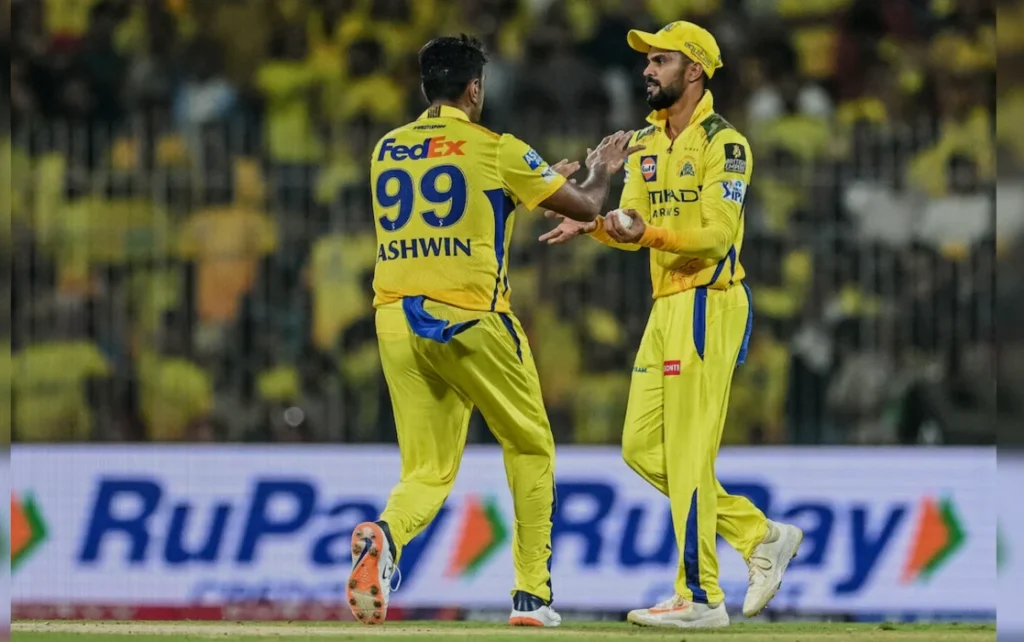
Former India spinner Ravichandran Ashwin has thrown his support behind Chennai Super Kings captain Ruturaj Gaikwad, arguing that IPL leadership brings an extra weight that many people fail to factor in—particularly during a franchise transition. Ashwin also pointed to CSK’s post-Mahendra Singh Dhoni phase, with Gaikwad taking over the captaincy role in 2024, and urged fans and stakeholders to allow time for a new leadership structure to settle. Meanwhile, with Sunrisers Hyderabad already securing a playoff berth after their win over CSK, SRH’s camp has praised the work being done by emerging bowling talent and highlighted Heinrich Klaasen’s impact with the bat.
Key takeaways
- Ashwin said the captaincy burden can weigh on a batter’s performance in T20 cricket, using Gaikwad as the example.
- He noted CSK are rebuilding after the end of MS Dhoni’s captaincy, with Gaikwad assuming the role in 2024.
- Aaron Finch urged patience, warning against judging a captain based on one season in a fast-changing format.
- Finch stressed that CSK’s skipper should focus on regaining his batting rhythm and scoring consistently.
- SRH’s bowling coach Varun Aaron praised Praful Hinge and Sakib Hussain for their eagerness to learn, tracing preparation back nearly two months.
- Varun Aaron highlighted Heinrich Klaasen’s consistency, mentioning 555 runs in 13 matches this season and his game-changing acceleration.
Ashwin backs Gaikwad through CSK’s transition
Ravichandran Ashwin believes Gaikwad is carrying more than just the usual demands of batting in the IPL. In his view, the added responsibility of captaincy can disrupt rhythm because T20 already places heavy pressure on players, and expectations from a high-profile franchise like CSK only intensify the challenge.
Ashwin also contextualised Gaikwad’s situation within CSK’s leadership shift. He said the team is in a transition period after the conclusion of MS Dhoni’s captaincy reign, with Gaikwad stepping into the role starting in 2024. Ashwin urged everyone connected to the franchise—fans included—to recognise that rebuilding a successful leadership core does not happen overnight.
He added that CSK’s legacy naturally brings very high standards, but the group needs room and time to evolve into a new chapter. Ashwin further pointed out that his long association with Dhoni during CSK’s successful period helped him understand the importance of patience during leadership transitions.
Finch urges patience and focuses on batting form
Aaron Finch echoed a similar message of restraint. The former Australia captain argued that captaincy inevitably increases pressure for any player, so it is important not to form final judgements on leadership or performance after only one season in T20 cricket.
Finch stressed that the immediate priority for Gaikwad should be rediscovering his batting form. He said Gaikwad has, at least from a captaincy perspective, led the side well—particularly through on-field decisions and composure.
Finch also acknowledged that form and leadership pressures can overlap, but insisted the path forward is about returning to a scoring rhythm. He suggested that while quality remains, T20 momentum can swing quickly, and phases like the current one can improve rapidly.
CSK’s playoff hopes tighten after loss to SRH
On the field, CSK suffered a five-wicket defeat to Sunrisers Hyderabad on Tuesday. The loss has left their playoff chances hanging by a thread, with only one league match remaining. Finch’s comments and Ashwin’s backing arrive as CSK face a tough qualification scenario, where they will need other results to go in their favour to stay in contention.
Varun Aaron praises SRH’s learning culture and Klaasen’s impact
With SRH sealing a playoff spot, SRH’s bowling coach Varun Aaron took time to highlight the efforts of pacers Praful Hinge and Sakib Hussain. Aaron lauded both players for their hunger to learn and their clear ambition to earn a place in India’s setup.
He said a major part of the credit belongs to Hinge and Hussain because of their eagerness and the focus they brought to their development. Aaron also described how their dedication showed up not only during the tournament, but even before the IPL began, claiming preparation with them started almost two months ahead of the season.
According to Aaron, the coaching staff ran specialised camps and worked closely on different aspects of their bowling. He singled out how receptive they were to learning, calling that attitude one of the most impressive parts of their progress.
Turning to SRH’s batting, Aaron pointed to Heinrich Klaasen as a standout middle-order performer. He highlighted Klaasen’s all-round value with the bat, emphasising that the key to his influence has been his ability to accelerate scoring while also rotating the strike effectively.
Aaron noted that Klaasen has compiled 555 runs in 13 matches this season, reinforcing how consistently he has operated in the middle overs and how much impact he has had on results.
He then contrasted this season with the previous one, saying one area SRH struggled with last year was finishing games when the top order did not fully deliver. This year, Aaron credited Klaasen with taking on that responsibility effectively.
Aaron added that Klaasen’s special quality is his seamless shift between phases—moving smoothly from rotating the strike at around run-a-ball pace to suddenly pressing the accelerator for eight or nine runs an over. He said that kind of transition is difficult in T20 cricket, but Klaasen makes it appear natural.
Finally, Aaron referenced Klaasen’s innings in the match against CSK as another example of that quality, pointing to several shots versus spin where Klaasen created room and struck boundaries from the back foot with notable ease.
