
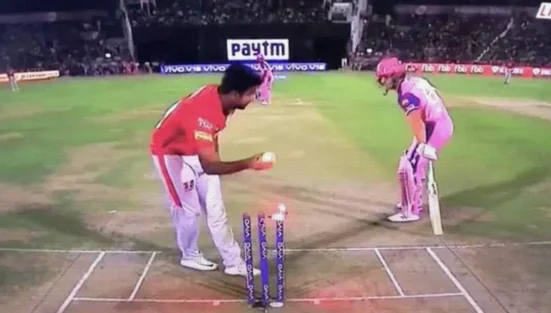
Ravichandran Ashwin has once again defended the decision that turned heads during the IPL 2019 clash between Kings XI Punjab and Rajasthan Royals. The controversy centred on a run-out at the non-striker’s end involving Jos Buttler, a moment that Ashwin insists was fully within the laws of the game.
At a glance
- Season and match: IPL 2019, Kings XI Punjab vs Rajasthan Royals
- Player involved: R Ashwin (Punjab) and Jos Buttler (RR)
- Incident type: a “mankad” run-out at the non-striker’s end
- Chase context: RR were chasing 185
- Result: Punjab won by 14 runs
In that match, Rajasthan began their chase briskly, with Buttler taking on the opposition bowlers. But the game changed when Ashwin removed the bails at the non-striker’s end before delivering his next ball, after Buttler was already outside his crease.
Buttler was given his marching orders after the dismissal, and the two players exchanged words immediately following the incident. With the third umpire also siding with the decision, the pressure shifted sharply toward Punjab, and the Royals’ chase never fully recovered. Punjab ultimately sealed the win by 14 runs.
Ashwin’s defence: “It’s in the rules”
Speaking on JioStar’s The Ravichandran Ashwin Experience, Ashwin said he has never felt the action was a breach of character, despite the backlash it drew. He argued that if the sport’s governing body believed it to be dishonest, it would not remain permitted in the laws.
He added that he was motivated by the match situation rather than any desire to score a moral victory. Ashwin pointed to an earlier captaincy moment against Mumbai, saying that when his team needed two runs off a single ball, he had instructed the bowler to attempt a run-out at the non-striker’s end. In his retelling, the bowler hesitated due to the fear that people would label it “wrong,” which Ashwin framed as an issue of public perception rather than rule compliance.
Ashwin then addressed the core criticism directly, stating that if a batter starts moving early while the requirement is to run for a specific number of runs, then the blame cannot be placed on the bowler. He also pushed back on the idea that he did it merely to win, saying he would not be ashamed of using a legal advantage to secure a result.
He further claimed that after the run-out, he spoke to his team and reassured them that the reaction would not matter as long as they won. “We just have to win,” he said, emphasising that the outcome ultimately proved there was no real issue of character in the action taken.
Why the backlash, in his view
Ashwin acknowledged the polarised reaction to the dismissal, with some fans backing him while others accused him of damaging cricket’s spirit. He suggested that the real reason others do not attempt similar dismissals is social pressure—worrying about what “people will say” rather than following the laws.
He also criticised the process around appeals, claiming that the controversy began when umpires asked captains whether they wanted to withdraw the case. In his explanation, withdrawing an appeal can label a side as “good,” but he argued it also lets the bowler down in front of everyone, and that the decision should remain with the officials and the rules.
To Ashwin, the dismissal should not be treated as a complicated exception, just like other outs governed by clear criteria. He compared the legal clarity to LBW and insisted that the same principle applies here as well—this is an out if the conditions are met.
He recalled that many players had taken to social media to call the act wrong, but said his stance remains straightforward: he did not steal or do anything improper, and he played within the laws. Ashwin went further, saying that those who speak against him are engaging in “character assassination,” and he expressed confidence that he will continue to defend his record and actions, adding that he would even praise anyone who challenges him through that kind of criticism.
