
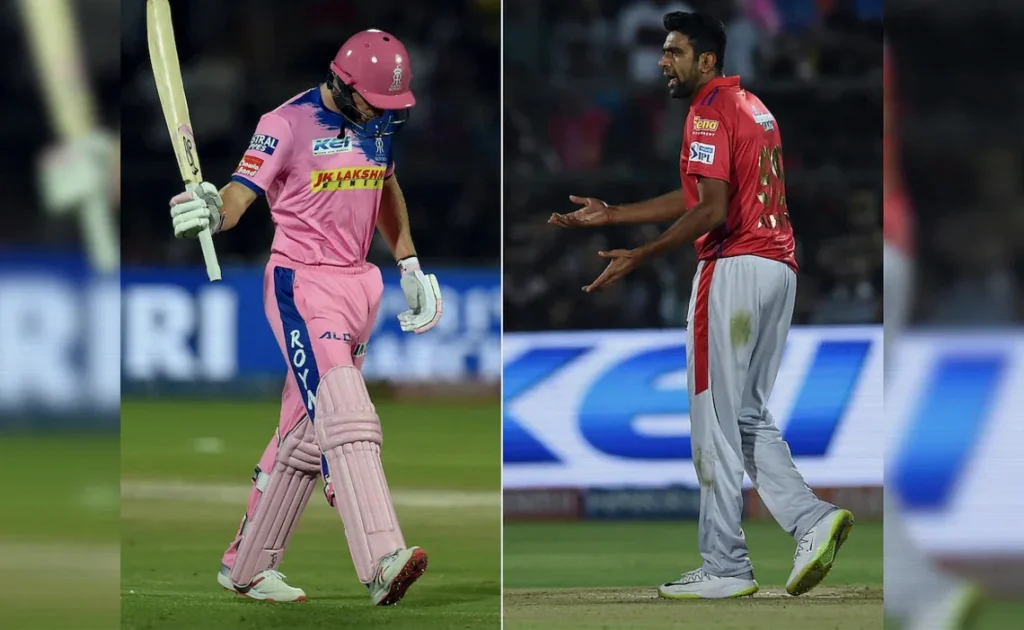
Ravichandran Ashwin’s reputation as a thinking, evolving spinner has never been built on raw talent alone. The former India campaigner has often credited his nickname “Scientist” to a mindset of constant improvement—learning from scenarios, adjusting plans, and finding new ways to trouble batters. Yet even for a player known for innovation, there have been moments of controversy, including a high-profile non-striker run-out involving England’s Jos Buttler during an IPL match in 2019. Ashwin later reflected on the uproar that followed, insisting there is no dishonour in how he executed the dismissal despite the stigma attached to it.
Key takeaways
- Ashwin earned the “Scientist” tag by emphasising learning, adaptability, and experimentation rather than relying only on natural skill.
- In the IPL in 2019, he ran Jos Buttler out at the non-striker’s end, a moment that shifted how people viewed that style of run-out.
- He argued that the criticism is misplaced because the action was made within the laws of the game and done to secure the win.
- Ashwin said other bowlers often hesitate due to fear of public reaction, describing it as a form of social pressure.
- He added that decisions around giving such dismissals should be for the bowler, while umpires handle the process of appeals and rulings.
Ashwin defends the non-striker run-out
Ashwin recalled how reactions to his dismissal quickly turned into debates about “character,” with people claiming the approach was wrong or that the batter had been treated unfairly. Instead of backing down, he said he felt even more inclined to act in that manner after hearing the noise. He explained that his decision stemmed from match awareness—particularly from a situation where the margin was tiny and execution mattered more than the reaction around it.
He pointed to an example from when he was captain against Mumbai. With the team needing two runs, Ashwin described being positioned at extra cover and telling the bowler to attempt a run-out at the non-striker’s end. In his telling, the batter ran, but the bowler did not carry the plan through because of the belief that such actions were “wrong.” Ashwin then argued that if this was truly an issue of honesty, it would not remain in the rules. He said the governing body would not permit it if it contradicted the spirit of the game.
“What is there to be ashamed of?”
Continuing his defence, Ashwin questioned where responsibility lies in an early-running scenario when a team needs runs. He noted that some commentators framed it around Jos Buttler’s intent, claiming the batter had not tried to run. Ashwin rejected that framing as irrelevant to the core point, stating that his focus was on playing correctly within the laws.
He also addressed the idea that he did it purely to win, saying that of course the goal was victory. After completing the run-out, Ashwin said he spoke to the team with reassurance—telling them that the moment would look different to outsiders, that the opponent would end up losing, and that he would manage the media response. In his view, that meant there was no real “character” issue, because the action was not dishonest; it was simply effective cricket carried out legally.
Why Ashwin believes others avoid it
Ashwin further argued that the problem is not the dismissal itself, but the fear it triggers. He said other bowlers should attempt similar plays, but hesitate because the first thought that comes to mind is the potential public backlash—“what will people say.” In his assessment, this has evolved into a broader societal pressure, regardless of whether the criticism is justified.
He added that the pressure has also seeped into the match procedure, describing how it began with umpires asking captains whether they want to withdraw the appeal. Ashwin said that if an appeal is withdrawn, the captain is often viewed as “good,” which he believes is also incorrect because it can be seen as letting the bowler down in front of everyone watching.
From Ashwin’s perspective, the decision to appeal or not should rest with the bowler, while the umpire’s role is to handle the ruling. He likened the situation to another well-established dismissal category, saying that just as LBW is part of the laws, this form of being out is also legitimate. He claimed that many players reacted publicly, but his answer remained straightforward: he did not “steal,” he did nothing wrong, and he played within the rules. He even suggested that those who attacked his integrity could face legal consequences, calling it character assassination.
Concluding his remarks, Ashwin said he was proud of the way he handled the dismissal and that he would keep backing his approach. He added that if anyone repeats the same kind of play and chooses to criticise it, he would praise them even more for having the courage to act in accordance with the game’s laws.
