
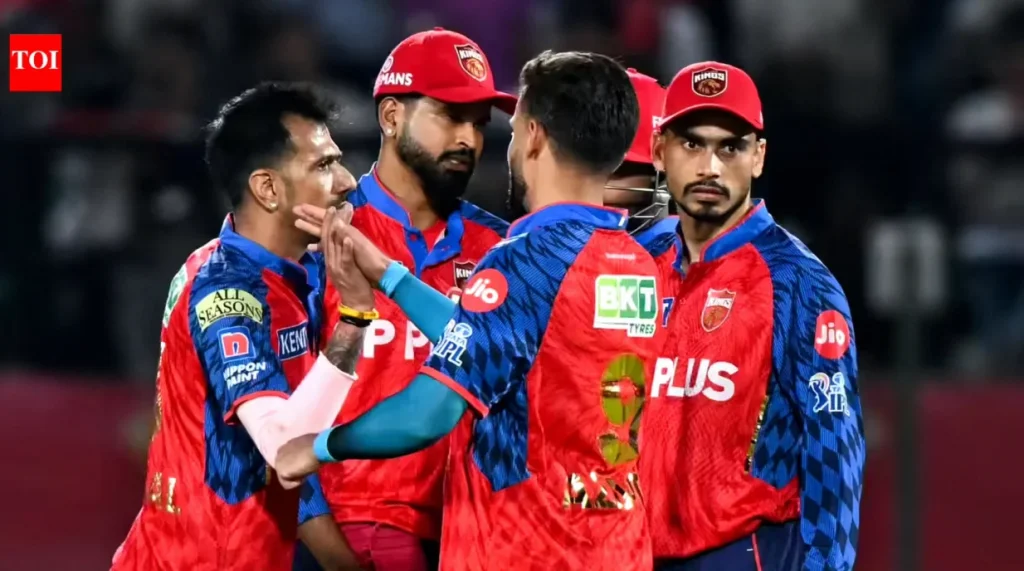
Ravichandran Ashwin has sparked fresh debate around Punjab Kings’ planning for IPL 2026, questioning why the franchise has chosen to divide its home fixtures between two different venues. The veteran spinner believes the constant change in playing conditions has been a key factor behind Punjab’s sudden drop in form during the second half of the season, after a promising start that had them looking like genuine contenders.
Punjab’s strong start, then a collapse
- Punjab began their IPL 2026 campaign brightly, remaining unbeaten for seven straight matches and building momentum as the league stage progressed.
- That momentum later evaporated, and the franchise went on to suffer five consecutive defeats.
- Two of those losses arrived at Dharamsala, which is listed as Punjab’s secondary home venue for the season.
In a video shared on his YouTube channel, Ashwin argued that moving away from Mullanpur disrupted the team’s rhythm at a critical stage. He pointed to the value of routine in professional cricket—especially when batters and bowlers alike have to adjust quickly to new boundaries, pace, bounce and overall pitch behaviour.
To strengthen his point, Ashwin referenced the most decorated IPL franchises and their home-ground consistency. He said that the sides with the most trophies have generally depended on stability, noting that KKR, CSK and MI have together won a combined haul across the tournament and that teams such as Sunrisers Hyderabad (including its former Deccan Chargers identity) have also benefited from long-term home venue familiarity.
Ashwin then posed a direct question to viewers: whether these trophy-winning franchises have ever meaningfully altered their home venue across the season. He suggested that outside criticism often overlooks how venue switches can affect preparation, planning and match-day execution.
Ashwin’s personal Punjab experience
The spinner, who has previously played for Punjab in the IPL, said he understands the issue from first-hand knowledge. He recalled winning five matches in Mohali before the situation changed, adding that the team “got knocked out” after the venue shift, in his view.
From Ashwin’s perspective, Punjab can’t simply be judged on results without considering the environment in which they were forced to operate. He argued that the franchise was not simply losing—it was being asked to adjust to different playing conditions in the middle of the most demanding portion of the tournament.
Pressure in the business end
With the league stage entering its decisive phase, Punjab’s margin for error is extremely small. The franchise needs to win both of its remaining fixtures to keep its playoff hopes alive. However, Ashwin highlighted that one of those must-win games is once again scheduled at Dharamsala—meaning the team would have to deal with the same adjustment challenge all over again.
He specifically focused on how the hill venue’s surface can make batting far more difficult, particularly when a team is required to chase or, as he emphasised, when batting first. Ashwin said the ball tends to skid low during the early part of the innings, which can slow down a team’s scoring tempo until batters settle into the pitch.
Why the batting order is losing runs
Ashwin also claimed the batting group has been unable to score at the same rate after the venue change. He said the batting order has been producing roughly 30 to 40 runs fewer—or in some situations around 20 fewer—because batters have to spend extra time adapting to the new wicket characteristics.
He rejected the idea that Punjab’s struggles can be explained purely as a team problem. In his view, the narrative that “this is what happens in Punjab” ignores the context that the side has already played multiple matches at a changed home setting during the season.
Questioning the inconsistency versus established franchises
Ashwin went a step further by challenging the fairness of Punjab’s schedule. He questioned why Punjab are among the few franchises that have had to alternate venues during the season, while other well-established IPL teams—including Chennai Super Kings, Mumbai Indians, Kolkata Knight Riders and Sunrisers Hyderabad—continue to enjoy the steadiness of hosting all home games at a single ground.
