
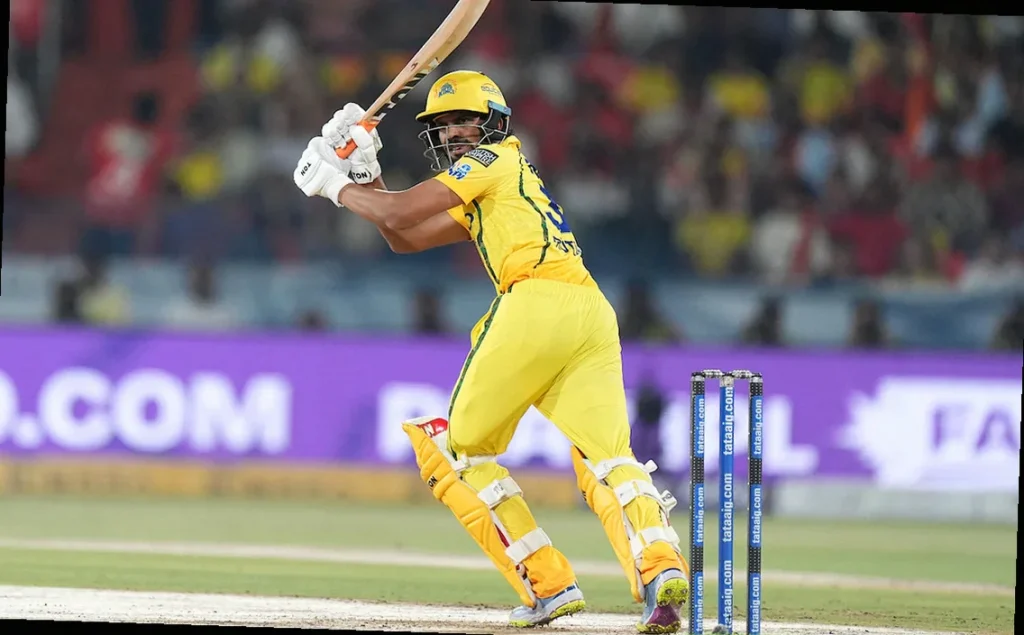
Former India off-spinner R Ashwin has suggested that Chennai Super Kings’ captain Ruturaj Gaikwad missed a prime opportunity to find rhythm in the IPL clash against Sunrisers Hyderabad. The match swung after Ayush Mhatre launched an eye-catching cameo, with SRH eventually beating CSK by 10 runs in Hyderabad on Saturday.
How Sunrisers Hyderabad built the platform
After getting their innings underway, Sunrisers Hyderabad posted 194/9. The total was powered by two brisk half-century efforts from Abhishek Sharma and Heinrich Klaasen, which gave SRH a firm base before the late acceleration.
With the chase in front of them, CSK could not chase down the required rate despite Mhatre’s innings being finished at the right time for SRH. Mhatre made an impact in the CSK innings as well, striking a 13-ball 30, but the overall momentum did not stay with the chasing side.
CSK’s chase and the key spell from Eshan Malinga
Sunrisers Hyderabad managed to rein in CSK, restricting them to 184/8. The decisive factor, Ashwin argued, was the pressure created by the SRH bowlers once the innings needed to accelerate further.
- SRH set a target of 195 after scoring 194/9.
- CSK finished at 184/8, falling short by 10 runs.
- Ayush Mhatre contributed a 13-ball 30 for CSK during the chase.
- Eshan Malinga led the bowling attack with 3/29 from his four overs, keeping CSK’s run flow tight.
Ashwin’s view on Gaikwad’s missed chance
Ashwin felt Gaikwad’s start was an opening to rebuild confidence, especially given how the chase was developing around Ayush Mhatre. In his assessment, the captain did not need to force the tempo immediately; instead, he had the space to settle, score steadily, and then use his timing as the innings progressed.
He also pointed to what happened after Mhatre’s dismissal, implying that Gaikwad faced a difficult moment with a quality ball and struggled to respond. Ashwin added that Gaikwad appears to be carrying substantial pressure, with his decision-making possibly affected.
- Ashwin said it was “the best chance” for Gaikwad to score runs because Mhatre’s start allowed batters to take more time.
- He noted that SRH were “running away with the powerplay,” meaning Gaikwad had an opportunity to bat through the phase and then re-enter form.
- Ashwin suggested Gaikwad struggled after Mhatre’s wicket, describing it as a “very good ball” that is not easy to hit on the pull.
- He said Gaikwad is under “immense pressure” and that his mind appears “a bit cluttered.”
Gaikwad’s IPL 2026 slump and support for SRH’s young bowlers
Ashwin’s comments came as Gaikwad continues to endure one of his hardest spells in IPL cricket. In the 2026 season, Gaikwad has scored only 82 runs across his first six matches, with his average sitting at 13.67 and his strike rate at 112.33.
While Malinga stood out with the ball for SRH, Praful Hinge drew attention for his own roller-coaster start. Hinge had begun his IPL journey with a historic three-wicket opening over, but in his next game he went for plenty of runs. Despite the setback, SRH’s bowling coach Varun Aaron defended his approach and framed him as a long-term prospect.
Aaron’s praise for Malinga and faith in Hinge
Aaron highlighted Malinga’s underrated value to the bowling group, stressing that the youngster’s effectiveness grows further when the ball reverses, particularly as the innings moves toward the death overs.
- Aaron called Eshan Malinga “very underrated.”
- He said Malinga has bowled well throughout the campaign, and becomes even more dangerous once reverse swing comes into play toward the end of the innings.
- Aaron added that Malinga can bowl around 145 km/h and has a sharp bouncer and the ability to land yorkers accurately.
- He described Malinga as a complete T20 bowler with all-round capabilities and suggested he can be trusted to take the new ball as well—not only for SRH, but also for Sri Lanka.
On Hinge, Aaron used the nature of T20 cricket to explain why swings in performance happen. He pointed out that a batter can take three wickets in the first over on one day, and then be punished for runs in another over the next day. Aaron framed it as part of the learning curve and said Hinge’s character showed through when he managed to execute yorkers under pressure and stage a comeback in the final over despite earlier struggles.
- Aaron said IPL experience shows how extremes can arrive quickly in the same league.
- He referenced Hinge’s first game, where he took three wickets in the opening over.
- He contrasted it with the second match, where Hinge conceded 15 runs in an over.
- Aaron stressed that even if a bowler doesn’t get off to a perfect start, execution—especially yorkers—still matters under pressure later in the innings.
- He concluded that Praful Hinge is likely to be part of the long-term plans.
Earlier game: Miller’s late sixes lift Delhi Capitals
In the day’s first match, David Miller provided a redemption story of his own. He struck two sixes in the final over to steer Delhi Capitals to a tense victory over RCB, after failing to finish off a previous game against Gujarat Titans where only two runs were needed off two balls.
Cheteshwar Pujara on DC’s finishing moments
Former India batter Cheteshwar Pujara praised Miller’s turnaround for DC in the pressure phase against RCB. Pujara emphasized how a single big over can shift the mental balance of a chase, and he singled out the first six.
- Pujara said DC were under pressure before Miller’s first six in the final over changed the equation.
- He added that when a team needs a decisive over at the end, that opening six becomes crucial and makes the remaining execution easier.
- Pujara referenced Miller’s earlier near-miss in a game versus Gujarat Titans, noting that not crossing the finish line can plant doubts—but argued that Miller’s experience and current form helped.
- He also noted that Tristan Stubbs was there to support the chase.
- Pujara said DC had confidence because they knew RCB would need to use their sixth bowling option at the end, and DC waited for that moment before completing the job.
Final over drama: DC win by six wickets
Delhi Capitals managed to overhaul the target with composure, scoring 15 runs in the last over. They won the match by six wickets against RCB after Miller’s late hitting.
