
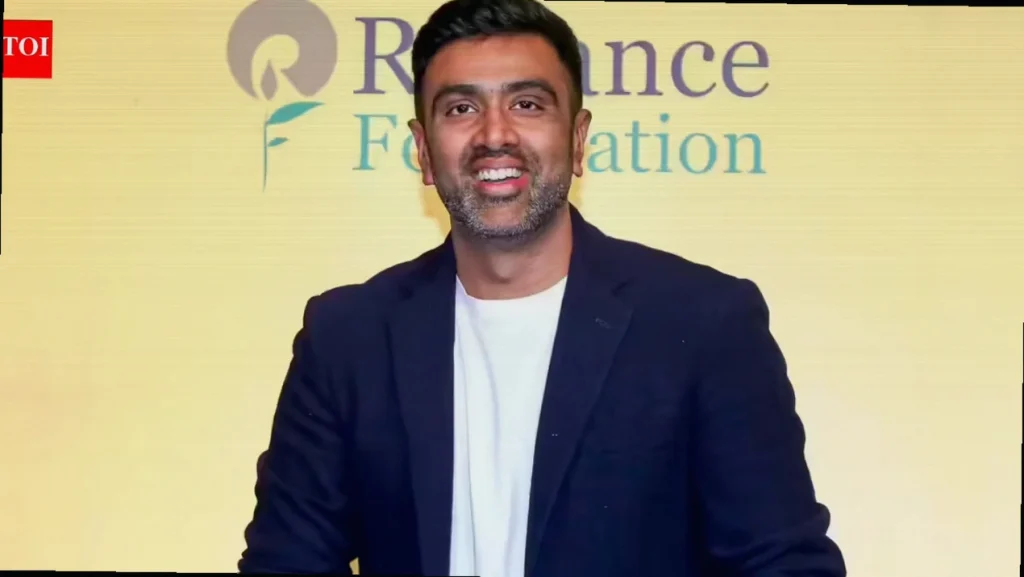
Ravichandran Ashwin has warned that the future of Test cricket will hinge on whether first-class cricket can once again become a genuinely attractive career path for the next generation. Speaking at the Cricinfo Honours Awards 2026, the former India off-spinner argued that protecting the red-ball game is not a challenge unique to India, but one the wider cricketing world must address.
His remarks land at a time when India’s Test team has been going through a testing stretch in the longest format. After suffering successive home defeats in 2024 to New Zealand and in 2025 to South Africa, doubts have grown around India’s overall output in red-ball cricket. The setback against New Zealand was especially damaging because it snapped India’s record of 12 straight years without losing at home in Tests.
While India managed a hard-fought 2-2 stalemate in England, their Test performances across the past two years have lacked steady momentum. Ashwin pointed to the bigger picture of change within the side, noting that the dip has coincided with the departure of several long-time leaders of the dressing room.
With Ashwin himself no longer available, along with Rohit Sharma, Virat Kohli and Cheteshwar Pujara stepping away from the format, India have entered a rebuilding phase. Shubman Gill has been entrusted with leading the group as the team looks to re-establish its rhythm and identity in Tests.
Ashwin’s case for making domestic red-ball cricket pay
After being named among the top 25 cricketers of this century, Ashwin focused on what he believes must change at the domestic level. He said the standard of first-class cricket alone is not enough—players must also feel that the pathway it offers can deliver both reward and recognition.
“First-class cricket needs to be attractive enough for players to take up,” Ashwin said. He added that while the BCCI has tried to improve the situation through adjustments to the salary structure, he questioned whether the incentives are strong enough to encourage young cricketers to commit to the red-ball game. “Test cricket is not just India’s problem. It’s a global one. Are players being incentivised enough to take up the red-ball game?” he asked.
Ashwin also stressed that the real burden of Test cricket extends beyond the action viewers see on screen. In his view, the physical and mental demands of playing five-day matches—along with long tours, constant recovery requirements and the grind of staying sharp over extended periods—can make the format a difficult career choice when compared to shorter opportunities.
He highlighted the contrast with the modern calendar, where players can often earn well while spending only a couple of months in action. “That is a tough proposition when players can play for a couple of months and pretty much earn a good living,” Ashwin said. However, he insisted that once a player has experienced Test cricket, there is no substitute for what it delivers. “Having played Test cricket and put my body on the line, I can say that nothing compares to the feeling at the end of a hard-fought Test match. Nothing can replace it.”
To ensure the format survives and grows, Ashwin said young players need careful guidance. “And if you are serious about Test cricket, young cricketers should be groomed by slightly old-fashioned coaches,” he concluded.
Ashwin’s Test record
Ashwin retired as one of India’s most decorated Test performers. Across 106 matches, he accumulated 3,503 runs at an average of 25.75, including six centuries and 14 half-centuries, with a top score of 124. With the ball, he took 537 wickets at 24.00, featuring 37 five-wicket hauls and eight instances of taking ten wickets in a match.
He continues to sit as India’s second-highest wicket-taker in Test cricket and is widely seen as among the finest spinners the country has produced.
