
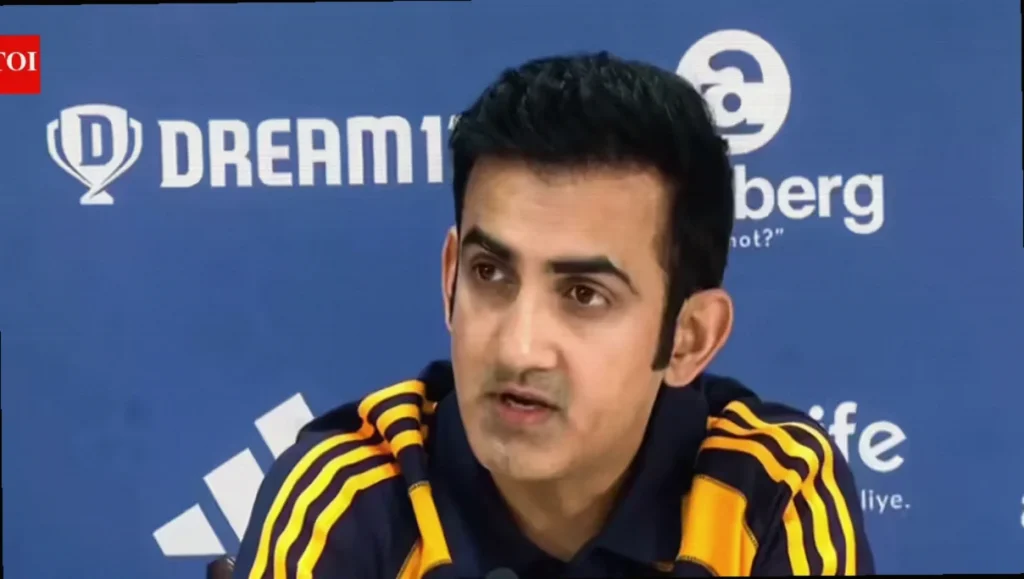
Gautam Gambhir’s rise from celebrated India cricketer and head coach to a figure facing sharp scrutiny has taken another turn, with former India batter Atul Wassan accusing him of “bullying” behaviour in team environments. Wassan’s comments, delivered in an interview with Vickey Lalwani, questioned whether the confrontational edge that helped Gambhir as a player translates cleanly into leadership as a coach.
Quick facts
- Atul Wassan criticised Gautam Gambhir’s conduct and called him a “bully” in team settings.
- Gambhir became India’s head coach on July 10, 2024, replacing Rahul Dravid.
- Under Gambhir, India won the ICC Men’s T20 World Cup 2026, ICC Champions Trophy 2025, and Asia Cup 2025 in the same period.
- India’s Test record worsened during the same stretch, including home whitewashes versus New Zealand and South Africa.
- India also lost the Border-Gavaskar Trophy to Australia for the first time in a decade.
- Reports suggest the BCCI is considering extending Gambhir’s contract beyond the 2027 ODI World Cup, potentially through the 2028 T20 World Cup and the Los Angeles Olympics.
- Wassan did not name any players he suggested were unhappy with the current environment.
Gambhir took charge of India’s men’s team on July 10, 2024, stepping in as head coach after Rahul Dravid. The early phase of his tenure has produced contrasting outcomes across formats, with major highs in limited-overs cricket and clear struggles in Tests.
In white-ball cricket, India’s performance under Gambhir has been described as historic, with the team becoming the first to hold all three major titles simultaneously: the ICC Men’s T20 World Cup 2026, ICC Champions Trophy 2025, and Asia Cup 2025. Those achievements have reinforced Gambhir’s reputation as a coach who can drive results in high-pressure tournaments.
Yet the same period has not brought the same momentum in red-ball cricket. India endured rare home series whitewashes against New Zealand and South Africa, and they also suffered defeat in the Border-Gavaskar Trophy against Australia—an outcome that came for the first time in a decade.
Contract talks amid mixed results
Despite the drop in Test fortunes, Gambhir’s future at the helm appears far from settled in the public eye. Reports indicate the BCCI is backing him for the long term, with talks around extending his contract beyond the 2027 ODI World Cup and potentially continuing through the 2028 T20 World Cup and the Los Angeles Olympics.
That context has added weight to Wassan’s critique, which focused less on outcomes and more on temperament. Wassan said he has known Gambhir personally since childhood and claimed that Gambhir’s approach has long been based on a “my way or the highway” mindset.
Wassan’s remarks were blunt: he argued that even in Gambhir’s Delhi cricket days, the pattern of aggressive behaviour was evident. He suggested Gambhir’s ego and intelligence were matched by a belief that assertions should be accepted as truth—adding that dissent could bring consequences on and off the field.
Wassan also linked the same confrontation to Gambhir’s success as a player, while raising doubt about whether such intensity remains effective in a coaching role. He described Gambhir’s playing identity as something forged through conflict and insisted that the coach may not have fully adjusted his style after retirement.
In that vein, Wassan claimed the confrontational streak is part of what has recently been noticed in the way Gambhir has interacted with Virat Kohli, pointing to what he called over-aggressiveness and an “alpha-male” personality associated with Delhi.
The former India cricketer went further, suggesting that not every member of the dressing room is comfortable with Gambhir’s strict leadership. He said he believes some players may feel unsettled, framing it as a situation where personal preferences and a hard-edged approach can create pressure—especially when the team’s results are not consistently positive.
Wassan argued that winning can silence internal criticism, but losing brings backlash and scrutiny. He added that criticism becomes part of the coaching ecosystem when results go against the team, and claimed that a strong personality can determine who gets heard and who has to adjust.
Even though Wassan hinted that certain players might be unhappy, he refused to provide names publicly. He said he knows “one or two” who would not speak openly, insisting that everyone is already aware of what is happening, but maintaining that he could not disclose identities on the show.
He concluded that in a team sport, players do not always set the tone when a coach is delivering results. Wassan’s final point was that if the coach keeps winning despite internal discomfort, the narrative shifts—making the coach appear right and any dissenting player view irrelevant.
While the debate continues around Gambhir’s leadership style, the IPL season cycle also keeps fans locked into live match action, schedule updates, and standings—along with the ongoing races for the Orange Cap and Purple Cap.
