
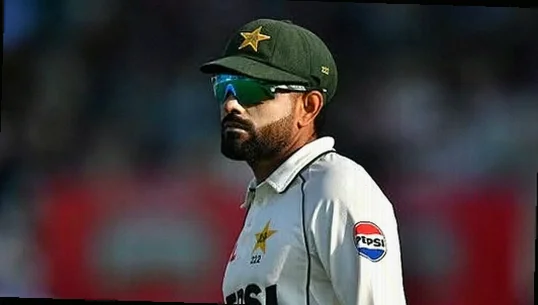
Pakistan’s cricket leadership conversation is starting to revolve around another possible major reshuffle, with Babar Azam now viewed as the leading candidate to regain the Test captaincy after the ongoing Bangladesh tour. With the Bangladesh series continuing, internal discussions have reportedly begun on reinstating Babar for the remaining matches of the World Test Championship cycle, and Pakistan still have seven Tests scheduled for the calendar year.
The timing of the renewed talk has been shaped by Pakistan’s recent stumble in the opening Test at Dhaka on Tuesday. Bangladesh handed Pakistan a 104-run loss, a defeat that has intensified scrutiny on Shan Masood’s captaincy and added pressure to his batting as well. Pakistan, chasing 268 in the fourth innings, were bowled out for 163, and Nahid Rana’s five-wicket effort proved decisive as Bangladesh recorded a notable victory.
In the wake of the loss, criticism has grown inside Pakistan, targeting both Masood’s form and his leadership decisions. Masood struggled in both innings of the Dhaka Test, and the setback has come at a time when his captaincy already faced a mounting wave of doubt due to a run of results that has not gone Pakistan’s way.
Babar back under consideration
While the team’s immediate focus remains on the ongoing series, Babar’s name has resurfaced strongly. A report citing a team source said that if Babar plays the second Test and can regain the rhythm that helped him succeed previously with the bat, he would be a serious option to return as captain. The same report also suggested early conversations with board officials have indicated that Babar is not necessarily opposed to stepping back into the role.
The plan being discussed is not only about the Test captaincy. The idea, as described, is to bring Babar back as Test leader first, and then groom him to take over the ODI captaincy ahead of next year’s World Cup. Babar previously captained Pakistan across formats between 2019 and 2023, stepping down after Pakistan’s disappointing campaign at the 2023 ODI World Cup held in India. Shan Masood was then appointed Test captain as Pakistan tried to move into a fresh leadership phase.
That transition is now being treated as severely strained. Pakistan have lost 11 of their 15 Tests under Masood, a record that has made his position increasingly difficult to defend. The Bangladesh defeat has deepened the sense of crisis because of the opponent involved, the setting, and the manner in which Pakistan collapsed. Bangladesh had already beaten Pakistan 2-0 in Rawalpindi in 2024, and the latest outcome extended their recent advantage in the longer format against a side that has traditionally managed to control many of these contests.
Pakistan’s red-ball decline has also arrived during a crucial World Test Championship stretch, when every result weighs heavily on qualification chances. With seven Tests still remaining this year, the board now faces a direct leadership decision. Backing Masood would mean continuing under intense pressure—both from the public and from the numbers. Choosing Babar, in contrast, would be viewed as a move toward experience, established authority, and what supporters believe could mean stronger influence within the dressing room.
There is, however, no guarantee that the storyline would simply reverse. Babar’s own captaincy record had been questioned earlier as well, particularly around Pakistan’s home Test performances and certain tactical choices. Any return would therefore bring its own set of questions. Still, Pakistan appear to be weighing the magnitude of the current slide more than the shortcomings of the earlier period.
With the series heading toward its next chapter, the second Test against Bangladesh could become pivotal on two fronts. Pakistan need a clear response to avoid yet another series defeat, and Babar’s batting in particular may determine how quickly the captaincy debate shifts from discussion to a concrete decision.
