
Lucknow Super Giants entered the last five overs needing 64 runs, staring down a near-certain defeat as Kolkata Knight Riders tightened their grip. The hosts looked set to finish things off after Anukul Roy accounted for Mukul Choudhary, leaving Lucknow stranded at 93 for five. Still, Ayush Badoni refused to roll over: he struck a boundary off the spinner and then cleared the ropes with a six off Kartik Tyagi. Just as Kolkata began to sense the end was close, George Linde struck Varun for two consecutive boundaries, pulling the chase back to 28 needed from 12.
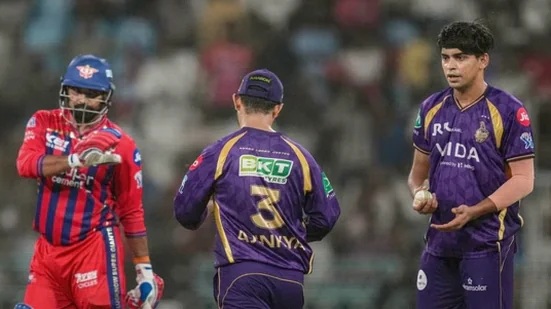
The momentum swung again when Vaibhav Arora removed the South African, but Mohammed Shami and Himmat Singh steadied the innings in the penultimate over with two more boundaries. With that, the equation narrowed to 17 required off the final over. Ajinkya Rahane turned to Tyagi, a pacer who had earlier shown he could thrive in high-pressure finish scenarios. With Himmat Singh the only batter at the recognised batting end, Kolkata still believed they were in control—until Tyagi’s over unraveled in dramatic fashion.
What began like a routine close turned into chaos when the bowler delivered two back-to-back waist-high no-balls. The second call did not sit well with Tyagi; he questioned the decision and asked Rahane to challenge it. Replays, however, confirmed the ball was well above waist height, and the no-ball stood again. The on-field officials then held a discussion, with broadcast commentary suggesting Tyagi could be taken off the attack for bowling two beamers. Yet he was allowed to continue.
The reason came down to the IPL 2026 Playing Conditions, specifically Clause 41.7, which distinguishes between an “unfair” and a “dangerous” delivery. Under that framework, only a second “dangerous” ball can trigger a suspension. Clause 41.7.1 states that any delivery that passes—or would have passed—above waist height of the striker standing upright at the popping crease is to be judged “unfair”, regardless of whether it is likely to cause physical injury; if a bowler bowls such a ball, the umpire must immediately call and signal No ball. Clause 41.7.2 further clarifies that a delivery becomes “dangerous” if the bowling-end umpire believes there is a risk of injury to the batter, with the umpire instructed to ignore any protective equipment worn by the striker and to consider factors including the pace, height and direction of the ball, the batter’s skill, and the repeated nature of similar deliveries. In the end, the discussion—consistent with what viewers were speculating—was that the umpire did not label the second full toss as “dangerous”, allowing Tyagi to remain in the attack.
From there, the over continued under mounting tension. Himmat Singh struck a boundary off the Free Hit, but Tyagi responded immediately on the very next ball with a wicket. He then conceded just one run across the following two deliveries, keeping the pressure on Lucknow as the final ball approached. Then Mohammed Shami, the unlikely finisher, swung the last delivery for a six, forcing a Super Over and turning the threatened collapse into a fresh contest.
Even after the drama, the emotional picture was clear: Rahane was seen putting an arm around Tyagi as he stood despondent for failing to defend 17 runs. Kolkata ultimately managed to survive the scare. In the Super Over, Sunil Narine struck twice in three balls, setting a target of only two runs for Lucknow. Rinku Singh sealed the outcome for Kolkata by hitting a boundary off the first ball of the chase, wrapping up the game with a statement finish.
