
A crammed international calendar has pushed the BCCI to think more seriously about keeping its top players fresh for the next major assignments, with workload management expected to become an even bigger talking point once the IPL wraps up. That said, the board’s latest approach has also ignited a wider debate about whether players should treat the tournament as non-negotiable, or whether taking breaks for workload reasons is the correct message to send. Several names have now come under the spotlight as discussions grow around who prioritises what, and how rest decisions are communicated.
Recently, the BCCI announced squads for the ODI and Test series against Afghanistan, and Jasprit Bumrah and Ravindra Jadeja were among those rested as part of the workload strategy. In contrast, Rohit Sharma and Hardik Pandya were included, but only subject to fitness clearance. Both have continued to honour their IPL commitments during the current season, keeping them in franchise action even while the national setup is planning ahead for the upcoming contests.
Rohit has returned to batting duties for Mumbai Indians after recovering from a hamstring problem. For the moment, he has mainly been used as an Impact Player, a role that allows him to contribute while managing his workload at the franchise level. Hardik, meanwhile, has resumed training and is expected to be in contention for selection against Kolkata Knight Riders on Wednesday, assuming he passes the required fitness checks.
While the conversation around national-team workload continues, Bumrah has still been a consistent presence in Mumbai Indians’ playing XI throughout the season. That steady involvement has added another layer to the ongoing discussion about workload and rotation—especially as fans and observers weigh how much rest is actually being built into planning for different players.
There have also been reports about fitness issues involving Varun Chakravarthy and Arshdeep Singh. Even so, both have continued to bowl their full quota of overs for their respective teams in the IPL. Their continued workload in franchise matches has underscored the constant balancing act between the demands of T20 cricket and the need to protect players for a longer schedule that includes international cricket.
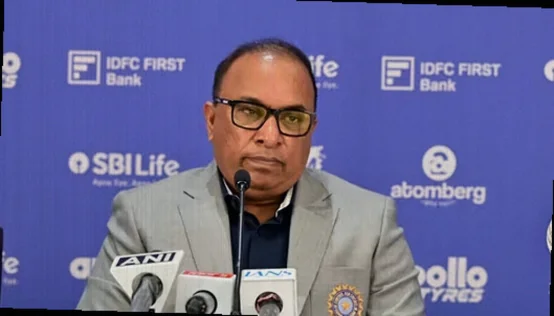
Amid the noise around player availability during the IPL, BCCI secretary Devajit Saikia attempted to clarify the board’s position. He stressed that the BCCI does not intend to interfere with the internal functioning of franchises, particularly when it comes to fitness and workload management during the tournament. Saikia’s remarks were framed as a response to concerns that players’ workload and availability might be monitored too closely by the board, rather than being handled within the franchise ecosystem.
“BCCI can’t micro-manage the workload and fitness of the players during the IPL,” Saikia said. He added that such involvement would amount to interference in how franchises operate, since the board would then be stepping into decisions relating to teams and players during league matches.
Varun Chakravarthy’s fitness under scanner
For players under central contracts, it is generally understood that franchise medical staff stay in regular contact with the India support group, sharing updates on fitness and any risks of a worsening injury. In such scenarios, the BCCI can also flag concerns if a player appears to be in danger of aggravating an existing problem. However, attention has turned back to Varun Chakravarthy after he appeared to struggle through his full spell during Mumbai Indians’ match against Gujarat Titans, looking visibly uncomfortable while continuing to bowl.
The episode has sparked questions about team management decisions and whether Chakravarthy should have remained in action amid suggestions of a hairline fracture. With the spinner still being used for the entirety of his allocation despite the fitness chatter, scrutiny has followed around how the support set—led by Abhishek Nayar and his staff—handled his workload in-game, particularly given what looked like discomfort on the field.
