
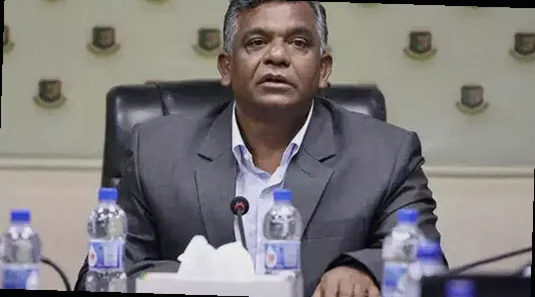
Aminul Islam Bulbul, the Bangladesh Cricket Board’s ousted president, has now turned to the International Cricket Council, seeking help from the same cricket governance authority he previously sidelined during the build-up to the T20 World Cup. The development follows reports that Bulbul has written to the ICC arguing that his removal from the BCB is unlawful, and requesting the world body’s intervention in what has become a politically charged dispute over the board’s leadership.
The letter arrives just a day after the Bangladesh government removed Bulbul from his post and named Tamim Iqbal—an accomplished former international—as the interim president of the BCB. While the precise wording of Bulbul’s complaint to the ICC has not been made public, an ICC official involved at the time said it was difficult to reconcile Bulbul’s current stance with the position he had taken earlier. The concern is that Bulbul had previously sought grounds to oppose Bangladesh’s participation in the February-March global tournament, even as the ICC urged cooperation.
During that earlier period, Bulbul’s approach was widely understood to have been rooted in the Bangladesh government’s direction not to play in India. Now, with his own removal contested, the ICC has questioned how Bulbul can seek protection from the ICC’s constitution and processes against steps taken by the Bangladesh government—particularly given that he had earlier pursued a boycott of the World Cup framework on the basis of government instructions, despite persistent appeals from the ICC.
One ICC director highlighted the apparent contradiction, pointing to the BCB’s explanation for missing the recently concluded ICC Men’s T20 World Cup. The director noted that the board had cited the government’s instruction not to play in India, while also disregarding a binding Members Participation Agreement with the ICC. Yet, the director said, the same board is now asking the ICC to shield it from inquiries and directives issued under the authority of its government.
Bulbul’s appeal to the ICC was also preceded by his own public statement earlier in the day, in which he urged immediate ICC action to safeguard the “sanctity” of an elected board. In that statement, he claimed the “Ad-hoc Committee” set up in the midst of the leadership turmoil was illegal, and he also argued that the findings of a probe report were without legal foundation.
He further insisted that the outcome of an election held on October 6, 2025—conducted by a neutral three-member panel that included a Supreme Court advocate and a senior CID officer—cannot be challenged by any government body after the event. Bulbul also alleged that a report submitted on April 5, 2026 is “defective,” “whimsical,” and legally unsustainable, adding that it holds no weight under either law or the BCB’s constitution.
ICC engagement with Bulbul had already been complicated before the latest correspondence. During an online meeting with ICC officials, he was described as the toughest BCB representative to deal with for the global body, and at one stage he even declined to continue participating in the discussions. Throughout the interaction and the ensuing standoff, Bulbul repeatedly relied on government instructions to defend the BCB’s position against taking part in the T20 World Cup—maintaining that the board would not comply unless its request to move matches from India was accepted.
