
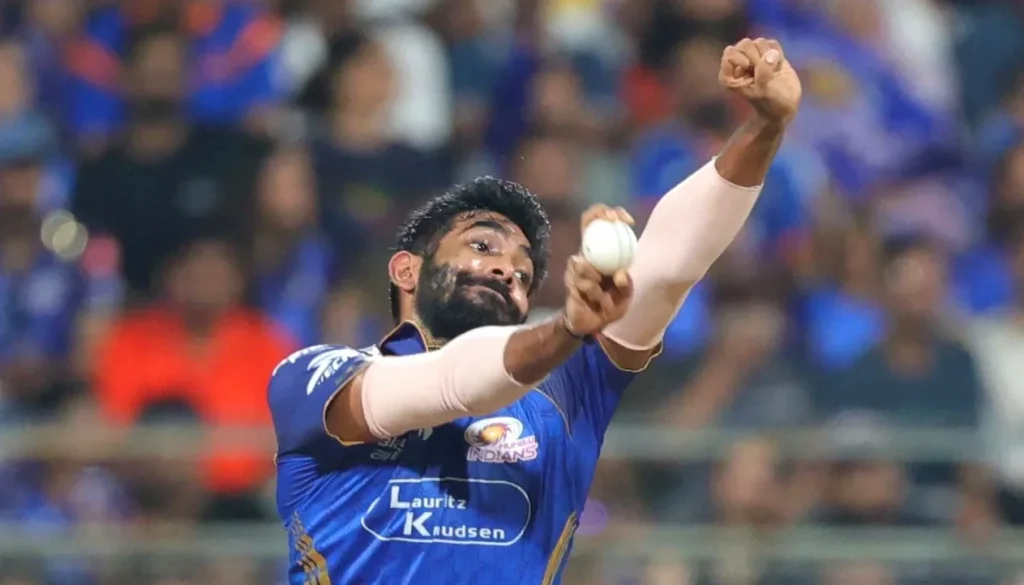
Jasprit Bumrah’s IPL has felt unusually quiet for a fast-bowling force that rarely goes missing for long. For Mumbai Indians (MI), the league’s leading “go-to” wicket-taker has delivered an economy of 8.36 this season—still respectable—but wickets have not been coming. Across 13 matches, Bumrah has finished with only four scalps, producing his weakest bowling average of 102.50 in any of the 13 IPL seasons he has played.
A campaign shaped by niggles and managed workload
MI’s season began with a known concern: Bumrah entered the tournament carrying a minor injury-related issue that affected his pace during the early stages. His usage was adjusted as the competition moved forward, with workload management helping him build up speed gradually. Even in the final stretch, where his bowling appeared to be at full tilt, the breakthroughs failed to arrive—though it is notable that he still appeared in every match for the franchise this year.
World Cup return, then questions over execution
Mixture of timing and transition also formed part of the explanation. Immediately before the IPL, Bumrah had taken 14 wickets from eight matches at the T20 World Cup. After that run, he and several World Cup players jumped straight into the IPL schedule. The follow-up dip naturally raised questions about fatigue, but MI head coach Mahela Jayawardene pointed to a combination of circumstances rather than a single cause.
Jayawardene said Bumrah had been playing through the same niggle even after the World Cup, which meant MI controlled his comeback. He described a careful early ramp-up designed to bring his pace back without forcing the issue.
- He said Bumrah carried a slight niggle into and through the World Cup, then MI gave him adequate rest on return.
- According to Jayawardene, the first four to five matches were used for a gradual rebuild so Bumrah could shake off the issue.
- He added that while Bumrah has returned to his usual pace in the last four to five games, the period of working through something else can still blunt sharpness in execution.
- Jayawardene framed Bumrah’s health as 100% while stressing that the season’s ending for MI has been unfortunate from a results perspective.
Why wickets didn’t fall: pressure, tactics, and match plans
Jayawardene also argued that opposing sides may have taken less risk against Bumrah in certain phases, and MI struggled to consistently build pressure around him. In other words, even when Bumrah was bowling in his usual areas—slower balls and yorkers—other bowlers were not always able to apply the kind of support that forces batters into mistakes.
He said teams played Bumrah differently because MI couldn’t create the pressure required from the rest of the bowling unit. As a result, it wasn’t a one-factor explanation, but a set of overlapping issues.
- Jayawardene said teams did not take too many risks against Bumrah in specific situations.
- He claimed opponents “played him out” because MI couldn’t generate the pressure needed through other bowlers.
- He insisted the reasoning was multi-layered—tactical variations from opponents plus MI’s inability to sustain pressure.
- Despite the wicket drought, Jayawardene said he would not worry about Bumrah’s mindset, adding that Bumrah is in good spirits and will return stronger.
Stats that explain the drought: slower balls, yorkers, boundaries, and sixes
Bumrah’s repertoire remained familiar, but the returns didn’t. He continued to lean on the slower balls and yorkers that typically define his wicket-taking threat. Yet this season, those deliveries have not produced the breakthroughs he is known for.
- He has bowled 82 slower balls at an economy rate of 8.27, but they have yielded no wickets.
- He has delivered 31 yorkers at an economy of 3.6, again without a single wicket.
- He has conceded the most boundaries this season (43).
- He has also been involved in the joint second-highest number of sixes conceded (12).
Run-up “issues”, front-foot no-balls, and strategic first-over bowling
Further details emerged about Bumrah’s mechanics. Jayawardene said Bumrah had “issues” with his run-up during the season, which contributed to several front-foot no-balls. Bumrah ended up bowling seven no-balls—the most by any bowler in the IPL this year. Jayawardene also pointed out that Bumrah delivered the first over of an innings in just five games during the season, describing the approach as strategic.
Jayawardene added that MI’s internal group had multiple conversations with Bumrah throughout the campaign about his form—covering how and when he could be pushed, and how his nets and preparation should be managed.
How MI handled him: conversations, freedom, and work between matches
Jayawardene said Bumrah is now an experienced leader who understood he wasn’t at peak performance, which made the process more collective. He described the decision-making around workload and how to keep Bumrah from being overloaded with pressure in every situation.
- Jayawardene said there was a collective conversation involving Bumrah and the training staff about where to push him.
- He said MI considered workload management, including how much Bumrah could handle in nets and preparation.
- Initially, MI tried to use him tactically so he was not constantly placed under extreme pressure.
- He acknowledged that as the lead bowler, Bumrah is naturally under pressure—especially during the death overs.
- Jayawardene said MI used him in different ways this season to give him more freedom, and that Bumrah understood the intent.
Jayawardene also highlighted the tone of those discussions. He described a learning mindset from Bumrah—smiling after matches and asking to try different approaches when a plan doesn’t work—before concluding that everyone involved tries to learn from a season like this and manage it better in future.
Late signs of improvement: pace return and behind-the-scenes work
Despite the overall wicket numbers, there were signs of a revival in Bumrah’s final run of matches. Jayawardene praised the effort off the field during the previous six or eight weeks, stating that Bumrah worked his way back to where he should be. He said recent spells showed Bumrah returning to his pace, including bowling around the 140 km/h and even 142 km/h range.
He also linked the run-up problems to the same underlying niggle, explaining that no-balls earlier in the season were related to the build-up. Jayawardene said Bumrah went back to work on those issues, particularly during longer breaks.
- Jayawardene said Bumrah put in significant work over the last six or eight weeks to regain the level he should be at.
- He said Bumrah looked “top-notch” in the last few games and was back to bowling in the 140 km/h range, including 142.
- He said run-up troubles continued to be connected to the niggle, which had contributed to no-balls.
- He added that Bumrah worked on fixing the build-up, especially whenever MI had long breaks.
- Jayawardene maintained that nothing could be taken away from Bumrah’s work ethic, even if results did not arrive on the field.
- He concluded that MI had the right conversations, tried what it could, and now needs to move forward.
