
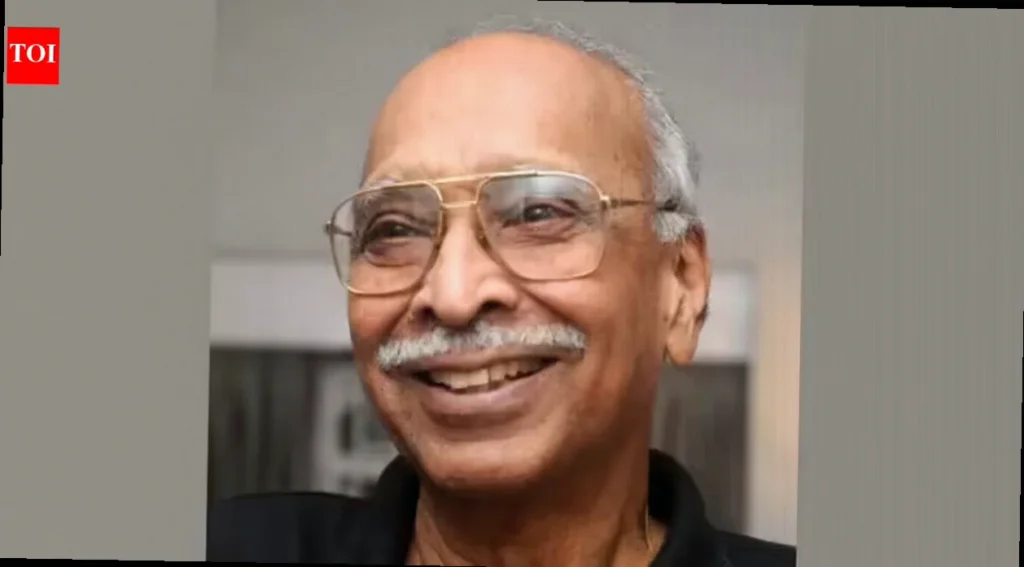
CHENNAI: CD Gopinath once recalled a stirring scene at the MA Chidambaram Stadium in Madras after India’s historic Test triumph. “The crowd applauded us for 15 minutes straight after the Test match was over. I still remember that moment,” the former India batter said years ago, looking back on the landmark first Test victory at the venue. It came in 1952, when India defeated England in the fifth Test by an innings and eight runs. In that memorable contest, Gopinath made a brisk 35 and joined a cast of standout performers, including Vinoo Mankad (12 wickets), Polly Umrigar (130) and Pankay Roy (111). Now, aged 96, Gopinath—the last surviving member of that side—has died in his sleep in Chennai on Thursday.
“A natural batsman, a genial presence”
Former Hyderabad off-spinner V Ramnarayan, a noted cricket historian and co-author of Gopinath’s autobiography, Beyond Cricket — A Life In Many Worlds, paid tribute to the late cricketer. He described Gopinath as “a lovely batsman to watch,” highlighting that he played in a straightforward, instinctive manner. Ramnarayan also underlined Gopinath’s temperament and leadership, calling him a shrewd captain who could keep wickets “from time to time.” Yet, he felt the most enduring trait was Gopinath’s warmth. “What always stood out was his geniality,” Ramnarayan said.
Gopinath featured in eight Tests for India, spanning the years 1951 to 1960. However, his international career was not without controversy. Ramnarayan pointed to an incident during the 1952 England tour, saying that in Gopinath’s own account, he was insulted by then captain Vijay Hazare. Gopinath believed he was being singled out because he was from South India, and he chose not to take part in the subsequent West Indies series, as Ramnarayan explained.
Key figure in Tamil Nadu cricket
Beyond the national team, Gopinath’s influence on Tamil Nadu cricket was significant. He was part of the Madras squad that secured its first Ranji Trophy title in 1954–55. In the final, against a strong Holkar outfit that included Mushtaq Ali, Gopinath struck 133 in the first innings. With the contest moving into its crucial stages, he also had to step into the captaincy role, Ramnarayan added.
His sporting life was not limited to the cricket field. Game hunting formed another major interest. During the 1955–56 season, Gopinath hosted the visiting New Zealand team for a hunting trip. Ramnarayan noted that on the return journey they ran late, arriving only on the morning of the match against South Zone. Despite that delay, Gopinath still delivered a big performance, scoring 175 in that game, according to the historian.
Later years and life after cricket
Gopinath played his final Test at Eden Gardens in 1960, and he did not stay long in first-class cricket either. In 1962, at the age of 32, he retired primarily because he held a responsible position with the British firm Gordon Woodroffe. Ramnarayan described it as a clear signal that Gopinath had a full life beyond the sport. “He had a life beyond cricket,” he said, adding that Gopinath was also a talented tennis player. Ramnarayan revealed that his wife Comala was his partner in mixed doubles, and the couple won several tournaments during that era.
Remembered as mentally sharp, Gopinath enjoyed playing bridge and kept tabs on the current India team. He was also known for being open in conversations about cricket. The former batter once said that for him it was “sheer passion,” with players receiving only Rs 250 per Test as “smoke money” and travelling by train rather than staying in hotels. Ramnarayan recalled that even foreign players would sometimes share lodging as “house guests.” Yet Gopinath insisted there were no regrets, and the smile stayed on his face as he spoke.
Gopinath’s passing marks the end of an era for Indian cricket history—especially for those who remember the 1952 team that delivered India’s first Test win at the MA Chidambaram Stadium in Madras.
