
With the 2027 ODI World Cup still on the horizon, questions around the long-term roles of Rohit Sharma, Virat Kohli and Ravindra Jadeja for India remain unresolved. However, Cricket Australia has laid out a sharply different picture for its own ageing stars, explicitly indicating who it expects to spearhead the ODI campaign leading into the tournament.
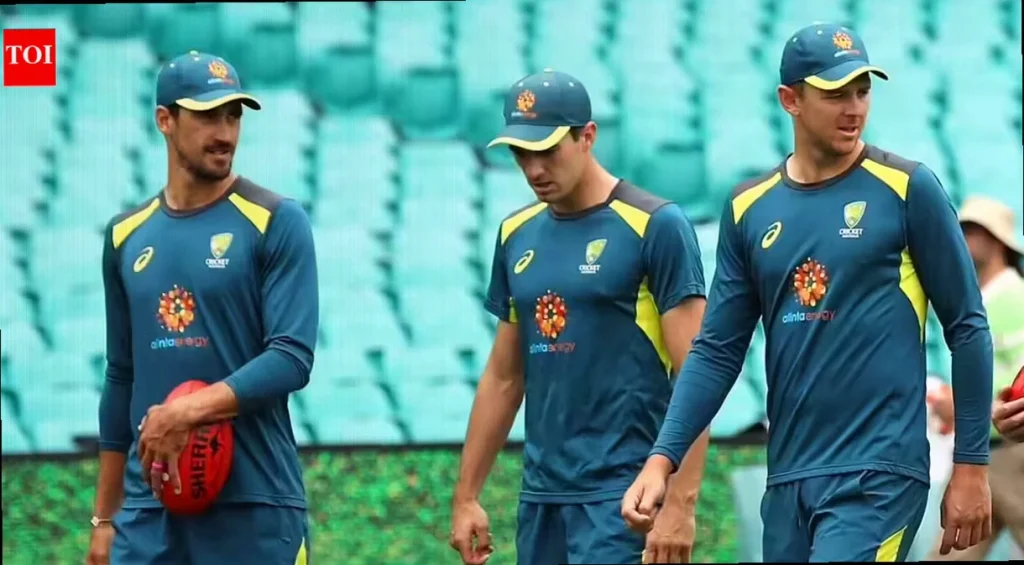
Australia have, for next year, publicly backed their veteran pace combination—Pat Cummins, Mitchell Starc and Josh Hazlewood—to anchor the team’s title defence across South Africa, Zimbabwe and Namibia. The support comes even as fitness worries and an intense run of international cricket continue to raise eyebrows over how long the trio can stay fully available.
India’s situation, though, is far less clear-cut. There are still no firm assurances that Rohit, Kohli and Jadeja will still be part of India’s ODI plans when the World Cup gets underway in October and November 2027. Both Rohit and Kohli have already ended their Test and T20I careers, meaning they currently operate as one-format players for India. Kohli’s case has continued to gain momentum due to improvements in both fitness and batting consistency, while Rohit’s recent fitness issues during IPL 2026 have fuelled fresh speculation about how long he can remain a long-term ODI option.
The immediate selection picture offers only partial comfort. Rohit has been named for the upcoming ODI series against Afghanistan, but his participation is still dependent on fitness clearance. Jadeja’s prospects look similarly clouded after he was rested from both the Afghanistan ODI series and a one-off Test, underlining that Indian cricket may be entering a transition period sooner than many expected.
Australia make their stance crystal clear
While India weigh up the future of senior players, Cricket Australia has made its intention unmistakable. The governing message is that Cummins, Starc and Hazlewood are expected to remain central to Australia’s ODI World Cup plans in 2027.
Australia coach Andrew McDonald said the fast bowlers are not being sidelined from upcoming white-ball assignments in Pakistan and Bangladesh by choice. Instead, he framed their management as part of a broader, long-term workload plan designed to protect their availability for the World Cup.
“We are planning for them to be there in 2027,” McDonald said as he explained Cricket Australia’s approach to balancing workloads.
Australia’s scheduling burden is substantial. Between August 2026 and the 2027 World Cup, they are set to play up to 20 Tests, including series against India, England, South Africa and New Zealand. By the time the World Cup arrives, Starc and Hazlewood are expected to be nearing 38 and 37 respectively, with Cummins around 34—ages that naturally place extra emphasis on injury prevention and recovery.
Fitness remains the biggest concern
For Australia, fitness has already become a recurring theme for its pace unit. Hazlewood has dealt with hamstring and Achilles problems in recent years, while Cummins has recently battled a back stress injury. Starc, meanwhile, acknowledged that he had shoulder and elbow concerns during the previous Australian summer.
Even with those challenges, Australia’s stance has been consistent: in major ICC tournaments, experience still carries weight. The idea is to keep the core ready for the World Cup while managing the workload so that the injuries do not derail their peak period.
India, on the other hand, appears to be stepping into a more uncertain chapter. The transition that followed the retirements from Tests and T20Is has already started, but selectors now have to juggle two competing priorities—trusting proven champions while also building the next group of players for the future.
In the months ahead, particularly the Afghanistan series and the ODI assignments that follow, India’s selection direction could become clearer. Those events may provide the clearest signal yet on whether Rohit, Kohli and Jadeja remain woven into India’s pathway toward the 2027 World Cup—or whether the team is already quietly preparing for life after its current golden generation.
