
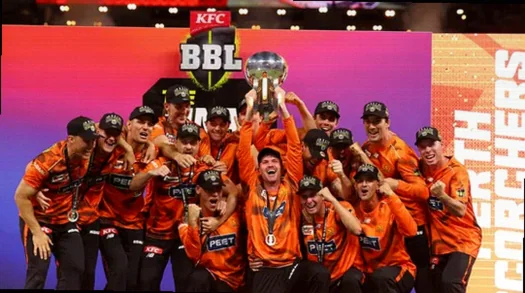
Cricket Australia is facing a fresh hurdle in its attempt to reshape the Big Bash League’s ownership structure, after Queensland Cricket told the governing body on Wednesday that it does not back the private ownership model—mirroring the position already taken by Cricket NSW.
While that development complicates CA’s roadmap, several other state associations have shown support. Victoria, Western Australia and Tasmania have agreed with Cricket Australia’s approach, whereas South Australia has signalled support for a hybrid setup that comes with multiple conditions attached.
Quick facts
- Queensland Cricket has informed Cricket Australia it does not support the private ownership model for the Big Bash League.
- Cricket NSW has also opposed the private ownership structure, aligning with Queensland’s stance.
- Victoria, Western Australia and Tasmania support Cricket Australia’s plan.
- South Australia backs a hybrid model with several restrictions.
- Cricket Australia’s private ownership model would have moved forward only if five of the six entities approved it.
Speaking on Thursday, Cricket Australia chief executive Todd Greenberg said the league will eventually have to move in the direction that has been discussed, but insisted that for now the organisation is exploring other options in order to reach a “peaceful solution.”
Greenberg pointed to the reality that different stakeholders want different timing and approaches. “There may be a world where some want to do this, and some don’t, or some want to do it now, and some want it in another time frame,” he said, adding that CA’s original preference has been to align the process simultaneously to “extract the maximum value” in the market.
With that level of consensus not yet in place, Greenberg said Cricket Australia must reconsider what comes next. “But clearly we’re not at that point. So we now have to reassess what comes next,” he told reporters.
Impact on Australian cricket under the microscope
Greenberg stressed that any decision cannot be taken in isolation from the wider game’s interests. He said Cricket Australia will need “deep analysis” to understand the potential consequences for Australian cricket, returning to the central goal that originally drove the proposal—ensuring it benefits the entire sport.
“We would have to get some deep analysis to understand the impacts on Australian cricket, because if you get back to the very objective that we started with, to do this, it needs to benefit the entire sport,” he said. “We have to look at that lens in the decisions that we make. And we’ve now got some analysis to do if that’s the case or not,” he added.
There are also concerns that a private ownership model could shift control away from Cricket Australia and its state associations. Greenberg did not dismiss those fears, but argued that privatisation is ultimately unavoidable if the sport is to stay competitive on the global stage.
“I do think at some point in our lifetimes, the private capital will come in,” Greenberg said. “I think if we’re going to compete with the rest of the world, it is inevitable.”
He said the governing body’s broader project has been about balancing the risks that come with bringing in private funding, while ensuring appropriate safeguards remain in place. The aim, he suggested, is to let Australian cricket attract private capital but still operate under the principles of governance that have governed the game.
Greenberg also rejected a self-funding proposal put forward by Cricket NSW that is tied to gambling revenue. He said CA does not view wagering-linked funding as something the sport would accept.
“Our view is that that’s not a step that the sport would accept. To back itself on wagering is not a way to fund the game. That’s been very clear from the CA Board,” Greenberg said.
