
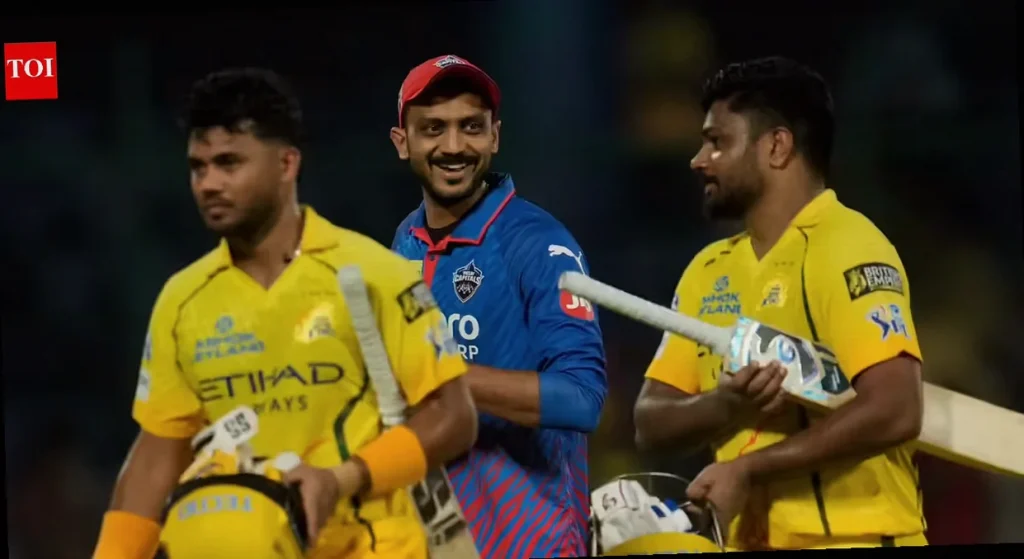
Delhi Capitals have looked strangely out of sync in home conditions at the Ferozeshah Kotla, and Tuesday’s game only underlined the point. For the second straight match at this venue, they struggled with their batting again, managing 155/7 and then watching Chennai Super Kings chase it down comfortably with eight wickets and 15 balls to spare.
The setting worked against Delhi as much as anything. The crowd’s energy tilted heavily toward CSK, even with MS Dhoni not travelling for the match, and the noise after every wicket added pressure at the worst possible time. In a tournament where survival depends on margins, Delhi’s batting never quite found its footing on a surface that played a little slower than expected.
At a glance
- Match result: Chennai Super Kings won by 8 wickets with 15 balls remaining.
- Delhi Capitals’ score: 155/7.
- CSK chase: completed successfully with 8 wickets down.
- Sanju Samson: unbeaten 87 off 52 balls.
- Akeal Hosein: 1/19 in four overs.
- Kartik Sharma: 41 not out off 31 balls.
- Impact Player use in the first innings: Sameer Rizvi came in and played at 69/5.
CSK’s control with the ball was the difference, and their left-arm spinner Akeal Hosein set the tone early. He opened the bowling and finished with figures of 1/19 from his four overs, helping keep Delhi’s scoring in check on a track that didn’t reward big hitting. With the bat, Samson ran the chase with calm judgment, timing the ball and pacing his innings to perfection.
Samson’s 87* off 52 formed the backbone of CSK’s successful run chase. He kept Delhi at bay by taking what the pitch offered rather than forcing shots, while the younger Kartik Sharma supported him with composure of his own. Sharma stayed unbeaten on 41 off 31 deliveries, ensuring the momentum never slipped away from CSK.
The chase was effectively wrapped up by a crucial unbeaten 114-run partnership. It also highlighted a key issue for Delhi: their top and middle-order batters, specifically KL Rahul and Axar Patel, were unable to step up in conditions that demand patience and sharper execution. On a surface that made scoring harder, Delhi’s key names couldn’t find the right rhythm.
Kuldeep Yadav’s bowling added another problem for Delhi. He conceded 34 runs in his three overs, leaving another dent in the Capitals’ confidence and reputation, particularly on pitches where Rahul has also tended to struggle. During the powerplay, Delhi could only reach 37/1, and the early overs felt like they were setting up a chase rather than building a defendable total.
When Rahul eventually fell, the manner of his dismissal looked like a sign of frustration with the conditions. He departed for 12 off 13 in the sixth over after a slog off Hosein, and the shot reflected how tough it was to impose any authority on the ball. After that, the batting never quite recovered to the level needed for a competitive score.
Axar Patel’s struggles were another storyline that kept running in the match. Tuesday’s contest also stood out because it arrived amid a hotter run-scoring phase in the IPL, but it still served as a reminder of a modern batter’s challenge: when the pitch provides assistance to bowlers, finding a workable balance becomes far harder.
Delhi were forced into tactical adjustments as well. In both of the last two matches at Kotla, they had to use their Impact Player in the first innings. Last week, it was Abhishek Porel who came in at No. 7 during the Powerplay against Royal Challengers Bengaluru; this time, Sameer Rizvi arrived when Delhi were 69/5, aiming to restore some respectability to the innings.
However, that decision came with a follow-on consequence. Because Rizvi entered early, Delhi were unable to call upon their third spinner later in the innings to defend the total during the second half, a phase where the pitch’s slower nature mattered even more. The game reinforced that Rizvi is most comfortable when he can play controlled, slower knocks without being forced to accelerate from ball one.
Rizvi followed that template, starting extremely cautiously before adding momentum toward the end. He finished unbeaten on 40 off 24 deliveries, giving Delhi a late push that ultimately produced 155/7—though it still proved insufficient once CSK settled into their chase.
