
Gujarat Titans assistant coach Vijay Dahiya is convinced that the ability to keep picking the right combinations, match after match, has been a major reason behind how both Gujarat and Royal Challengers Bengaluru have performed this IPL season. Ahead of IPL 2026 Qualifier 1 in Dharamsala on Monday, May 25, Dahiya pointed to the pace-led nature of the contest, arguing that the teams’ success has been built around strong bowling identities and, just as importantly, belief within those bowling groups.
In Gujarat’s case, the numbers underline Dahiya’s argument about consistency and execution. The Titans boast the competition’s leading seam attack, topping the wicket chart with 79 strikes, while also owning the best bowling average at 22.93. Their strike rate of 14.9 and an economy rate of 9.18 sit at the head of the table, and they have managed to build pressure through dot balls, with 43.6% of deliveries going for no runs. Dahiya noted that this impact is not concentrated in one or two overs or one bowler alone—four of Gujarat’s seamers are positioned among the top 17 wicket-takers in the tournament.
Bengaluru’s pacers have been equally difficult to handle at the other end of the equation. RCB’s fast bowling unit is third in the wickets tally, having taken 66 scalps at a bowling average of 27.37, while maintaining an economy rate of 9.82. Dahiya also highlighted the role of self-belief and stability, suggesting that when captains and management trust the same bowling group repeatedly, the unit’s rhythm tends to stay intact throughout a long campaign. “At the end of the day, teams put runs on the board, but you need a solid bowling unit,” he said. “And what’s very important—if you look at both sides—the consistency in the bowling unit is very much there. You hardly see any change in both the sides because of that self-belief in the bowlers and the belief from the captain or management. That’s what pays,” Dahiya added.
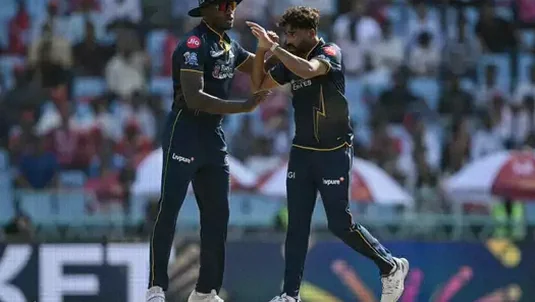
When it comes to specific matchups, Dahiya believes the Qualifier could be shaped by the way the pace groups complement each other. For RCB, the partnership of Bhuvneshwar Kumar and Josh Hazlewood has stood out, with the duo combining for 36 wickets so far in the competition. Gujarat, meanwhile, have found a similar brand of effectiveness through Mohammed Siraj and Kagiso Rabada, who have jointly taken 41 wickets. Dahiya stressed that the key difference in long tournaments often comes from how well quick-bowling partners understand one another—both in terms of planning and in how they carry out roles during spells.
“I think the kind of character he (Siraj) is—channelizing all his energy towards one goal—that’s very important. And he’s got a very able partner on the other end as well,” Dahiya said. He then described the chemistry between Siraj and Rabada as a major factor behind their output. “The chemistry between the two (Siraj and Rabada) is phenomenal, not only on the field, but off the field as well. They understand each other—not just mentally, but skill-wise too. They understand the game very well: how it’s going, what I need to do, and how I need to finish my overs to help my partner,” he explained.
Dahiya also expanded on the importance of that partnership, saying it is not always discussed in the same way as batting partnerships, but can be just as decisive for bowlers. He credited Ashish Nehra for managing the pair effectively, while also pointing out that they come from different backgrounds and different international environments, which can bring different pressures. “Normally when you talk about partnership, it mostly goes with batting, but I think they have a very good partnership, and a lot of credit needs to be given to Ashish Nehra—the way he handles both of them,” Dahiya said. “Different characters, different environments, different pressures when they play for their different international sides—but both of them are top-class bowlers and they really, really do well.”
With Dharamsala set to host the contest, Dahiya expects the pace battle to remain central. Bhuvneshwar and Rabada arrive with 24 wickets each this season, while Siraj is eighth among wicket-takers with 17 strikes. The venue’s recent history also throws up a clear challenge for spinners. Since 2023, pacers have taken 78 wickets at Dharamsala, compared to 22 for spinners. Even though spinners have been slightly more economical than seamers, with an economy of 9.47 versus 10.23, the wicket-taking gap remains significant. First-innings totals at the ground in that period average 210, and in matches where the chasing side went on to win, the number rises to 216.
Despite those trends pointing towards seam dominance, Dahiya felt the threat from experienced spinners on both sides should not be dismissed. He noted that Dharamsala’s altitude and the style of play tend to encourage big hits, which can reduce the margin for error for spin, but he still believes quality turn and control can influence phases of a match. “It’s for everyone to see. It’s not only us,” he said. “Since you start playing IPL games in Dharamsala—or whatever games you’ve seen here—high altitude, we know the number of sixes is much more than any other ground. There are some in Bangalore as well… but it comes down to the dynamics, what sort of surface you get here.”
Addressing a question about whether spinners will have much impact, Dahiya agreed that their role can be limited when batting-friendly conditions dominate, but insisted that the spinners still matter because the quality in both camps is high. “You’re absolutely right: there’s not much role to play for spinners, but they do come in,” he said. “That’s what the quality of spin in both the sides is about. The spinners you have in both teams are two very mature spinners, and they will play their part irrespective of the surface.”
One spinner making a strong case for influence this season is Rashid Khan. Dahiya pointed out that after managing only 10 wickets in IPL 2024 and nine in IPL 2025, Rashid has bounced back with 19 wickets this year, and is currently the only spinner inside the top 10 wicket-takers list. Dahiya attributed Rashid’s earlier dip to the demands placed on him as a spinner and the effect of surgeries, which can disrupt rhythm and workload. “Let’s go back and talk about those two seasons. It’s not easy for a spinner, especially the way you bowl, and he has gone through a couple of surgeries as well,” Dahiya said. “That’s the reason you take a season or two, and the amount of cricket he ends up playing will show in his performance somewhere down the line as well.”
But Dahiya believes the turnaround this season has been evident from the start rather than only in match results. He spoke about how Rashid’s preparation has looked sharp in nets, and how the bowler has been working on game awareness, including conversations with batters and a heavy focus on fine-tuning his approach. “But this season, the kind of space that he is in from day one—the way he has been bowling in the nets,” he said. “Sometimes you see the result, but the process is the nets: how you bat, how you bowl, how you feel in the nets. I think he has been top class there quite a bit. He’s been doing a lot of single-wicket bowling as well and having a lot of chat with the batters to understand how this game works, what is there that I am lacking. That’s a trait of a good cricketer—he wants to improve even when he is already at the top shelf of his play, like we just mentioned, one of the best in this format.”
Finally, Dahiya linked Rashid’s hunger for improvement to the wider culture inside Gujarat’s setup. He stressed that the team has looked after Rashid when he was not at his best, while also ensuring he remains a central part of the bowling plans. “But that hunger of getting better is very visible in this season. That’s why he is more hungry—he wants to contribute to the side where he has been valued as a very, very important player,” Dahiya said. “And I think this is what the GT setup is all about. They looked after him when he was not up to his mark because his standards are very high, and I think he’s giving the GT management what you ask him to do.”
