
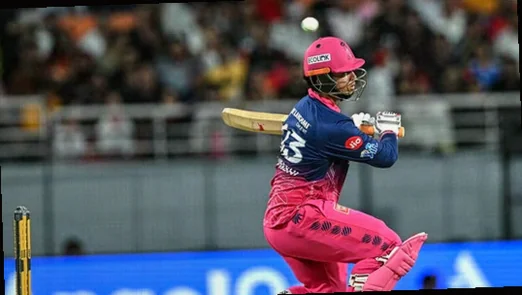
Test cricket has found a fresh public cheerleader, even if that support hasn’t fully answered the bigger question of where some of the brightest young talent truly fits. Dale Steyn, the former South Africa pace spearhead, believes a single statement from India’s most discussed teenager could do more for the longest format than any polished campaign ever could.
Quick facts
- Dale Steyn posted a message on X praising Vaibhav Sooryavanshi’s potential to choose Test cricket.
- Steyn described Sooryavanshi as carrying a kind of power that marketing cannot manufacture.
- The former fast bowler framed Sooryavanshi’s possible red-ball dream as a major “advertisement” for Test cricket.
- Steyn’s post suggested the hopes for the longer format are tied to Sooryavanshi’s decision.
Steyn’s target was clear: Vaibhav Sooryavanshi. He argued that no administrator’s roadshow and no broadcaster’s promotional push can replicate the unique influence of a gifted young player publicly choosing to chase red-ball cricket—and, specifically, the dream of playing Tests for India.
“There’s no bigger advertisement for Test cricket than if Sooryavanshi tells the world his dream is to play red ball for India,” Steyn wrote on X. He added, “Our hopes sit with you, young sir.” The message was brief, but the undertone was unmistakable.
Sooryavanshi’s arrival in franchise cricket has been immediate and loud, arriving like a bolt of electricity. His aggressive hitting, fearless approach and the youthful timing that makes every knock feel almost unreal have already turned him into someone fans plan their evenings around. Yet the spotlight also brings a modern discomfort that never really goes away: when a teenager is this talented, which format should become their home?
T20 cricket has changed the way ambition is written in the sport. Around the world, promising teenagers are being fast-tracked through franchise pathways where money, visibility and global attention arrive long before they have delivered the kind of classic proof—like a first-class century or a five-wicket haul—that traditionally signaled readiness for the highest levels.
The incentives now feel blunt and heavy. They push players toward what is immediate and measurable in the short format, long before the slower tests of temperament and craft have had time to fully shape them. In that environment, Sooryavanshi’s situation becomes even more pointed.
The symbolic question
At an age when many cricketers are still navigating school routines and dressing-room basics, Sooryavanshi finds himself wrapped in intense public attention. That makes the debate not only about his personal route, but also about what the sport wants to see from future stars.
In practical terms, it becomes a question of identity: what does a player with his profile choose to become? Steyn’s intervention doesn’t just comment on an individual—it highlights the cultural weight of a teenager opting for Test cricket at a time when cricket’s priorities are constantly under negotiation.
Steyn’s post does not attack T20 cricket. Instead, it does something more strategic and arguably more persuasive. He treats Sooryavanshi’s hypothetical red-ball ambition as a declaration—almost a public act of trust in the longer format—precisely when cricket’s balance of priorities is one of the sport’s loudest arguments.
If a player so young and so hyped places Test cricket at the centre of his goals, that choice carries more emotional and cultural meaning than any governing body can manufacture through slogans or staging.
The former pacer, whose career in whites was built on dismantling batting units across different continents, chose his words with the careful restraint of someone who understands what the longest format actually requires. He didn’t deliver a lecture. He simply outlined what such a declaration would signify—and left the door open for Sooryavanshi to walk through it.
India’s relationship with Test cricket has always contained a specific kind of seriousness. For many years, the Test whites have served as the final benchmark of a batter’s depth—not just raw power or sharp timing, but the ability to occupy the crease, handle pressure across long stretches and build innings that can last when conditions and demands change.
Sooryavanshi’s current skill set, as it has been shaped so far, has been formed in environments built for scoring quickly and hitting through difficulty. The key question is whether that talent can be reshaped, stretched and made more complex by the patience and technical discipline that first-class and Test cricket demand.
Steyn clearly believes it can. He also seems convinced that the teenager himself has the stature to shift the conversation—not by force, but simply by wanting it strongly enough to make it visible.
In the end, Steyn’s message lands like a quiet challenge beneath the applause. T20 cricket has already made Sooryavanshi impossible to ignore; red-ball cricket, Steyn suggests, could make him permanent in the way the sport remembers those who commit to its most demanding stage.
