
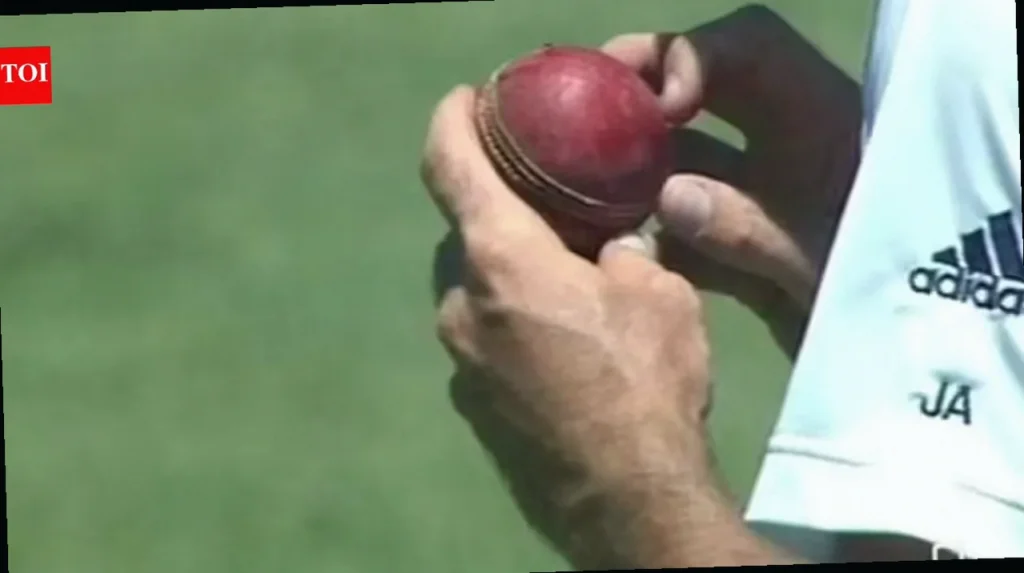
NEW DELHI: England batter Dawid Malan has ignited a fresh discussion in cricket after floating a provocative proposal—introducing a tightly controlled, limited form of ball tampering. The thrust of his argument is not a call to ignore laws, but to reshape them so that the balance between bat and ball better reflects the modern game, where hitters often dominate proceedings in shorter formats.
Malan, speaking on the BBC’s Strategic Timeout podcast, suggested that tampering has never been completely absent from cricket. In his view, since players have long tried to alter the ball across matches, the sport should stop pretending it does not occur and instead bring the practice under clearer regulation. “Over the course of the game, people have been caught trying to tamper with the ball for years. It’s not a new thing,” Malan said. “I actually think you should legalise it—just let people scratch the ball.”
While making his case, he also stressed that any change would need firm boundaries. He pointed out that players should not introduce anything from outside the field of play, and that the approach should remain a skill-focused part of the contest rather than an anything-goes tactic. “Obviously, do not bring things in from outside. But it’s a skill in itself—to get the ball to reverse swing,” he added.
At the heart of Malan’s concern is the growing difficulty bowlers face, particularly during the closing overs. Reverse swing, which once provided a decisive edge for fast bowlers, has become far less common in recent times. He linked the shift to stricter regulations, more frequent ball replacements, and playing conditions that tend to favour batters. In that landscape, even when bowlers have the pace and accuracy, the late-innings swing that can flip momentum is often missing.
By allowing small, controlled modifications, Malan believes reverse swing could re-enter the game more consistently. That, he argued, would make matches more competitive in the final phase and reduce the sense that outcomes are already sealed with wickets in hand. “I think it would make cricket a lot more bowler-friendly towards the end, if you can get the ball reversing,” he said. He went further, saying such a change could tighten contests so they are not simply decided by batters cruising through the last overs.
For Malan, the proposal is rooted in how the sport has evolved. As batting has become more refined and aggressive, bowlers need additional avenues to remain effective. “Batters are so skilled now, that if you can get any tactical advantage with the ball—shaping it a little bit, reverse swinging it—you want to do what you can to do that,” he said. He also highlighted the unique challenge of death bowling, pointing out that getting the ball to move can make a major difference when matches are at their most pressured. “If you can get the ball to move, it makes such a difference at the death—the hardest overs to bowl,” Malan added.
