
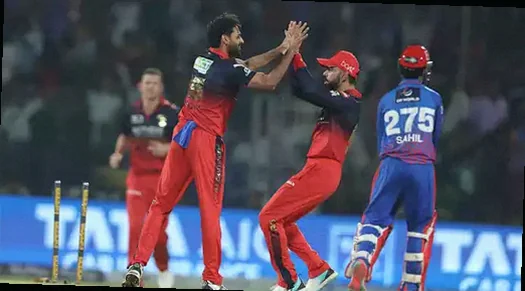
Delhi Capitals’ start against Royal Challengers Bengaluru was historically poor as the side managed just 13 runs in the first six overs, setting the lowest powerplay total in IPL history. That mark eclipsed the 14-run powerplays posted by Rajasthan Royals versus RCB in 2009 and by Sunrisers Hyderabad against Rajasthan Royals in 2022.
Damaging powerplay and early-wicket collapse
DC also struck another unwanted landmark with 7 runs at the point of losing the fifth wicket, which stands as the second-lowest score reached at that stage in an IPL innings. The only worse example is the 6 runs made by Kolkata (then known as KTK) against Deccan Chargers at Kochi in 2011. In addition, Delhi recorded the lowest IPL total at the fall of the sixth wicket, finishing on 8 runs when that wicket arrived.
The batting collapse continued as well: DC lost 6 wickets within the first six overs, a joint-highest figure for any team inside that phase in an IPL innings played as a non-curtain-raiser. That same number has been matched only by KTK against Deccan Chargers in 2011.
RCB’s chase built on time and comfort
In reply, RCB’s pursuit of 76 was also shaped by margin and momentum. With 81 balls left when the target was reached, RCB recorded the second-largest buffer in a successful IPL chase, surpassed only by the 87 balls remaining when Mumbai Indians chased 68 against Kolkata Knight Riders at Wankhede in the 2008 season. RCB’s earlier best during a chase had been 71 balls left when they chased 89 against Punjab Kings at Indore in 2018.
This win marked the 15th time RCB have finished an IPL match by winning with 9 or 10 wickets, a tally that places them well ahead of Sunrisers Hyderabad and Mumbai Indians, who have achieved the same margin 9 times each.
Match length and completion
The RCB vs DC contest also carried a timing record of its own. A total of 138 balls were bowled in the match, making it the second-shortest completed IPL game when rain-affected fixtures are excluded. The shortest such meeting remains the 125-ball clash between MI and KKR at Wankhede in 2008.
DC’s low totals across innings
Delhi’s innings ended with 75 all out, which ranks as the seventh-lowest first-innings total in IPL history. It was DC’s third-lowest IPL score after 66 against MI in 2017 and 67 against KXIP in 2017. It also became the third occasion DC have been bowled out for 75 or fewer in the tournament, with RCB holding the most such dismissals at four.
That 75 also stands as the lowest first-innings total in the IPL for this match-up, and the third-lowest aggregate by any team against RCB in IPL. The only lower totals against RCB are 58 and 59 by RR in 2009 and 2023 respectively.
Suyash Sharma’s dominance with the ball
Suyash Sharma produced a standout spell against DC, delivering 20 dot balls—the most by a spinner in an IPL innings and also level with the joint-highest dot-ball count by any bowler in an IPL innings, matching Munaf Patle’s (RR) total versus KKR at Durban in 2009, Deepak Chahar’s (CSK) dot-ball haul versus KKR at Chennai in 2019, and Umran Malik’s (SRH) achievement versus RCB at Brabourne in 2022.
Sharma’s economy was also notable: he conceded 7 runs, which is the fewest runs allowed by a spinner across a full four-over spell in an IPL match.
His figures of 1/7 in four overs were additionally the joint-most economical four-over spell by uncapped Indian bowlers in IPL, matching Rahul Sharma’s 2/7 for PWI against MI at DY Patil in 2011.
Virat Kohli milestones and head-to-head output
Virat Kohli reached a major batting milestone with 9012 IPL runs, becoming the first player to cross 9000 runs in the league. His output against DD/DC was also emphasized, with 1172 runs scored against them—second only to the 1174 runs he has made versus CSK.
Opening pair impact for Bhuvneshwar and Hazlewood
Bhuvneshwar and Hazlewood combined for 7/17, which ranks as the fourth-best set of opening-bowler figures in an IPL innings. The record benchmarks include 8/29 by Ishant Sharma and Dale Steyn for Deccan Chargers versus KTK in 2011, 8/42 by Starc and Sreenath Arvind for RCB versus KXIP in 2015, and 8/58 by Praful Hinge and Sakib Hussain for SRH versus RR earlier this season.
They also became the first pair of bowlers in the IPL to each take three wickets inside the powerplay overs (1–6) within the same innings.
Hazlewood’s best in T20 and RCB vs DC context
Josh Hazlewood’s 4/12 was his joint-best in T20 cricket, matching his figures against Sri Lanka in Sydney in 2022. For RCB vs DC specifically, it ranked as the second-best bowling return, sitting behind Jaydev Unadkat’s 5/25 at the same venue in 2013.
Delhi’s back-to-back scoring swing
Another striking trend came from DC’s two most recent totals before this match: a 189-run swing between their last two innings totals, calculated as 264 versus PBKS and 75 versus RCB. It represents the largest difference across two successive games for any team in the same IPL season, excluding no-results and successful chases. The previous high was 164 runs by RCB in 2017, when they scored 213 against GL and then were bowled out for 49 against KKR in the very next match.
Impact substitute timing
When DC used their impact sub against RCB, it came in 2.5 overs, making it the second-earliest use of the Impact substitute in the first innings of an IPL match. The earliest instance was MI’s decision to use the option in the second over of their game versus RR at Wankhede in 2024.
