
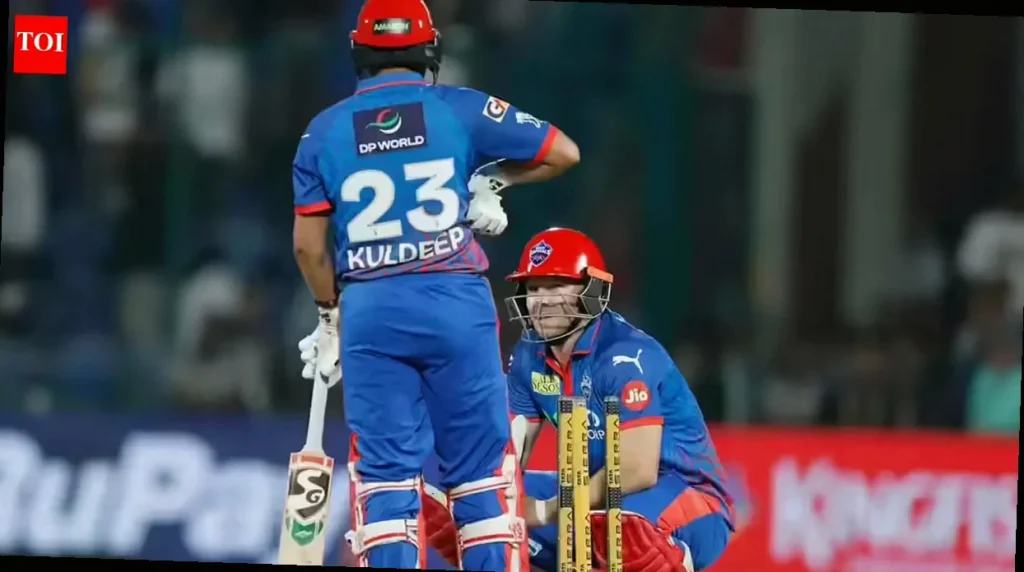
“What was he thinking?” “What was he doing?” “Why didn’t he run?” Those were the questions swirling around the Delhi Capitals camp after their one-run defeat to Gujarat Titans in the IPL 2026 at the Arun Jaitley Stadium on Wednesday. The name at the centre of the debate was David Miller, whose right-hand injury, altered batting impact and a final-ball hesitation combined into a night that left DC feeling they had let a golden chance slip away.
Injury, comeback and the turning point
- During the fielding phase, Miller sustained a right-hand injury after diving on the practice pitches to cut off a cover drive from Sai Sudharsan.
- He attempted to move past the setback, but the consequences became obvious early in Delhi’s chase of 211, with the problem worsening after he had to dive to make the crease.
- At that stage of the chase, DC were 130/3 and required 81 off 42 balls, with KL Rahul already firmly set on 69 from 37.
- When Miller returned, DC had lost Tristan Stubbs to a run out, leaving the target equation at 51 needed from 20 deliveries.
- Three balls later, Rahul went for a ball from Mohammed Siraj that arrived well outside off stump; the inside edge was taken cleanly by wicketkeeper Jos Buttler, and the pressure shifted again.
- Responsibility suddenly landed on the 36-year-old Miller, who managed only 6 runs from 3 balls when he resumed, as the required rate climbed to 18.00.
- That is where the match swung back in DC’s favour. Miller struck 6, 4 and 6 off Siraj, and the pacer conceded 23 runs in the penultimate over to tighten the equation further.
- GT were also penalised for a slow over rate, which forced an extra fielder into the circle, and that tactical change helped DC squeeze the chase.
- The requirement dropped from 13 off 6 to 8 off the final three, as Miller got his chance in the last over.
- On the next delivery, Prasidh Krishna came around the wicket and was punished: he was struck for a six that soared 106 metres into the third tier.
The run-out of momentum: the final hesitation
After that huge hit, the moment that baffled everyone arrived at the end. A pull shot sent the ball towards deep square leg, but Miller refused to take the single. With Delhi needing 2 runs from the last 2 balls, completing that run would have changed the finish completely—either Kuldeep Yadav would have been asked to complete it, or at minimum the match would have gone to a Super Over.
Instead, with Prasidh delivering a disciplined last ball under pressure, DC could not add to their total and ended up one run short—leaving Miller’s decision to turn down the run as the defining talking point.
Finisher debate revisited
The controversy also reopened a wider conversation about T20 batting roles. A few days earlier, Punjab Kings had chased down 210 against Chennai Super Kings at Chepauk, and CSK head coach Stephen Fleming suggested that the idea of “finishers” no longer fits modern T20 cricket. He argued that teams attack from ball one, aiming for consistent run rates rather than building only near the end, meaning the major “peaks” late in the innings are not as expected as before.
Delhi’s chase—though unsuccessful—still provided evidence that the approach can be more nuanced. DC’s scoring rate in the powerplay was 10.5 per over, and it was 8.77 in the middle overs. However, they accelerated strongly in the final five overs, lifting the rate to 13.40. The 16th over produced 16 runs, and Siraj’s 19th over went for 23, which was the joint-highest haul of the night.
Reactions after the one-run loss
Back to the question that dominated the aftermath: why Miller didn’t run on the crucial ball, and why nobody could offer a clear answer afterward. Gill felt Delhi still had “a chance to win,” acknowledging that the contest remained alive until the final delivery.
DC skipper Axar Patel said that in a tight chase, any small swing can decide the outcome, and that DC could have been sharper in execution. He noted, “In a close game like this, you can point out anything. We played very good cricket. But in a close chase, we could have played smarter.”
Opener Pathum Nissanka kept his response brief in the post-match press conference, saying, “We haven’t discussed it yet, but sometimes it happens in cricket.”
Rashid Khan, named Player of the Match, was satisfied that he was not standing in Miller’s position at that moment—implicitly reflecting on how small margins can define a high-pressure finish.
In the end, what was happening inside Miller’s mind can only be guessed from the outside, but on the inside, Delhi Capitals will feel the sting of a rare opportunity squandered by a single, costly choice.
