
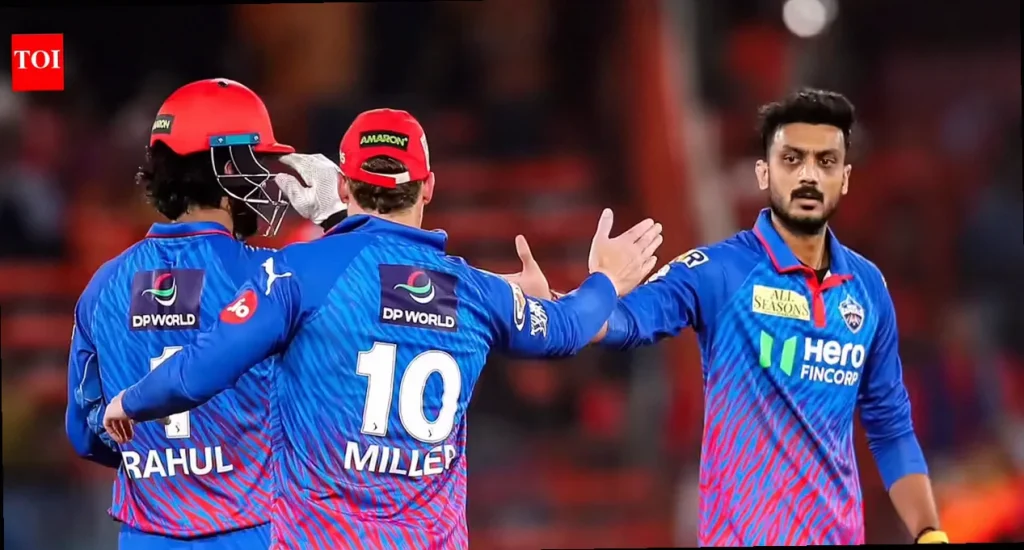
Delhi Capitals (DC) have had a rough time at the Arun Jaitley Stadium in IPL 2026, yet they managed to finish their home stretch on a positive note. Playing on Sunday, DC defeated Rajasthan Royals to keep their postseason hopes alive, though the margin of comfort was slim. The win did not erase the larger concern: their home record has been one of the most disappointing storylines of the campaign, and head coach Hemang Badani did not shy away from being blunt when asked about it after the match.
DC’s home struggles and Badani’s pitch verdict
Badani’s message after the victory was direct. He said DC are no longer going to dwell on the condition of the surface, adding that, in his view, the team effectively treats the ground like an away venue. The contrast he drew between home and away results was stark: splitting the season into two halves, he pointed out that DC have managed four wins from six games on the road, while their home form has remained the primary problem.
That frustration is hard to ignore. In IPL 2026, DC have recorded five defeats and only two wins at the Arun Jaitley Stadium. Their home campaign has included extreme swings: once, they chased down a target of 264 with seven balls remaining, and in the very next match they were dismissed for just 75. The overall home loss rate of 71.4% has been the second-worst among the ten franchises in the league this season.
Here are the home-record details for all teams in IPL 2026:
- RCB: 7 matches, 1 win, 6 losses, 0 no results — Win percentage 14.30% (B. Chinnaswamy Stadium, Bengaluru; Shaheed Veer Narayan Singh International Cricket Stadium, Raipur)
- CSK: 6 matches, 4 wins, 2 losses, 0 no results — Win percentage 66.70% (M. A. Chidambaram Stadium, Chennai)
- SRH: 6 matches, 4 wins, 2 losses, 0 no results — Win percentage 66.70% (Rajiv Gandhi International Stadium, Hyderabad)
- GT: 6 matches, 4 wins, 2 losses, 0 no results — Win percentage 66.70% (Narendra Modi Stadium, Ahmedabad)
- RR: 6 matches, 3 wins, 3 losses, 0 no results — Win percentage 50.00% (Barsapara Cricket Stadium, Guwahati; Sawai Mansingh Stadium, Jaipur)
- KKR: 5 matches, 2 wins, 3 losses, 0 no results — Win percentage 40.00% (Eden Gardens, Kolkata)
- PBKS: 7 matches, 3 wins, 4 losses, 0 no results — Win percentage 42.90% (Maharaja Yadavindra Singh PCA Stadium, New Chandigarh; HPCA Stadium, Dharamsala)
- MI: 6 matches, 2 wins, 4 losses, 0 no results — Win percentage 33.30% (Wankhede Stadium, Mumbai)
- DC: 7 matches, 2 wins, 5 losses, 0 no results — Win percentage 28.60% (Arun Jaitley Stadium, Delhi)
- LSG: 6 matches, 1 win, 5 losses, 0 no results — Win percentage 16.70% (Ekana Stadium, Lucknow)
Badani also explained why he believes preparation has been difficult. While he said teams would ideally assess grass, texture, and colour, DC have encountered “something very different” each time they have arrived at the venue. “We accept it and move on,” Badani added, suggesting the unpredictability has become part of the equation rather than a problem that can be solved in the short term.
He further pointed to the variety of surfaces used in Delhi. According to him, DC have played on three different pitches across the matches and none of those venues have been repeated more than once. He illustrated the inconsistency with examples: one game saw a score around 60 (75), another ended around 150, and another reached approximately 260. In Badani’s view, that means DC could not develop a reliable plan for pitches numbered 4, 5, or 6. “We’ve played on three surfaces and if you look at the numbers, they are all over the place. That is difficult for you to prepare,” he said.
Sunday’s win: how the surface shaped the match
With the playoff race still within reach after beating Rajasthan Royals, Badani linked Sunday’s match flow to how the pitch behaved. He noted that RR had reached 160 for 2 after 14 overs, but then their scoring slowed sharply at the end. Badani said RR managed roughly 33 runs in the final six overs, and DC responded by taking six more wickets.
He described DC’s approach as cautious early and then more aggressive later, largely because the team had a target to work with. Badani said DC managed the situation as the ball began to reverse and held up on the surface. He argued it became harder to bat once the ball aged, which influenced their tactics: “take the game deep; go hard at the top but take the game deep in the end.”
Badani’s comments did not stop at the match itself. The question had been raised earlier in the season, and it came up again after Sunday’s result: should the BCCI allow IPL franchises to have more control over pitch preparation in order to secure a clearer home advantage? The topic also received attention from cricket analyst Sanjay Manjrekar during Sportstar’s podcast, where he suggested IPL teams should be allowed a say in how the pitch might behave over the course of the season.
For DC, the bigger takeaway is that the “unpredictable 22 yards” in Delhi have repeatedly tested their ability to execute consistent plans. Even with a home win against Rajasthan Royals to keep the playoff conversation alive, Badani’s post-match stance made it clear that the team’s home struggles have been rooted in more than just results—they have been shaped by conditions that have refused to settle.
