
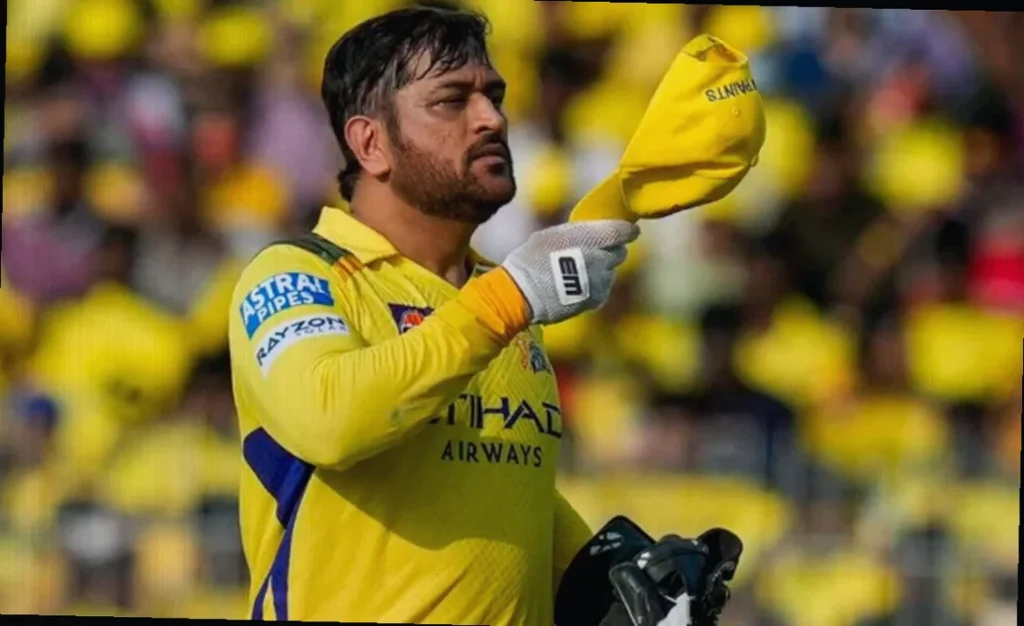
Chennai Super Kings captain Mahendra Singh Dhoni is expected to return to action on April 23 against Mumbai Indians at the Wankhede Stadium. Dhoni missed time earlier in IPL 2026 after being sidelined for about two weeks with a calf issue, and CSK have since navigated a difficult stretch before finding rhythm again. The franchise, after beginning the campaign with defeats, have rediscovered momentum and have won their last two matches on home soil. CSK’s next assignment is scheduled for Saturday, when they travel to Hyderabad to take on Sunrisers Hyderabad.
Key takeaways
- Mahendra Singh Dhoni is likely to make his IPL 2026 comeback on April 23 versus Mumbai Indians at Wankhede Stadium.
- Dhoni was previously ruled out for roughly two weeks with a calf strain just before IPL 2026 started.
- CSK are coming off back-to-back wins at home after a tough start that included early losses.
- Noor Ahmad produced a match-winning spell versus Kolkata Knight Riders, finishing with 3/21 in four overs.
- CSK’s turnaround in Noor’s performance is linked to work done in training, including a discussion with Dhoni in the nets.
Dhoni’s expected return and CSK’s schedule
Dhoni’s comeback is widely anticipated for the April 23 clash against Mumbai Indians at Wankhede Stadium. The venue is also closely associated with his greatest moment as a captain, when India lifted the 2011 World Cup at the same ground. CSK believe the wicketkeeper-batter is nearing full fitness and are planning his return in a controlled manner after the calf concern kept him out earlier in the season.
While Dhoni’s availability remains a central talking point, CSK’s focus is also on the immediate fixtures ahead. Their next match is set for Saturday against Sunrisers Hyderabad in Hyderabad, after which the team will turn its attention back to the Wankhede date with MI.
Noor Ahmad’s spell, his wicket run, and the training influence
Noor Ahmad’s impact against Kolkata Knight Riders came after a prolonged conversation in the nets with CSK’s senior figure, Mahendra Singh Dhoni. The Afghan left-arm wrist spinner struck at key moments to help CSK secure a 32-run victory. Noor finished with figures of three wickets for 21 runs across his four overs, removing Ajinkya Rahane, Rinku Singh and Cameron Green during the middle stages.
Prior to that performance, Noor had struggled to make a significant mark in the tournament. Until Monday night, he had managed only one wicket from four matches, leaving his breakout spell against KKR as a major improvement in output.
How the conditions shaped Noor’s success
The pitch offered limited assistance, but Noor still managed to take control of the contest. He exploited the surface by getting the ball to behave in a way that troubled batters, including a dismissal of Green with a quicker delivery that hit the stumps before the Australian could get enough connection.
CSK assistant coach Sridharan Sriram detailed how the wicket and the adjustments Noor made were connected to the work leading into the match, as well as the guidance received from Dhoni. Sriram noted that the wicket played its part, with Noor benefiting from the ball coming out slower through the air and showing more sidespin and drop than earlier. He also referenced that these were areas Noor had been working on during practice.
Sriram further explained that Dhoni spoke at length with Noor during a practice session, encouraging him to bowl more leg-breaks. In Sriram’s view, the instructions proved valuable and the results were visible in the match, with Noor turning those changes into wickets when the game demanded it.
Why deviation and aggression matter for spinners
Sriram also stressed the importance of getting deviation from the surface for spinners. He argued that being able to create that sideways movement off the pitch is crucial, even on days when conditions can become flat. At the same time, he underlined that spinners must still aim to be attacking—putting revs on the ball, encouraging it to turn, and forcing errors from the batter. In his assessment, when bowlers shift into purely defensive patterns, batters tend to settle and take control of the scoring.
Akeal Hosein’s role and the length Noor needed
Sriram added another layer to Noor’s success by discussing the relationship between Noor and West Indies spinner Akeal Hosein. He said the pair complement each other well, communicate effectively, and share strong team camaraderie. Sriram revealed that during the match, Akeal was the one who advised Noor about the precise length to target—specifically the “between length” that would keep the ball holding just enough to challenge the batters.
According to Sriram, Noor’s first over suggested he was either slightly too short or fractionally too full, but once he found that key length range, he became difficult to play. He credited Akeal for the guidance, including the conversation they had during a strategic timeout when Akeal explained how the ball should behave at that length. Sriram also remarked that hitting down the ground was not straightforward, implying that the combination of grip, variation, and length made batting increasingly risky for KKR’s batters.
