
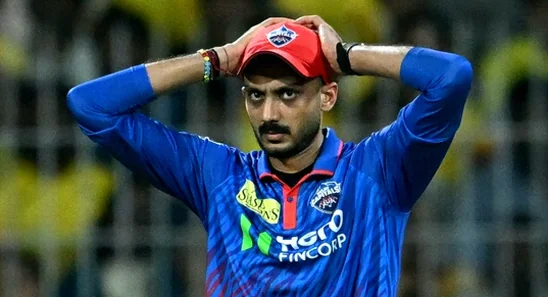
Aaron Finch admitted he struggled to understand Delhi Capitals’ bowling choices during their IPL 2026 clash with Sunrisers Hyderabad at the Rajiv Gandhi Stadium on Tuesday—especially after Abhishek Sharma punished the attack with an unbeaten 135. Finch questioned why the team used only a combined four overs from captain Axar Patel and Kuldeep Yadav, despite both being frontline spin options, while Nitish Rana—described as a part-time spinner—was allowed to bowl his full allocation.
Finch questions Delhi’s use of spin
- Finch said Delhi’s plan left him “scratching [his] head” because Axar Patel and Kuldeep Yadav, two of India’s leading spin bowlers, were limited to just four overs between them.
- He pointed out the figures attributed to their spell: Axar Patel returned 2-0-23-1 and Kuldeep Yadav finished with 2-0-30-0, meaning the two played a shortened role rather than being used for a full quota.
- Finch contrasted that with Nitish Rana, who he noted bowled four overs as a part-time offspinner, describing it as a decision that made little sense to him.
- He further argued that Axar, as captain and a retained senior player, is one of the “core” bowling options and should be able to execute under pressure—particularly when left-hand batters are involved.
- Finch suggested the reluctance to rely on their principal spinner after a left-hander came in reflected more on mindset than on skill, saying the captain appeared unwilling to defend against left-handers in that moment.
Finch also expanded on what he sees as Axar Patel’s bowling identity, arguing that the captain carries a “defensive mindset” even when batters are looking to force the issue. He said Axar tends to protect his line and length rather than float deliveries into scoring areas, describing how he changes angles and uses height and variation to remain effective.
According to Finch, that defensive approach can still become attacking when the batter is already in a dominant rhythm—specifically referencing Abhishek Sharma’s ability to take advantage once the rhythm is set. Finch said that when Axar bowls a couple of decent balls, it can still invite danger because something can happen quickly against a batter in full flow.
Finch then addressed the broader criticism that comes with tactical decisions, arguing that he does not blame a bowler for occasional mis-execution. In his view, any single over or even a short stretch of poor execution is acceptable if the planning, preparation, and thought process are sound. He added that it is impossible to deliver 24 perfect balls and maintain flawless decision-making every time.
Delhi Capitals’ season context, Finch felt, adds weight to the concerns. With three wins from six matches, DC sit fifth in the IPL 2026 points table, and Finch noted that the side had opportunities to win at least two of those games. He cited examples including David Miller’s slip against Gujarat Titans and a late chance for KL Rahul to run out Abhishek Sharma in the previous evening’s match.
While DC’s results have been inconsistent, Finch’s central point remained clear: he believes Axar Patel’s usage in that Hyderabad game did not match the level of trust expected from a captain and a key bowler, particularly in matchups where left-hand batters are involved.
