
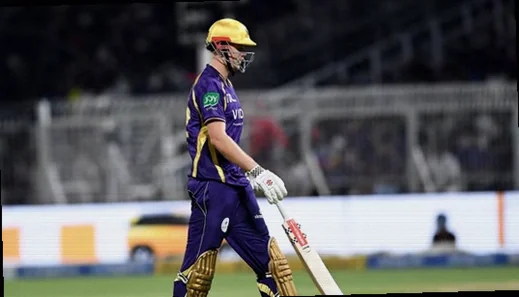
Aaron Finch’s comments on Cameron Green did not come across as the kind of casual verdict teams hear whenever a top-order batter goes through a quiet spell. Coming at a point in IPL 2026 where KKR are still ironing out their best batting combinations and overall rhythm, Finch’s take made Green’s slow start feel bigger than mere batting numbers. Instead of framing it as simple form, the former Australia captain suggested the situation raises doubts about how the franchise is steering the role Green is meant to play.
For KKR, that matters because Green’s early returns have looked below expectations, and the attention around his usage has naturally intensified. Finch’s concern was not limited to the runs. He focused on how Green appears at the crease—whether the Australian all-rounder is showing the same confidence and impact that once made him a frightening presence higher in the order. In Finch’s view, something has shifted in the way Green attacks the contest, and that change is what stands out most.
Finch: Green looks tentative, not imposing
Finch pointed out that even dismissals that are not directly the batter’s fault have still left Green missing key opportunities. He also highlighted that Green has been out twice, and the overall body language does not resemble the player who used to dictate terms.
Speaking on ESPNcricinfo’s Time Out, Finch said: “One of those dismissals has been a run out, not a part of his fault. Still, he’s missed out twice. There’s a bit of panic—he’s not looking the same as the past. Remember when he was at the top of the order for MI and how he had totally different intent. He was imposing at the crease. Now he looks tentative. Don’t push him down. Push him either up the order, or give him a rest.”
The thrust of Finch’s message is straightforward: lowering Green in the batting order is unlikely to solve what he sees as a deeper issue. Rather than treating the problem as a simple “batting position” fix, Finch argues KKR need to decide whether Green is ready to be backed with more authority—or whether he needs time away to reset.
Why KKR’s bigger problem is role clarity
That reading lands at the core of KKR’s current Cameron Green challenge. Green is not a player brought in to quietly blend into a pre-defined slot. He arrived as a major recruitment with high expectations of influence—someone expected to shape the tempo, provide control, and immediately raise the level of the team’s batting. When a player with that profile begins cautiously and appears unsure about his timing and approach, questions quickly move beyond technique and into clarity of assignment.
In KKR’s case, the pressure intensifies because a “premium signing” is supposed to alter matches: set the pace, steer momentum, and create stability at crucial phases. If instead Green looks like he is still searching for his place in the order, the franchise’s investment inevitably invites sharper scrutiny.
Finch’s blunt solution
Finch’s view was direct. Moving Green down the order, in his opinion, is not the right answer. The better options, he suggested, are to either trust him with greater responsibility—effectively restoring the authority he once carried—or to make a firmer call that includes giving him a break so he can regroup properly.
That is why Finch’s comments resonate more strongly than a routine reaction to a single player’s lean run. They point to a broader concern: KKR are still finding the correct balance, tempo, and the right way to deploy some of their most valuable assets. Green’s form has, in this sense, become a visible marker for the uncertainty the team is trying to iron out early in the season.
The risk if KKR keep hiding the problem
If KKR continue to treat Green like an issue to be concealed rather than a role to be clearly defined, the scrutiny is likely to keep rising. Finch’s central message was not only about panic in one batter’s current performance, but about the level of conviction a team must have when using one of its biggest names.
At this stage of IPL 2026, Green’s struggle is becoming intertwined with KKR’s larger task: deciding how best to translate their marquee talent into consistent match impact. Finch’s warning, ultimately, was about ensuring that decision-making is firm—because hesitation in role and responsibility can be harder to fix than any short-term dip in runs.
Also Read: Aminul Islam-led Bangladesh board booted out after T20 World Cup fiasco, Tamim Iqbal to head ad-hoc committee
