
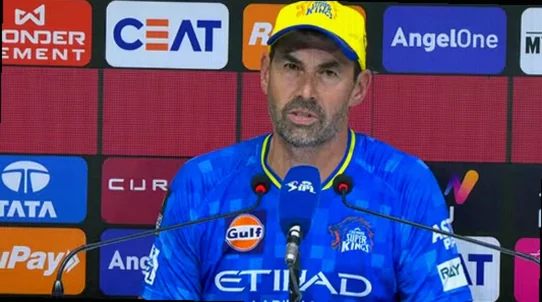
Chennai Super Kings head coach Stephen Fleming has addressed the mounting criticism surrounding CSK’s start to IPL 2026, with the franchise sitting at the bottom of the points table after three matches and still without a win. Fleming, who has guided the side for nearly two decades and has been central to CSK’s five IPL triumphs, acknowledged that the situation is tough—but insisted the team is working to speed up the adjustment process while adapting to a changing squad.
Key takeaways
- CSK remain winless after three IPL 2026 matches and are currently placed last in the points table.
- Fleming said the frequent squad changes this season have created a settling period compared to teams that have stayed together longer.
- MS Dhoni is unavailable as he continues recovering from a knee injury.
- Sanju Samson has struggled to get going, while Sarfaraz Khan leads CSK’s runs with 99 in three games and sits 16th in the Orange Cap race.
- CSK’s bowling has also underperformed, with Anshul Kamboj taking five wickets and standing 11th in the Purple Cap standings.
- Fleming believes the criticism is justified and linked it to the team’s need to convert better performances into results.
Fleming defends CSK’s adjustment phase before Delhi clash
Speaking ahead of CSK’s IPL 2026 encounter against Delhi Capitals, Fleming pointed to roster turnover as a major factor behind the team’s difficulty in finding rhythm. He noted that changing a large number of players means there is an inherent period of settling, especially when opponents have had continuity from the previous season.
He also stressed that improvement is tied to outcomes, saying CSK have not been far from turning games their way. Fleming suggested that the team’s effort is evident, but results must follow—adding that confidence grows when performances lead to winning moments.
On the broader reaction to his leadership, Fleming stated that criticism is part of the job when results are not strong, and he urged the team to work harder and keep searching for a clear path forward. He also remarked that he stays close to the game and continues learning, maintaining that the feedback—while tough—is appropriate given where CSK currently stand.
Learning across formats and scrutiny of CSK’s Impact Player plan
Some commentators have questioned whether Fleming’s tactical thinking is outdated, but he pushed back by emphasizing that he is still actively involved in cricket during the year. Fleming said he coaches throughout the calendar in two other tournaments—SA20 and MLC—and participates in player auctions, which keeps him connected to how the game is evolving rather than switching off between leagues.
He further explained that his schedule involves extensive study of T20 cricket around the world, including how players and setups are being shaped across different teams. He argued that this ongoing work also feeds into CSK’s decision-making in the IPL.
Fleming also addressed criticism aimed at CSK’s use of the Impact Player strategy. He said the Chepauk surface is no longer as friendly to spin as it once was, which has affected how CSK approach their selections and match plans at home. Fleming admitted that CSK have not been accurate enough with the option, contrasting the present conditions with earlier years when CSK had a clearer and more straightforward approach.
He described how the old method made it easier to choose a specific profile of player when the pitch tended to be slower and heavily spin-oriented. With conditions now looking “pretty vanilla,” Fleming said CSK must change their game plan to suit the current demands of the venue and the realities of IPL 2026.
