
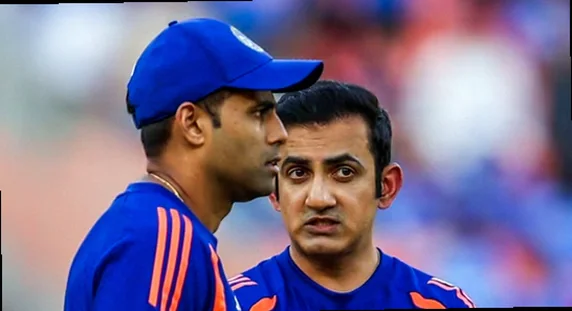
Suryakumar Yadav may have played a key role in India’s T20 World Cup success earlier this year, yet his batting rhythm remains a live concern for the team leadership and the BCCI. With the next major calendar items—both the 2028 T20 World Cup and the Los Angeles Olympics—already on the horizon, questions are being raised about whether the Mumbai Indians star can deliver consistent performances at the top level.
Key takeaways
- Suryakumar Yadav contributed 242 runs during India’s victorious T20 World Cup campaign.
- His best innings in the tournament came in the opening match vs the USA, when he made 84* off 49 balls.
- In the first four IPL 2026 matches for Mumbai Indians, he managed 106 runs, with a highest score of 51 against Delhi Capitals.
- Reports have questioned whether he is the right captaincy option for India ahead of the next T20 World Cup and the 2028 Los Angeles Olympics.
- India’s upcoming T20 assignment against Ireland and England is viewed as especially important for evaluating his current form.
- In the World Cup, he scored 18, 18, 11 and 0 against South Africa, West Indies, England and New Zealand respectively.
India’s captaincy debate and the pressure on current form
Although Suryakumar’s tournament numbers were strong overall, his start and follow-through in the early phase of the campaign drew attention. After the unbeaten 84 against the USA, he struggled to find runs in the remaining matches, failing to build on that early breakthrough.
The concern has carried into domestic cricket as well. In IPL 2026, the right-handed batter has had a slow beginning for Mumbai Indians, scoring 106 runs across the first four matches, with his top score reaching only 51 against Delhi Capitals.
With India’s immediate focus shifting to the next T20 series—scheduled against Ireland and England—the stakes for Suryakumar’s batting are now being treated as unusually high. The tour is seen as a potential turning point in the assessment of whether he can secure time to prepare for the next major cycle, which includes both the Olympics and the T20 World Cup in 2028.
How long can he be backed? Gambhir’s view and Agarkar’s selection call
One key storyline is whether Suryakumar gets the runway of two more years before the next big events. Even so, he is reportedly still viewed as a primary option by head coach Gautam Gambhir, who is anticipating an extension of his contract up to the 2028 T20 World Cup in Australia. At present, Gambhir’s term is understood to run only until the 2027 ODI World Cup.
A BCCI source has suggested that captaincy and leadership expectations will be tied closely to performance as India looks toward 2028. The underlying message is that while Suryakumar remains in the leadership mix, his batting consistency will be crucial—especially during the upcoming matches in the UK and the broader run of conversations that will follow.
There is also curiosity around how the Ajit Agarkar-led selection committee will interpret the situation, particularly because Suryakumar would be approaching 38 by the time the Olympics arrive. The form question, therefore, is not just about the present series, but about long-term planning for India’s shortest-format captaincy.
Recent trajectory: rough patch in 2025, resurgence in 2026
Looking at the broader trend, Suryakumar faced major difficulties in 2025, managing no fifty in the year and seeing his strike rate fall below 120. However, he responded strongly in 2026, striking four fifties before the end of the T20 World Cup and finishing the tournament at a strike rate above 160.
During the World Cup itself, his contributions came in uneven bursts. He registered scores of 18, 18, 11 and 0 against South Africa, West Indies, England and New Zealand respectively, a record that has added to the debate about how reliably he can impact matches when the pressure rises.
With IPL form still under scrutiny and the next T20 series against Ireland and England looming, Suryakumar’s performances in the coming weeks are likely to shape how India’s leadership weighs his role going forward—both as a batter and as a leadership candidate for the 2028 events.
