
India’s cricketing history has had its fair share of highs and lows, but few episodes have left as lasting a stain as the match-fixing scandal. For decades, cricket was treated in the country as more than just a sport—it was a source of pride and a near-guarantee of entertainment. Even when India’s results weren’t always dazzling in the years leading up to the 2000s, fans still trusted the game’s integrity. That confidence was shattered when reports emerged that players were willing to tamper with matches for money. Hansie Cronje quickly became the face of the wrongdoing, but the damage to Indian cricket went far beyond one name. Mohammad Azharuddin and Ajay Jadeja also became part of the story, and their involvement ensured the episode would be remembered as a dark chapter rather than a brief controversy. The effect endured. Even now, whenever an unusual pattern appears—like a bowler leaking four sixes in a single over, or a batter failing to score three runs from two balls—whispers of foul play tend to surface almost automatically.
By the time Indian cricket entered the new millennium, the sport found itself at a crossroads. With Azharuddin facing a lifetime ban and Jadeja receiving a five-year suspension, the team needed more than just tactical adjustments; it required a genuine reset. That opportunity came through Sourav Ganguly, who stepped into the role with the pressure of restoring belief. He embraced his responsibilities with the determination often associated with his nickname, and while the task was never simple—especially with suspicion lingering and trust broken—Ganguly worked to rebuild the side gradually, aiming to help Indian cricket regain its footing.
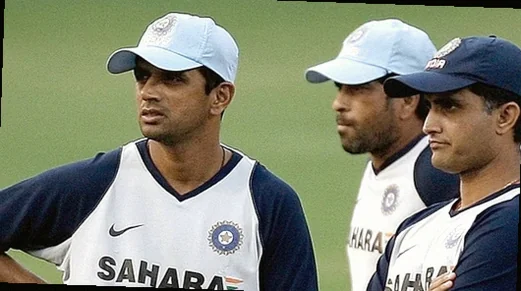
Speaking on the Raj Shamani podcast, Ganguly explained that he did not fully understand the scale of the problem when he took charge. He recalled that, at the time, he was completely unaware of the extent of betting and match-fixing surrounding the team. “The issues that the Indian team faced just before I became captain—betting, match-fixing—I didn’t even know about these things,” he said. He added that he kept asking senior figures such as Sachin Tendulkar and Rahul Dravid whether such conduct was actually happening, and whether anyone had approached them. In his telling, both Tendulkar and Dravid responded that nothing of that sort had come their way. Ganguly also said he questioned Anil Kumble, who similarly responded with a clear “no,” and that he therefore was not certain what exactly he was dealing with. In that context, he described captaincy as a job that was essentially “in hand,” rather than something he associated with those off-field concerns.
Ganguly’s captaincy: rebuilding trust and results
When Ganguly became captain at 27, he quickly turned the role into something bigger than just leading on the field. He saw it as a once-in-a-lifetime chance, and by the time his five-year tenure ended, he had delivered a set of milestones that helped shift the conversation around Indian cricket back towards performance. Under his leadership, India started winning overseas more often, a notable change from the inconsistency of earlier periods. The side drew the Border-Gavaskar Trophy 1-1 in Australia, secured their first-ever Test series win in Pakistan, and captured the NatWest Trophy. India also finished as joint winners of the 2002 Champions Trophy, adding to a run of achievements that symbolised a return to confidence.
Even so, Ganguly stressed that his early days weren’t effortless. The first series against South Africa—India’s 3-1 triumph—was described as a tough challenge. Not because he was unfamiliar with captaincy, but because he had to manage a dressing room filled with senior players who had once been his own captains. One of the moments he remembers most clearly came before India’s opening match in Kochi. He said that on the eve of the game he had to address the team in a meeting, and he found it mentally difficult to tell people like Azharuddin and Sachin—both of whom he had played under when they were captains—what to do and what not to do. He recalled deciding to keep the meeting short, explaining that the longer it ran, the more he would have to speak and the more awkward the situation might become. In his recollection, they finished the discussion in around 15 minutes, and the next day, India won. He then pointed to what happened next as evidence that things were beginning to fall into place: in the following match in Jamshedpur, he scored a hundred.
For Ganguly, those early moments—trying to establish authority with players senior to him, while also working within a side that had to move past a deeply unsettling period—became part of the foundation for the larger turnaround. His captaincy, as he sees it, was not only about results on the scoreboard, but also about steering Indian cricket back toward stability, where the game could be played with conviction and where the constant shadow of doubt could finally start to lift.
