
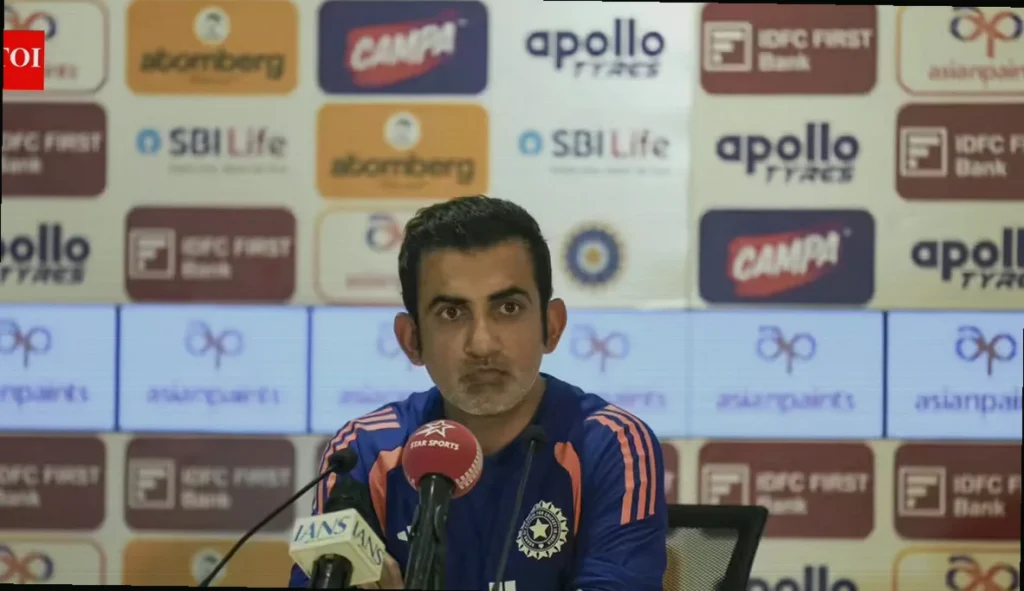
In Mullanpur, the word “transition” has become the default starter for almost every discussion about India’s Test team. Ahead of the one-off Test against Afghanistan, head coach Gautam Gambhir used the same theme in his pre-match media interaction, insisting that the Shubman Gill-led group is still in the middle of its development phase.
Gambhir pointed to the reasons people reach for the transition label: retirements among senior figures and injuries to key bowlers have forced the side to constantly recalibrate. Yet he also suggested that the phrase is being overused, arguing that the current core has already shown signs of progress in challenging conditions.
Transition, and why it’s not finished yet
- Gautam Gambhir said India’s Test group is still “in transition” ahead of the one-off match versus Afghanistan.
- He noted the side has played only nine Tests together, pointing to early momentum in England and wins over the West Indies.
- Gambhir acknowledged a two-Test series loss in South Africa as part of any transitional phase.
- He rejected the idea that the absence of a fully settled squad explains India’s current state.
- India are ranked sixth in the World Test Championship standings.
Speaking on Thursday, Gambhir said the journey that sparked the transition talk began after nine Tests, when India performed well in England and then beat the West Indies. He pushed back on the notion that a “long rope” is needed, stressing that the team’s recent output gives context to where they are heading.
He added that young sides can struggle with consistency, since many players have not yet accumulated extensive experience at Test level—most having played fewer than 30 matches. Still, Gambhir insisted he is not looking for excuses, and believes the group has enough quality to reverse any concerns quickly.
Since taking charge, Gambhir has repeatedly returned to a specific principle: backing players for longer rather than judging them after a brief run. That belief was visible in his defence of Sudharsan, though the batter’s Test path has felt stop-start so far.
Sudharsan struck 87 against the West Indies in New Delhi, but then missed out on the first Test versus South Africa in Kolkata a month later. He returned for the Guwahati Test, where his approach against spin became a talking point.
Selection debate: Sudharsan vs Padikkal
That uneven rhythm has fed questions about whether Devdutt Padikkal—who has been piling up runs in domestic cricket and made his Test debut earlier than Sudharsan—should be given more opportunities. Gambhir’s response was direct, arguing that Sudharsan has not been granted a fair chance to settle into the format.
Gambhir’s argument also targeted the broader habit of measuring players too quickly. He suggested that assessing a batter after only four or five Tests makes it extremely difficult to build a stable and winning combination.
The coach’s transition strategy, then, appears rooted in player planning rather than immediate returns. Instead of constantly swapping pieces in search of instant results, the management wants to identify those who can contribute across the remainder of the World Test Championship cycle.
India’s position in the standings underlines the urgency of that plan. They currently sit sixth in the WTC table. With the one-off Afghanistan Test outside the championship framework, India still have nine Tests left in the cycle—two each against Sri Lanka and New Zealand in the current year.
After that, the marquee Border-Gavaskar Trophy against Australia is scheduled for 2027. Before the blockbuster series next year, India will need strong performances in Sri Lanka and New Zealand to keep their route to a WTC final open. The coach acknowledged that those assignments are unlikely to be simple, but said he remains upbeat about reaching the final.
Gambhir said India are always optimistic until they have the chance to qualify for the final, pointing to the team’s quality and the hunger he sees in the dressing room. He added that one unusual low point can happen in cricket, but the group’s talent and appetite for Test success should carry them through.
Preparing for red-ball cricket
That seriousness about Tests is also shaping how the team is planning ahead. Gambhir highlighted a lesson from recent overseas stints: India need to prepare better for red-ball cricket, especially with the schedule packed by T20 and ODI assignments before the New Zealand Tests.
With the next Test stretch coming after those limited-overs series, the management is already considering whether to separate some Test players from ODI commitments. The goal is additional preparation time so that players can shift their mindset and skills back to the demands of longer-format cricket.
For Gambhir, preparation is important, but mental readiness matters even more. After nearly two and a half months of IPL, eight members of the squad will have had minimal time to regroup before the fixture begins on June 6.
He said that in Tests, the mental skill of grinding it out becomes crucial. The team, in his view, already has the raw talent; what they are trying to develop now are the habits, patience, and the ability to absorb pressure during the decisive moments.
Gambhir also framed Test cricket as more than technique. He stressed that successful players have to learn how to handle pressure, read the game well, and make sacrifices for the team. That message, he said, is something he wants to keep reinforcing with younger players.
With the one-off Test against Afghanistan, India will get an early snapshot of how the squad is adapting to the challenge—and how effectively they are embracing the transition that Gambhir believes is still underway.
