
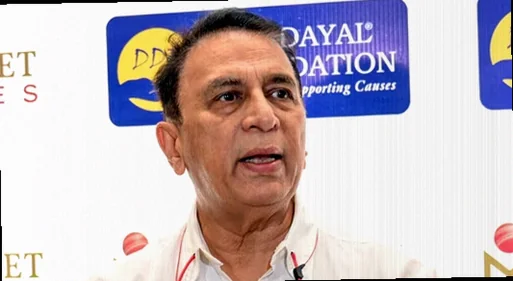
Sunil Gavaskar believes the IPL 2026 final should have been postponed after Gujarat Titans’ arrival in Ahmedabad was disrupted by bad weather. GT were expected to land in the city by early Saturday afternoon after leaving Mullanpur, but the team was held up by conditions outside its control and eventually reached Ahmedabad late on Saturday—about 10:45 pm. The players checked into the team hotel close to midnight.
Weather delay in Ahmedabad and the “reserve day” debate
Gavaskar argued that the circumstances created an avoidable disadvantage and that, with a reserve day already available, the final could have been pushed back to make the contest more equitable. Speaking on India Today, he said that players need rest, and the stress of not knowing exactly when a flight would depart—and therefore when they would arrive—can affect them mentally as well as physically.
He also added that since what happened was completely unexpected, the match officials could have used the reserve day to give Gujarat Titans a fairer chance.
- GT’s scheduled arrival from Mullanpur was set for early Saturday afternoon, but adverse weather caused a delay.
- The Titans landed around 10:45 pm on Saturday and reached the hotel about midnight.
- Gavaskar felt the final could have been moved to the reserve day to be fair to GT.
- The reserve day for the final was Monday (June 1).
How the teams arrived and what RCB’s captain admitted
While Gujarat Titans were dealing with travel uncertainty, Royal Challengers Bengaluru were already in Ahmedabad after beating GT in Qualifier 1 on Tuesday, May 26. Later, GT faced Rajasthan Royals in Qualifier 2 and managed to win a tight run chase to earn their spot in the final.
Before the title match, RCB captain Rajat Patidar conceded that his side held an advantage because it had more time to rest and recover. Patidar pointed out that RCB had enough time after Qualifier 1, whereas Gujarat came straight from Qualifier 2. He stressed, though, that any edge wouldn’t be massive given both teams’ quality and the high standard of cricket they’ve played.
- RCB had been in Ahmedabad since their Qualifier 1 win over GT on May 26.
- GT qualified for the final by beating Rajasthan Royals in Qualifier 2 during a pressure-filled chase.
- Patidar said RCB benefited from rest and recovery after Qualifier 1.
- He noted GT arrived straight from Qualifier 2, creating a timing gap.
- Patidar added the advantage was limited because both sides are strong and have performed well.
Gill’s form in Qualifier 2 and the final mindset
In the run chase that took Gujarat Titans through in Qualifier 2, the team successfully chased 215. They reached 219/3 in 18.4 overs, with skipper Shubman Gill playing a defining role by scoring 104 off 53 balls.
During the toss on Sunday, Gill indicated that the squad felt ready and fresh for the final.
Gujarat’s assistant coach Parthiv Patel then explained the team’s thinking around fatigue. He said the weather was not something the franchise could control, but that the players keep watching conditions and focus on the one objective that matters at this stage. Patel emphasised that fatigue cannot take precedence over the opportunity to win the IPL final and make a name for themselves, describing the match as the biggest moment for each player.
RCB vs GT meetings this season: key results and turning points
Before the IPL final, Gujarat Titans and Royal Challengers Bengaluru met multiple times across the season, with several close and significant outcomes shaping their head-to-head story.
- On April 24, GT and RCB played a match where Sai Sudharsan’s stylish century went in vain for Gujarat. Half-centuries from Virat Kohli and Devdutt Padikkal helped RCB cross the finish line.
- On April 30, Gujarat bowled out RCB for 155, then chased the target down in under 16 overs.
- They met again in Qualifier 1, where Rajat Patidar’s 93* carried RCB to 254—described as the highest total in an IPL playoff game.
- In that Qualifier 1 contest, RCB also struck in the powerplay by removing GT’s top order, eventually winning by 92 runs.
