
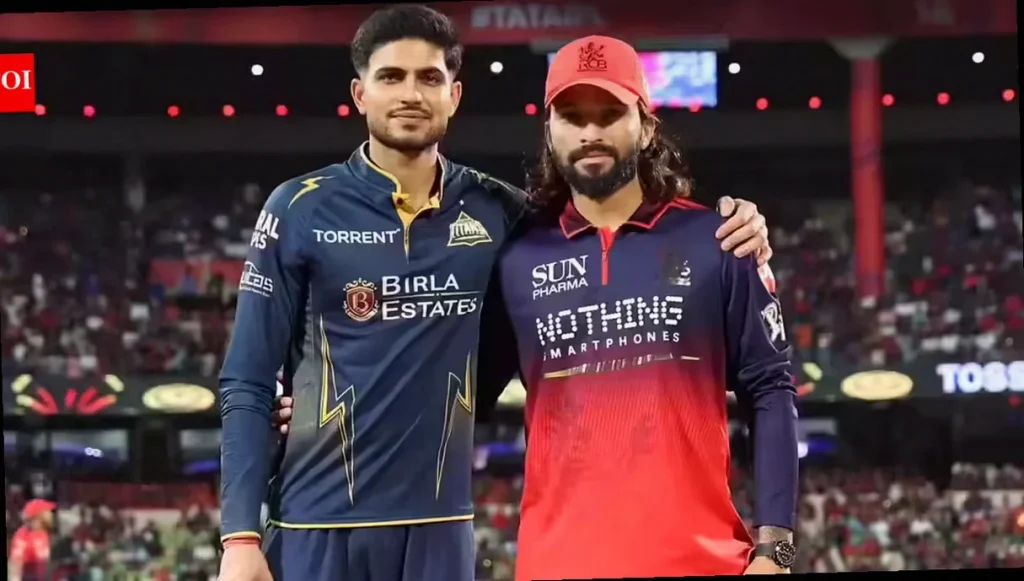
Ahmedabad: Rajasthan Royals’ dreams ended in Qualifier 2 as they lost by seven wickets to Gujarat Titans at New Chandigarh on Friday night. The defeat also meant fans will have to wait a little longer to see Vaibhav Sooryavanshi in his maiden IPL final. Still, the build-up to Sunday night’s title match is hard to ignore, with two of IPL 2026’s most reliable sides set to lock horns.
Royal Challengers Bengaluru, the defending champions, will chase a second consecutive trophy when they face Gujarat Titans at the Narendra Modi Stadium. For both franchises, the final is about more than silverware—this is the kind of game that can define who becomes the next long-term powerhouse in the league. RCB will feel particularly motivated to become only the third team after Chennai Super Kings and Mumbai Indians to win back-to-back titles.
Quick facts
- Qualifier 2 result: Rajasthan Royals lost to Gujarat Titans by seven wickets at New Chandigarh on Friday night.
- Final: Royal Challengers Bengaluru vs Gujarat Titans at the Narendra Modi Stadium on Sunday night.
- RCB’s title aim: second successive championship, aiming to join CSK and MI as back-to-back winners.
- RCB captain: Rajat Patidar—486 runs in 14 matches (avg 44.18, SR 196.76), with five fifties.
- GT captain: Shubman Gill—722 runs in 15 matches (avg 48.13, SR 163.71).
- Key knocks: Patidar’s 93 off 33 in Qualifier 1; Gill’s 104 off 53 in Qualifier 2.
- Orange Cap contention mentioned: Gill and Sai Sudharsan (710 runs, avg 47.33, SR 159).
- Bowling threats: RCB’s Bhuvneshwar Kumar (26 wickets, econ 8.00) and Josh Hazlewood; GT’s Kagiso Rabada (28 wickets).
On paper, this final looks finely balanced. Both teams are guided by captains in prominent form, with leadership styles that are different but equally effective. Rajat Patidar’s calm, low-key manner has helped RCB maintain stability over two seasons, and he now stands on the verge of joining MS Dhoni and Rohit Sharma as the only captains to defend an IPL crown.
Captains in the spotlight
Patidar, a 32-year-old batter from Madhya Pradesh, has backed his captaincy with big production. He has struck 486 runs across 14 matches at an average of 44.18 and a strike rate of 196.76, including five fifties. While he has long been trusted for handling spin, this season he has also shown the capacity to dismantle pace attacks with similar authority.
Shubman Gill, the other skipper, arrives with intent to regain his place in India’s T20 setup. The elegant opener has been in striking rhythm, collecting 722 runs in 15 matches at 48.13, with a strike rate of 163.71. Both captains have also delivered their defining blows in the knockout stage—Patidar’s 93 off 33 helped RCB beat Gujarat Titans by 92 runs in Qualifier 1, while Gill’s 104 off 53 carried the Titans past Rajasthan Royals in Qualifier 2.
Gill and his opening partner Sai Sudharsan may not rely on the flashiest brand of hitting seen from some of the league’s younger powerhouses, but their approach has consistently delivered results. Their 167-run partnership in the chase of 215 in Qualifier 2 highlighted how well they can build innings and bat deep when required.
Sudharsan’s season has been equally noteworthy, with 710 runs at an average of 47.33 and a strike rate of 159. With those numbers in play, he is also in the reckoning for the Orange Cap alongside Gill.
At No. 3, Gujarat Titans have Jos Buttler, whose 507 runs provide a steadying presence when the innings needs control. That gives GT a top order that generally avoids major collapses. RCB, though, are not short of batting firepower themselves, with Virat Kohli, Devdutt Padikkal, Tim David, Venkatesh Iyer and Patidar forming a dangerous lineup.
Across the season, RCB have repeatedly posted totals above 200, a trend shaped by batting-friendly conditions but driven just as much by clear intent. The team’s ability to keep momentum and apply pressure at the right moments could be decisive in a final where one partnership can tilt the balance.
The deciding factor may well come down to the bowlers, and both sides have pace options capable of changing the game quickly. For RCB, their strongest arguments are the experience and sharpness of Bhuvneshwar Kumar and Josh Hazlewood. Bhuvneshwar has been particularly impressive, taking 26 wickets at 18.15 with an economy rate of 8.00, while Hazlewood’s knack for striking early can unsettle Gujarat Titans’ top order.
Supported by Rasikh Salam and allrounder Krunal Pandya, RCB’s attack brings both depth and variety. Gujarat Titans, meanwhile, can point to what has been described as the most complete bowling unit in the tournament, led by Kagiso Rabada. Rabada has 28 wickets and is able to consistently reach speeds close to 150 km/h, which adds an extra layer of threat.
Alongside him, Rashid Khan, Jason Holder and Prasidh Krishna provide complementary roles, from wicket-taking spells to control in the middle overs. With home conditions in play, the venue factor also matters—Titans have won five of their seven games in Ahmedabad this season.
Even so, RCB enter the contest with a slight edge in confidence, having tasted title-winning success at this venue last year. With momentum, matchups and execution all likely to be scrutinised on the biggest stage, Sunday night’s final could ultimately reward the side best able to handle pressure and seize the crucial moments.
