
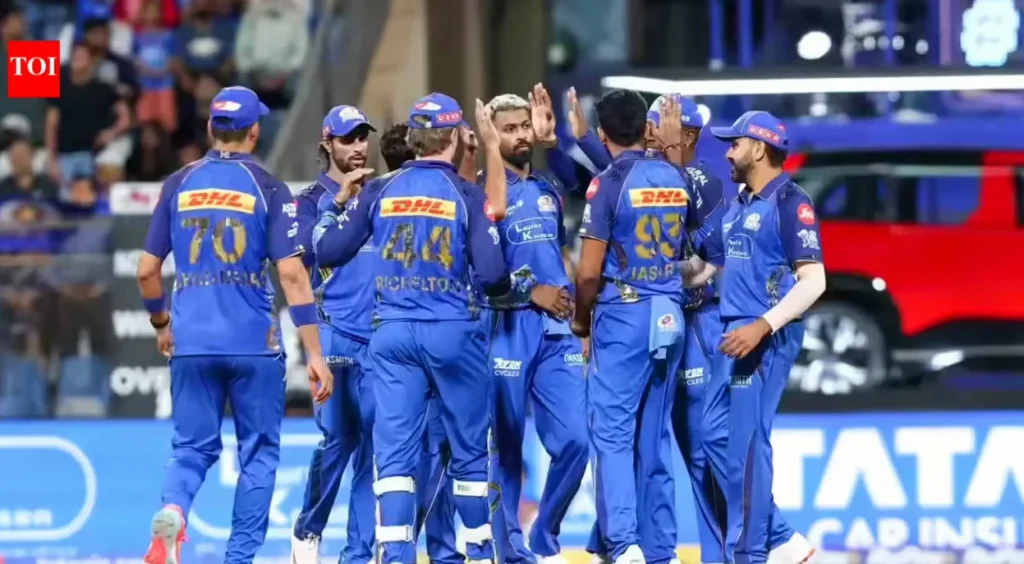
Ahmedabad: Mumbai Indians sit in early must-win mode after managing just one victory in their first five matches. They face Gujarat Titans at the Narendra Modi Stadium on Monday, with the pressure rising quickly for an MI side stuck at the bottom of the table. Another slip could make their route to the play-offs increasingly difficult, particularly against a Gujarat team that has been difficult to beat on this ground—one that has, so far, not offered MI a successful record at the venue.
MI’s tough spot: inconsistency with the ball
MI’s campaign has been defined by uneven performances, and their bowling—especially at the start of innings—has been a key concern. The new-ball combination of Deepak Chahar and Trent Boult has struggled to consistently generate the kind of early breakthroughs that help set a match up from the first powerplay. Instead of taking wickets at regular intervals, the pair has frequently conceded runs without delivering the decisive impact MI typically rely on.
Even Jasprit Bumrah has not appeared at his usual sharpness, looking short of the rhythm that often controls the tempo for the franchise. With the side lacking that familiar level of control, MI have found it hard to stem opposition momentum once the innings settles.
Where wickets have come from—and what it has cost
- Shardul Thakur is leading MI’s wicket tally with six dismissals.
- However, his economy rate of 13.57 highlights the balance MI are still searching for between taking wickets and containing runs.
- Spin has helped with some measure of control, but not enough penetration to repeatedly change the contest.
- Mitchell Santner, who missed the previous match against Punjab Kings due to illness, has been economical.
- Afghanistan off-spinner Allah Ghazanfar has taken wickets, yet has also leaked runs.
Batting swings: a big positive, but finishing remains a problem
MI’s batting has also lacked the steadiness needed to convert starts into match-winning totals. Quinton de Kock’s standout century against Punjab Kings—coming after he replaced the injured Rohit Sharma—has been a bright spot. Still, MI have not consistently carried that intensity through the death overs.
The recurring issue has been the inability of the middle and lower order to finish innings collectively when overs tighten. That is a problem they will need to address quickly if they are to compete with a Gujarat bowling unit that typically maintains pressure across phases.
GT’s bowling strength and the captain’s admission
Gujarat Titans enter the clash with one of the most formidable bowling attacks in the tournament. Their approach combines pace, disciplined lengths, and middle-overs control—an environment that can expose any fragility in the batting order.
GT’s pace and spin structure
- Mohammad Siraj and Kagiso Rabada provide a strong new-ball partnership.
- Prasidh Krishna and Ashok Sharma support the attack, known for thriving on pace and hard-to-hit lengths.
- Rashid Khan’s leg-spin continues to apply sustained pressure through the middle overs.
Captain Shubman Gill, despite steering Gujarat to a last-over win against Kolkata Knight Riders, acknowledged that he would have preferred to close out the chase earlier. That comment points to a degree of hesitation around the middle order, which has relied heavily on Gill, B Sai Sudharsan, and Jos Buttler.
Hardik’s return to Ahmedabad and what it means for MI
The match also carries added emotional and tactical weight with Hardik Pandya returning to the Narendra Modi Stadium. It was here in 2022 that he led Gujarat Titans to their first IPL title, making the venue especially significant for him.
While the chatter around his move back to Mumbai has cooled, his batting form remains a concern. A return to rhythm with the bat would be a major boost for MI’s efforts to revive their campaign—especially on a ground where their recent history is not kind. With urgency arriving early, the Monday encounter could be a defining moment for both teams’ trajectories.
