
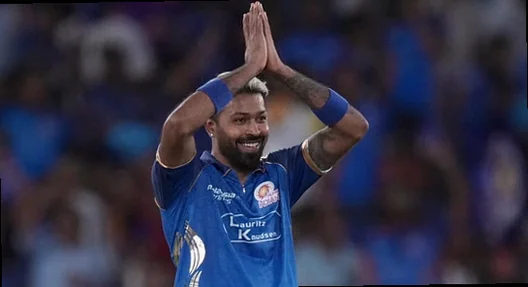
Hardik Pandya has never fit neatly into the “quiet achiever” mould. Even when he’s not talking about cricket, his presence comes across as flamboyant, self-assured and occasionally a little too comfortable in his own skin. In elite sport, that sort of confidence can be a weapon. But when multiple big personalities collide inside the same dressing room, it can also spark friction. As a player, though, Hardik is undeniably top-end talent—one of India’s most trusted all-rounders and a genuine match-changer in the shortest format. The surprising part is that, despite all that ability, the equation has not quite worked out with the Mumbai Indians. After three seasons together, the partnership has produced little more than a playoff appearance, and even that was a near miss for a side that is expected to be in the thick of the title conversation. For supporters of the five-time champions, 2024 and 2026 are years they would rather move past quickly. MI is a franchise built on big-game instincts and the ability to win when the odds look unfriendly. There are moments etched in the memory—like the 2014 campaign where they qualified after losing their first seven matches, the 2017 final where they defended 11 runs in the last over, and the 2019 finish where they held on for a one-run win off the final delivery. Yet in recent times, the contrast has been stark: fewer unforgettable nights, more struggles, and a drop that feels hard to explain away as just bad luck. Hardik alone cannot be blamed for everything, but it would be dishonest to pretend he has not been part of the broader decline.
There may not be an immediate sense that Hardik’s role as captain—or his long-term standing at MI—is under direct threat right now. Still, the relationship is beginning to resemble a gamble that keeps getting riskier. The saying about having too many cooks applies here; the shared responsibility has not translated into consistent results. For India, Hardik remains a central figure. Even at MI, when he was not leading the side, he often looked like a force of nature. During those earlier years, the Pandya brothers and Kieron Pollard combined to give Mumbai a middle order that could swing games from improbable situations. That specific blend no longer exists in the same way. And while the wider context has been unpleasant—Suryakumar Yadav’s struggles with runs, Jasprit Bumrah’s reduced wicket-taking impact, and Rohit Sharma missing five matches—Hardik as captain has not managed to turn “almost” into “dominant.” At times, the team’s performances have looked like they were fine in patches, but never quite settled into the kind of control that a captain’s calm confidence is supposed to create.
Off the field, Hardik’s aura has drawn as much attention as his cricket. With a new relationship in the public spotlight, he has attracted scrutiny that has not always been welcome. Nothing about dating and public interest is inherently wrong—plenty of athletes deal with it—but the timing has added fuel to murmurs of a rift. Two years after Hardik was infamously booed at the Wankhede, a similar wave of public mood seems to be forming again. There are also immediate practical signs: Hardik has missed MI’s last three matches and has not travelled with the squad for the next fixture. A late-night training clip shared at 1:30 AM has only intensified the speculation. While it is impossible to know what is really going on behind closed doors, it would not be surprising if this period ends up being his final outing for Mumbai in this stint. The return of a back spasm—his third such issue in his career—does not exactly inspire confidence about how quickly he can get back to full rhythm.
Writing on the wall
The IPL has a history of sudden, high-profile separations, and breakups between players and franchises are rarely as peaceful as fans would prefer. Even so, MI moving away from Hardik—or Hardik leaving MI—does not look like it would permanently damage either side in the long run. Bringing him back has not delivered the results that were expected, and a three-year stretch in which things never fully clicked is unlikely to reverse course abruptly. In recent IPL memory, no new captain has survived long without producing results—especially not after a season that ends with the wooden spoon or near the bottom of the standings. In 2021, David Warner’s captaincy with Sunrisers Hyderabad was removed, followed by a replacement and ultimately a drop from the playing XI, which turned into a very public fallout. Ravindra Jadeja’s short and turbulent spell as CSK captain played out just as visibly. Similar drama unfolded between Sanju Samson and Rajasthan Royals last season, and that’s before remembering how KL Rahul moved on from Lucknow Super Giants after an explosive exchange with owner Sanjiv Goenka.
If things do go sour between MI and Hardik, the player might be the one who benefits most. Someone with his calibre will always attract attention, and while the league increasingly looks toward the future, Hardik remains close to irreplaceable quality for teams trying to win now. Franchises such as Lucknow Super Giants, Delhi Capitals, Kolkata Knight Riders and even Sunrisers Hyderabad would likely be interested. Delhi, under Axar Patel, has at times appeared directionless; when a captain does not project confidence, it can seep into the dressing room and distort decision-making. Lucknow has faced a familiar lack of celebrations too since making Rishabh Pant the costliest player in IPL history at the 2024 auction. As for SRH, they could be forced to plan without Pat Cummins next season, with Australia expected to prioritise international commitments, including the Ashes and the World Cup. Kolkata may also need to think beyond Ajinkya Rahane as time catches up with the squad’s leadership options.
The idea of Hardik leading any of these teams is undeniably exciting. Ideally, Pant would be expected to receive a longer run at LSG, but if a blockbuster trade ever became realistic, a Hardik-for-Pant swap could offer mutual benefits. A significant part of Hardik’s success at Gujarat Titans came from the environment around him: a fresh franchise identity, a supportive coaching structure, and a group of young players who fit the moment. That same kind of ecosystem—LSG, DC, KKR and, in certain ways, SRH—can currently provide. In such a setting, Hardik has the tools to reclaim that dominant, decisive “alpha” role and, in the process, rediscover the form and momentum that made him such a driving force in the first place.
