
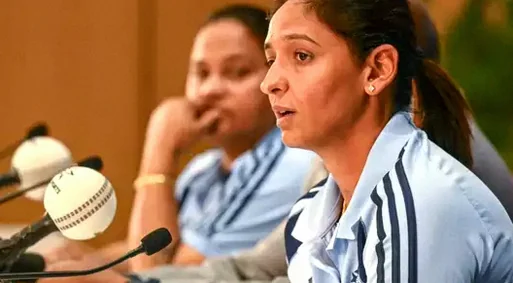
India have announced their 15-player squad for the Women’s T20 World Cup in England, with Harmanpreet Kaur set to lead the group. While the overall composition looks familiar, the selection committee has still made three notable adjustments—most prominently, giving a World Cup opportunity to Nandni Sharma, alongside the return of Yastika Bhatia and Radha Yadav.
Key takeaways
- Nandni Sharma earns a World Cup spot despite being uncapped, with selectors betting on her ability to handle high-pressure overs.
- Yastika Bhatia returns to the squad after a long injury layoff, with her last national-team appearance coming nearly two years ago.
- Radha Yadav is back after an absence from the T20I set-up, bringing left-arm spin plus a clearer batting role.
- The changes also reflect concerns about fast-bowling all-round depth, particularly given injury worries around other pace-bowling options.
- Bharti Fulmali’s recent batting form has been rewarded, even though a playing XI spot may be conditional on team balance.
Nandni Sharma: a gamble that could pay off
One of the biggest talking points from the squad announcement is the inclusion of Nandni Sharma, the 24-year-old pace bowler who has not yet played for India at international level in a T20 format. The selectors have effectively weighed the risk of handing a debut cap in a World Cup against the immediate value she can bring. Nandni’s skill set revolves around movement and variation: she can swing the ball, create bounce, and also trouble batters with deceptive slower deliveries. Importantly, the team’s confidence is not only theoretical—her performances in the Women’s Premier League have suggested she can operate under pressure.
In her debut WPL season, Nandni finished as the joint-leading wicket-taker, collecting 17 wickets from 10 matches. With that kind of output in a demanding tournament, her ability to survive the hardest death-over spells against elite batters becomes a key reason she could be trusted if India decide to include her in the XI.
Fast-bowling all-rounder gap and the bigger selection puzzle
The squad also highlights a selection challenge around fast-bowling all-rounders. Amanjot Kaur and Kashvee Gautam were recovering from injuries, and there was no fresh information provided about Pooja Vastrakar. With those uncertainties, India are left needing a more reliable seam-bowling all-round option—especially for conditions in England, where fast bowling and movement off the surface often shape matches.
Arundhati Reddy has improved as a batter, but the selectors have not seen the level of consistent international or WPL performance that usually defines a frontline all-round role. Still, she is expected to be considered for that responsibility, with the hope that her domestic success can translate at the highest level. The World Cup is, by definition, a high-stakes setting—meaning India are essentially deciding whether to try and solve that missing piece now, rather than later.
Yastika Bhatia returns after two years
Another significant change involves Yastika Bhatia, the 25-year-old wicketkeeper-batter. She has been part of India’s plans on and off for nearly five years, though injuries have repeatedly disrupted her run. Across her T20I career, she has appeared in 19 matches, and her last appearance for the national team came almost two years ago.
Her return timeline has also been shaped by an ACL procedure. Bhatia missed this season’s Women’s Premier League because she was recovering after undergoing an ACL operation in October of the previous year. Since then, she has not played competitive cricket after sustaining another injury in September 2025. Despite that, the selectors have brought her into the squad, and she is more likely to feature as cover than as an automatic XI selection. Even so, recalling her—at the expense of Uma Chetry—strengthens India’s backup wicketkeeping options, and also provides support for a reserve opener.
Bharti Fulmali’s power game earns a recall
Bharti Fulmali has enjoyed a noticeable rise in her batting in recent seasons, which has helped drive her selection. Her performances for Vidarbha in the Women’s T20 trophy served as a platform, but her impact in the Women’s Premier League has been particularly eye-catching. Over the last two WPL seasons, she struck at 172.72 and 146.91, underlining her ability to accelerate quickly.
Those contributions also led to a national-team recall for the South Africa series. However, her international stint did not produce many standout innings—across three outings, just one knock stood out as meaningful: a 30-ball 40 in a run chase of 156 that India did not manage to complete. Even so, the selectors have continued to back her for her capacity to clear the boundary in the lower middle order, a trait that can be valuable in late-match scenarios. As things stand, a place in the XI may depend on whether India opt to carry only five frontline bowling options.
Radha Yadav’s “all-rounder” evolution
The squad also includes Radha Yadav, whose return reflects a shift in how she is being viewed as an all-round option. Radha had been India’s most prolific-ranked T20I bowler in 2021, but her wicket-taking returns have declined over time. As a result, she has not featured in India’s T20I setup since July 2025.
In the gap since then, her batting has developed in a way that makes her more than just a bowling backup. She has spent years batting in the middle order for her state team, and the clearest sign of improvement came during Royal Challengers Bengaluru’s successful campaign in WPL 2026. Radha scored 114 runs at a strike rate of 140.74, frequently taking the crease as high as No. 5. One of her best all-around contributions included a 66-run knock that earned her Player of the Match honours.
With Radha in the squad, India gain a versatile reserve who can balance the XI when required—especially if Arundhati Reddy is unable to handle the full workload as a batter. Her left-arm spin and upgraded batting give the team another flexible combination to use across different match situations.
