
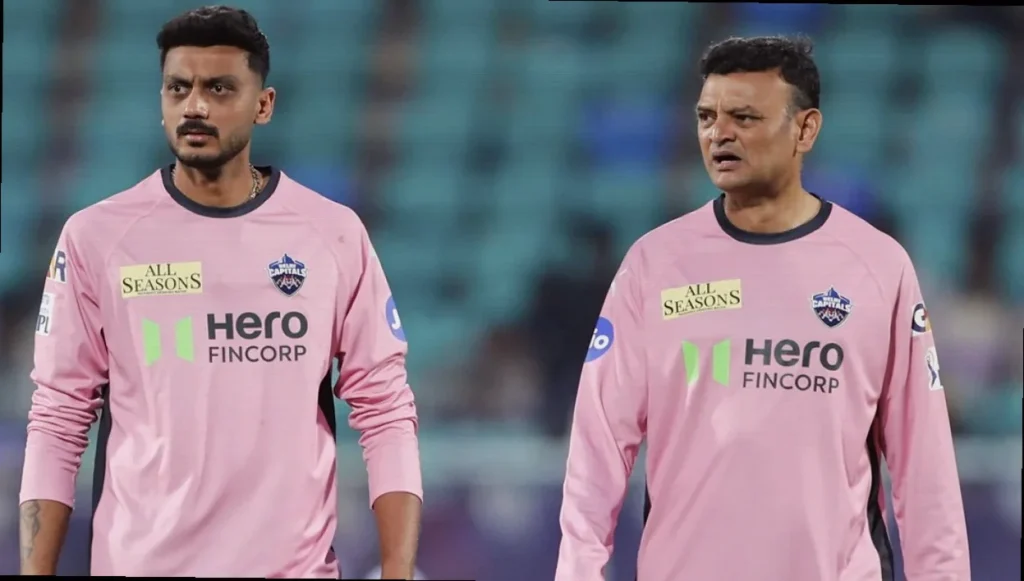
Delhi Capitals head coach Hemang Badani believes his side still hasn’t fully adapted to the playing conditions at their home venue in Delhi. He also argued that franchises don’t get to influence the nature of the wickets, pointing instead to the role of the cricket board in preparing and overseeing surfaces for IPL matches.
Quick facts
- Hemang Badani says DC have not “come to terms” with Delhi pitches.
- Badani claims teams have no control over surfaces and that the BCCI manages them.
- DC have played five IPL 2026 matches at Arun Jaitley Stadium, winning only once (vs Mumbai Indians last month).
- Badani noted DC faced a fast, swinging-and-bouncing pitch after a match where 265 was scored in two days.
- On Tuesday, DC encountered a slow, gripping track that helped CSK spinners Akeal Hosein and Noor Ahmad.
- Kuldeep Yadav conceded 34 runs in three overs without a wicket on a helpful surface.
- Kuldeep’s season: 30 overs, more than 10 runs per over, and seven wickets so far.
- Axar Patel’s batting: 33 runs in seven innings (average 5.50, strike rate under 90).
Badani’s message was direct: his team doesn’t decide what kind of pitch it will get. He said there is an understanding within the tournament framework that the BCCI looks after the surfaces and ensures that no local franchise gains an unfair advantage.
“We don’t have any control over the surfaces,” Badani said. He added that although teams would naturally prefer to play on the wicket they’re most comfortable with, the decision on what gets served is handled by the governing body, meaning the onus is on each side to adjust and compete with what’s presented.
Inconsistent Delhi conditions
So far in IPL 2026, DC have played five games at the Arun Jaitley Stadium and have managed just one win, coming against Mumbai Indians last month. Badani highlighted how sharply conditions have varied, describing it as an ongoing challenge for the franchise to predict what Delhi will offer game to game.
Near the end of April, DC had to deal with two very different wickets within a short window. Two days after contesting a match where 265 was scored and 264 was reached, DC were bowled out for 75 in 16.3 overs on a surface that produced swing and bounce.
He then pointed to Tuesday’s outing, when DC faced a slower, tacky pitch. That kind of wicket, Badani implied, naturally brings spinners into play, and in this case it allowed CSK’s Akeal Hosein and Noor Ahmad to influence the contest from the Delhi surface.
Badani returned to the theme of neutrality, saying that while a side can try to plan, it cannot fully dictate conditions. “Seventy [75] one game, one game was 265,” he said, reflecting on how much the wickets changed, including how the later track spun. His view was that the competition is fairly even in that sense—every franchise has to find a way to win regardless of pitch character.
Still, he admitted that consistency is what teams would prefer. In the same breath, he insisted it wasn’t about blaming the venue, but rather acknowledging how hard it can be to replicate success when the wicket’s behaviour keeps shifting.
Kuldeep and Axar under pressure
Even when the pitch seemed to offer support, DC didn’t get the breakthrough they needed. Badani noted that left-arm wristspinner Kuldeep Yadav struggled to hit his lengths and finished with 34 runs conceded in his three overs, without taking a wicket.
That performance underlined what has been a tough stretch for Kuldeep this season. He has bowled 30 overs so far, is going at more than ten runs per over, and has taken only seven wickets—figures that Badani will be keen to see improve as the tournament progresses.
Axar Patel, meanwhile, has been leading DC’s spin department, but his batting has lagged behind expectations. This season, he has contributed just 33 runs across seven innings, averaging 5.50 with a strike rate below 90.
Badani said he expected more from Kuldeep, but he also offered reassurance and support. He said the same backing was extended to Axar, framing it as part of working with players who have experienced the highs and lows of top-level cricket.
“They are people who have played cricket at the highest level,” Badani said. He highlighted that both players have delivered on the biggest stages, adding that the key is to give them confidence—trusting that they understand how to grind through challenges and come back.
Badani then pointed to Axar’s contribution in the match, recalling that he delivered a strong spell with the ball: four overs for 24 runs. He suggested that DC’s overall batting context also mattered, noting that if they had added roughly 20-odd more runs, Sanju Samson—who made 87 not out in CSK’s chase—would not have been able to pace the innings in the same way.
