
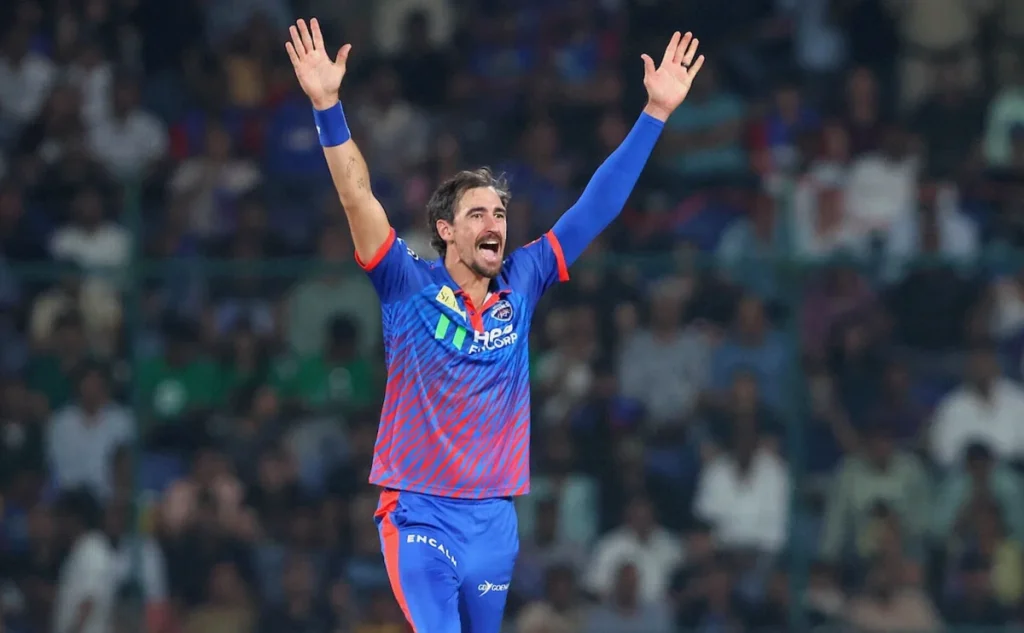
Delhi Capitals head coach Hemang Badani credited Australian fast bowler Mitchell Starc’s influence for helping the franchise keep its IPL playoff hopes alive, after the side secured a home win over Rajasthan Royals on Sunday. The triumph came by five wickets and lifted Delhi Capitals to 12 points, placing them seventh in the table. With one league match left, Delhi now must defeat Kolkata Knight Riders on May 24 to remain in the hunt for a postseason spot.
Quick facts
- Delhi Capitals beat Rajasthan Royals at home by five wickets on Sunday.
- The win moved Delhi Capitals to 12 points and seventh place.
- Delhi’s next league match is vs Kolkata Knight Riders on May 24 to stay in contention.
- Mitchell Starc took four wickets, including a three-wicket spell that swung the contest.
- Hemang Badani praised Starc’s professionalism, preparation and mentoring of younger bowlers.
- Badani said Delhi struggled to find a consistent opening combination during the season.
Badani’s admiration was especially reserved for Starc, calling him an outstanding example for teammates and younger players to emulate. He said Starc’s preparation, training discipline and match planning set him apart, and that those habits help him remain relevant at the highest level for long periods.
He also pointed to how Starc’s spell changed the momentum after Royals began brightly. Starc finished with four wickets in the match, and it was his three-wicket burst that tilted the game in Delhi’s favour, turning a strong start for Rajasthan into a chase they ultimately couldn’t control.
Speaking at the post-match press conference, Badani described Starc as one of the best role models sport can offer. He added that the younger members of the squad don’t always show the same visibility of that mindset, which is part of why Starc’s approach has endured for so long.
Beyond performances, Badani highlighted Starc’s day-to-day involvement with the bowling group. He said Starc is constantly engaging with younger bowlers—sharing ideas on reverse swing, explaining how to hold lengths, and discussing what adjustments are needed when batters are attacking.
The coach also said the franchise valued Starc not just for one phase of an innings, but for his ability to contribute throughout the match. In Badani’s view, Starc thrives under pressure, can strike long when required, and remains effective across the three major stages of a T20 innings.
Badani further noted that if circumstances demand it, Starc can even operate in the power play—something that has not been seen frequently enough in the tournament so far. He also drew a parallel to Starc’s impact in big international moments, saying that in the recent Ashes, he played a decisive role in swinging outcomes.
Selection calls and season struggles
Turning to Delhi’s broader campaign, Badani said recent squad changes were driven by the need to back younger players after some senior members failed to deliver with the same consistency. He said the management felt it was time for “fresh minds” and “fresh legs,” with the franchise shifting focus toward the younger group.
He admitted that dealing with the nature of the pitch at the home venue had been a major headache for Delhi across the season. Badani said the team had stopped dwelling on the surface before games, treating the venue like any other ground because it often did not fit their preferred style of play.
In his assessment, Delhi repeatedly arrived expecting one sort of wicket, only for conditions to look markedly different once the match began. With that uncertainty becoming the norm, he said the team had to accept it and move forward rather than search for answers mid-tournament.
Badani also voiced frustration over player availability, pointing to decisions taken by overseas cricket boards. He said that ideally he would like players available from the first day of the tournament, but governing bodies can restrict releases, leaving coaches and franchises with limited options.
He specifically referenced situations involving Australian players, saying that if Cricket Australia does not release a player—citing examples such as Hazlewood and Pat Cummins—then there is little a coach or a franchise can do. Badani expressed hope that a solution will be found in the future to ease such constraints.
Finally, Badani said Delhi’s biggest on-field challenge this season had been establishing a settled opening combination. He explained that the team experimented with different options, and while the situation might have looked like it could have been approached differently, he highlighted Abishek Porel’s recent hundred-run partnership as a sign of what the side is capable of when the pieces click.
He closed by acknowledging the perspective hindsight provides, adding that the team’s journey has been shaped as much by circumstances as by choices, as Delhi now looks to finish the league phase with a crucial result against Kolkata Knight Riders on May 24.
