
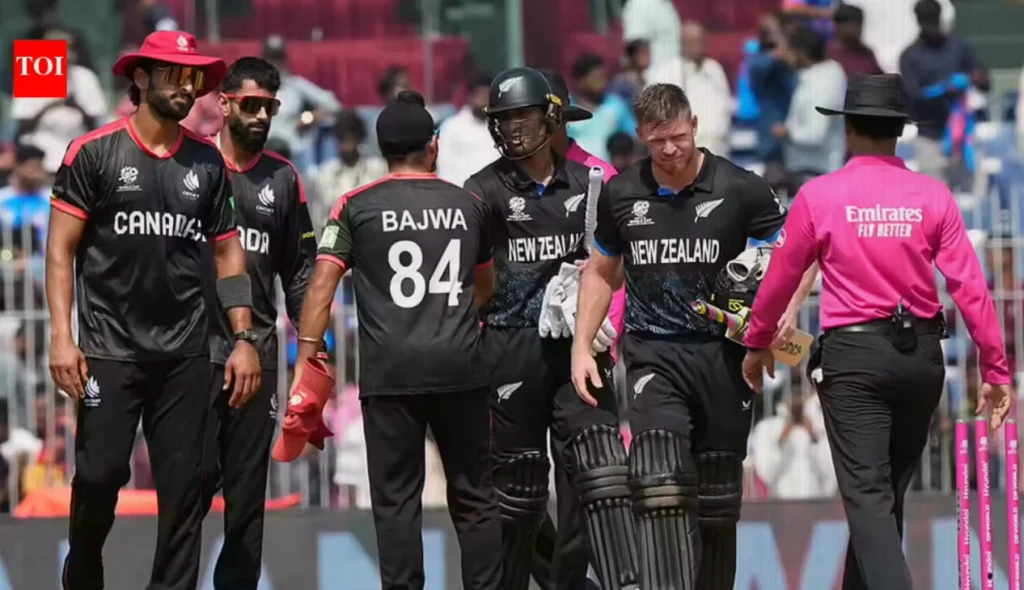
The International Cricket Council (ICC) has opened an investigation into alleged corruption connected to a Cricket Canada match during the 2026 Men’s T20 World Cup, triggering fresh questions about tournament integrity. The probe was prompted by reporting and claims that surfaced publicly around Canada’s cricket operations, with the ICC’s Anti-Corruption Unit (ACU) now looking into whether any breaches of the organisation’s anti-corruption standards took place at international level.
Investigative reporting has pointed to an active ACU effort involving Cricket Canada under the ICC’s anti-corruption code. The allegations first gained wider attention through a documentary titled “Corruption, Crime and Cricket,” produced for a Canadian investigative programme. The film, which runs for 43 minutes, was broadcast by Canada’s public broadcaster CBC on Friday and includes broad claims regarding corruption and governance issues within Canadian cricket.
What the ICC investigation is looking at
The ICC’s inquiry is understood to centre on a group-stage match involving Canada and New Zealand at the 2026 T20 World Cup. According to the details highlighted from the documentary, investigators have focused on a specific moment in New Zealand’s chase—during the fifth over—when Canada’s captain Dilpreet Bajwa entered the attack.
Bajwa, who was only 22 at the time, had been named skipper just three weeks before the tournament began. In that phase of the innings, he came on as a batting allrounder who also bowls off-spin. New Zealand were positioned at 35 for 2 when Bajwa started his spell.
Earlier, Canada’s attack had been led by pace through Jaskaran Singh and Dilon Heyliger. However, the opening overs proved expensive, with those two bowlers conceding 15 and 14 runs respectively. Canada responded by turning to spin as early as the third over, where Saad bin Zafar delivered a wicket-maiden, helping to keep the chase within reach.
Heyliger then struck in the fourth over, ensuring Canada remained in the contest. Still, the situation changed during the fifth over, which is now the main area of scrutiny. Bajwa’s over began with a no-ball, and it continued with a wide down the leg side. He ultimately conceded 15 runs in that over, and it is this sequence of events that has drawn investigative attention.
ICC response
Andrew Ephgrave, the interim General Manager of the ICC’s Integrity Unit, addressed the matter in a statement. He said the ACU is aware of the CBC programme and noted that, under established operating procedures, the unit is not in a position to comment on the substance of allegations presented in such material.
Ephgrave added that governance issues involving ICC members are handled by the ICC itself, where they fall under its jurisdiction, following the organisation’s standard constitutional processes. He also explained that the ACU works through three core functions—intelligence, prevention and education, along with investigations—and that these activities operate concurrently wherever there is a credible basis to believe the integrity of the sport may be at risk.
