
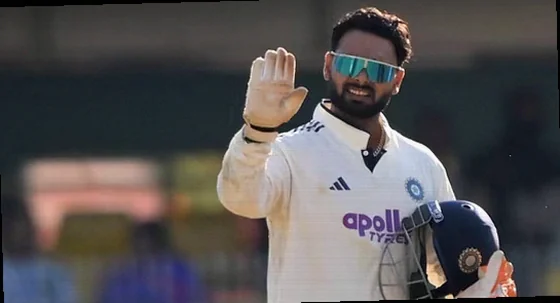
India’s upcoming one-off Test against Afghanistan may sit outside the World Test Championship framework, with Zimbabwe and Ireland also absent from the league’s playing list for now. Even so, it would be a mistake to treat this match as a mere footnote, particularly for a country that has not been playing many five-day games in recent times. After a heavy setback in their most recent outing—an away-and-home cycle that ended with a crushing loss to South Africa in Guwahati on November 26—India will have to wait until mid-August for their next WTC assignment, a two-match series in Sri Lanka. That means the Afghanistan encounter at New Chandigarh, starting June 6, becomes India’s only home Test throughout 2026.
For all the talk of tournament points and standings, this fixture carries a different kind of weight: it could be a tentative starting signal for how India plan to reshape their Test squad in the years ahead. The selection reflects that thinking. Jasprit Bumrah and Ravindra Jadeja are not part of the XI, both having been kept aside ahead of what the team considers more demanding challenges later. In their absence, three uncapped options have been handed an opportunity—fast bowler Gurnoor Brar, along with left-arm spinners Manav Suthar and Harsh Dubey. Brar, who is 25, and the two tweakers, aged 23, have all been given a chance to stake their claim.
Meanwhile, Mohammed Shami has once again been overlooked, and KL Rahul has been named vice-captain. The decision is notable because Rishabh Pant previously held the role during the England tour last June, and in his early stint as Test captain he led India to a record defeat in Guwahati. Rahul’s appointment therefore raises eyebrows, especially given how prominently Pant has featured as a leader-in-training over the last year.
Pant’s demotion and the Rahul call
At 28, Pant brings an established international record to the table: 49 Tests, 31 ODIs (with his last one coming on August 7, 2024), and 76 T20Is, with him not appearing in the shortest format since July 28, 2024. His elevation to Gill’s deputy last year—during India’s shift into the post-Rohit Sharma and Virat Kohli phase—indicated that the selectors viewed him as a future leadership option. However, the change now suggests a recalibration, and perhaps even a reaction to recent circumstances.
Rahul, for his part, is one of the few players who has captained India across all three formats. Yet last October, when Ajit Agarkar, the chairman of selectors, spoke to the media in Ahmedabad during the first Test against West Indies, he appeared dismissive when asked whether the Karnataka batter had been considered for a leadership role. On Tuesday, the tone was different. Agarkar said Rahul is the best option available “at this point” for vice-captaincy because he offers the experience required if a situation arises. He also pointed to what happened when Shubman Gill was sidelined due to injury during the South Africa series, and he highlighted Rahul’s performances on the England tour as well as against West Indies.
Agarkar also addressed the obvious question of Pant’s place in the set-up. He insisted that there is no concern about Pant’s position in the Test side and suggested that the focus is on helping him become the best Test player he can be. The message was clear: Pant is still viewed as a key batter for the long format, but leadership responsibilities for the moment are being directed elsewhere. How long that adjustment lasts is uncertain, but what is definite is that Pant now has to deal with pressure primarily as a batsman. His IPL 2026 campaign hasn’t been strong, and with Dhruv Jurel waiting in the wings as the reserve wicketkeeper, the margin for error in this spell of Test preparation will feel especially thin.
Shami left out again, and the pace/spin reshuffle
While the reasons behind Shami’s exclusion are only fully known to those inside the camp, the decision is hard to ignore. The 35-year-old from Bengal delivered a strong Ranji Trophy run, taking 37 wickets in seven matches, as his team lost to eventual champions Jammu & Kashmir in the semifinal. His tournament average of 16.72 came with sharp, wicket-taking spells and no visible drop-off in pace or intensity, which helped alleviate any concerns around his fitness.
In IPL 2026, Shami began brightly for Lucknow Super Giants, but his impact dipped as the tournament moved into its later phase. In his last five matches he managed just three wickets and finished with an economy rate above 10. Still, IPL form is not meant to be the sole measuring stick for Test selection. Shami, after all, has 229 wickets in 64 red-ball internationals at a strike rate of 50.2, and he has been a 12-year Test veteran. Yet the current call suggests he may have played his final Test for India, at least for the time being, despite Shami and others feeling he has more cricket ahead.
With Bumrah resting, the likely frontline pacers are Mohammed Siraj and Prasidh Krishna. Alongside them, Brar has been pulled in as a surprise inclusion. Agarkar explained the thinking behind the move, saying that in the last season and a half the management has seen promise in Brar—described as a tall quick with pace. He added that while Brar and others may look close to the mark, seam-bowling numbers do not automatically matter when picking a Test team in India, and that although Auqib Nabi—who was close to receiving a call—could have been considered, the selectors have opted for the three they selected for this match.
The Brar selection is intriguing on multiple fronts. Hailing from Muktsar in Punjab, the towering right-arm fast bowler has played only 18 first-class matches, with his most recent appearance coming last November. His overall first-class wicket tally sits under three per game, and while his economy is relatively high at 3.61, the selection seems to be rooted more in potential and opportunity than in a long résumé. Brar has also shared Under-19 experiences with Gill and is part of the Gujarat Titans setup as the Indian Test and ODI captain’s teammate, yet he hasn’t received game time there. Even though the 2022 champions paid ₹1.3 crore to bring him in, the Test call now comes as a direct test of whether the investment can translate into red-ball impact.
In terms of recent match exposure, Brar’s last ten representative appearances have primarily been in white-ball cricket. He first featured in two T20 matches for Punjab in the Syed Mushtaq Ali Trophy, then played eight Vijay Hazare Trophy games, where he picked up 11 wickets. He is also included in the ODI setup against Afghanistan, but his entry into the Test squad reads more like a vote of confidence in the system’s longer-term belief in him, rather than a reward for a specific red-ball burst of form.
Nabi, meanwhile, will feel distinctly unlucky. The 29-year-old swing specialist from Jammu & Kashmir has been outstanding, including a Ranji Trophy final effort in Hubballi where he dismissed Rahul, Mayank Agarwal, Karun Nair and R Smaran on his way to 5 for 54. Across the past two seasons he has accumulated more than 100 first-class wickets, yet Brar has been in the India ‘A’ environment while Nabi has not, which may have tipped the balance toward the taller quick for this particular opportunity.
India’s spinner department also carries the theme of auditions. Brar has not played any IPL match, but both Suthar and Dubey have seen action in the league. Suthar played for Gujarat, where Shubman Gill’s side reached the playoffs, and Dubey represented Sunrisers Hyderabad, who similarly made it to the postseason. Agarkar clarified that Jadeja is not being dropped—he is simply rested for this Test—meaning this match can be viewed as a trial run for the two players most likely to be considered as Jadeja’s successors.
Both Suthar and Dubey have the profile of emerging all-rounders. In red-ball cricket, each has averaged more than 25 with the bat. Their bowling numbers are also comparable enough to keep the selection debate alive: Suthar has 129 wickets from 29 matches at 25.76, while Dubey has taken 133 wickets at 23.26 from 27 outings. The final decision on which one gets the nod may depend on whether India choose a third spinner besides Kuldeep Yadav and Washington Sundar, a choice that will be guided by how the Mullanpur surface is assessed by the management.
When it comes to IPL exposure, Dubey has played eight matches this season for Sunrisers, taking eight wickets, whereas Suthar has appeared in four games for the Titans and taken two. That difference in game time and impact in the 50-over setting may explain why the Vidarbha spinner has earned a spot in the 50-over side ahead of his Rajasthan rival.
