
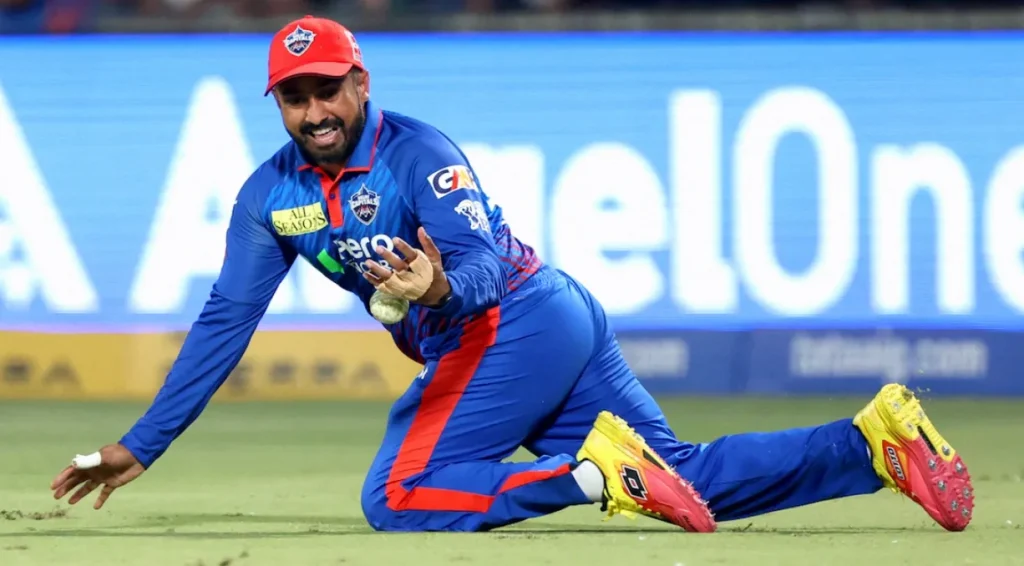
Luck has been written into the margins of IPL 2026’s batting fortunes, and the numbers show it clearly: when fielders drop chances early, batters are converting those reprieves into substantial totals far more often than in recent seasons. KL Rahul’s unbeaten 152 against Punjab Kings on April 25 is the headline example—partly powered by two dropped catches—but the wider story is that catching mistakes are increasingly being punished.
Key takeaways
- On April 25, KL Rahul was reprieved twice during his unbeaten 152 versus Punjab Kings: first when Shashank Singh dropped him off Arshdeep Singh, and later when Vijaykumar Vyshak missed a chance off his own delivery.
- That same day featured 16 dropped catches across IPL 2026, across 76.4 overs, the most such misses on a single day since 2018.
- By the time the 41st match arrived, IPL 2026 had held 382 of 476 catching opportunities, putting catching efficiency at 80.25%—right in the middle across the nine seasons since 2018.
- Rahul’s reprieve-to-total impact was exceptional: after being dropped at 12, he added 140 more runs from 60 balls—the most runs added after a reprieve in any IPL innings since 2018.
- Teams have paid for these lapses more often than recently: in 14 of 18 innings where a batter was reprieved and then went on to score 40+ more, the fielding side lost, producing a win-loss ratio of 0.29 (worst since 2018).
- Delhi Capitals have emerged as the most costly catching side this season, with their capture rate below 70% and three of five defeats coming in matches where dropped batters made winning contributions.
Rahul’s reprieves and the bigger catching picture
Rahul’s innings against Punjab Kings on April 25 came with a pair of reprieves. One chance was spilled by Shashank Singh off Arshdeep Singh when Rahul was on 12, and a second was dropped later in the innings when Vijaykumar Vyshak let one go off his own bowling. Those two missed opportunities were among 16 catches that were not taken across IPL 2026 on the day, from 76.4 overs in total.
Looking at the catch-miss logs, the day itself stood out: it marked the highest count of dropped catches on a single day since 2018. Even with that spike, the broader season has not been defined by poor hands across the board. Until the 41st game of IPL 2026, 476 catching chances had been created, and 382 were taken cleanly.
With catching efficiency at 80.25%, the season sits in a very average position among the nine IPL campaigns since 2018. After 41 matches, it ranks exactly at No.5 in that span. The low point in that comparison is the previous season, where catching efficiency had dipped to 75.89% after the same number of matches.
Why dropped chances are turning into big scores
Rahul made the most of his luck. After his first reprieve at 12, he went on to pile on 140 additional runs from just 60 balls. The season’s record context makes it even sharper: those are the most runs any batter has added in an IPL innings when they’ve been reprieved since 2018.
The pattern isn’t limited to one match. Virat Kohli, for instance, was dismissed on the third ball he faced against Gujarat Titans—at least in the sense that he was dropped early. Washington Sundar missed him off Mohammad Siraj just after play began, and Kohli then powered to a match-winning 81. Across IPL 2026, of the nine hundreds scored so far, five have come after the batter was reprieved by at least one dropped catch.
Overall, this has become a theme of the competition. When batters are dropped for the first time in their innings, they are punishing those fielding slips more frequently than they have in recent years. Out of 81 instances where a batter was missed the first time, they went on to add 40 or more runs on 20 occasions.
At nearly one in four reprieves, that conversion rate is notably higher than any other season in the dataset. The next best season is 2019 at 20.25%. In 11 of those 20 innings, batters added at least 50 runs after being dropped, representing the highest proportion of 50-plus additions following a first reprieve in a season.
The scale of that impact becomes clearer when compared with the other seasons. The only other campaign where 40-plus run additions after a first reprieve happened more than 20% of the time was 2019. For the remaining seven seasons in the data, the share of 40-plus additions after reprieves has stayed under 16%. The median figures help explain why this season is standing out.
The median cost of dropped chances—defined as the runs scored by batters after their first chance is missed—has been 17 runs after 41 matches in IPL 2026. That means that, across the 81 innings where batters were dropped, 40 of those innings ended with 17 or more runs added. It is the highest after 41 games since 2018, while 2019 had a median of 11, which is six runs lower than the current season.
Fielding lapses have been more damaging than usual
Beyond totals, the results show catching errors are increasingly affecting outcomes. In 18 innings where at least one batter was reprieved and then went on to score another 40 or more runs, the fielding side lost 14 times. The win-loss ratio of 0.29 is the poorest for teams since 2018.
Delhi Capitals have been hit hardest by this trend. Three of their five defeats have come in matches where they dropped batters who then made winning contributions. Against Chennai Super Kings, DC let Sanju Samson go after he was reprieved, and he struck 63 off 26 balls once he had the second chance. In the clash with Sunrisers Hyderabad, Abhishek Sharma was dropped and went on to deliver an unbeaten 135 in a match-winning effort.
Punjab Kings, meanwhile, have recorded the highest successful chase against them in T20 history, with their two top scorers arriving after being given early chances. Prabhsimran Singh and Shreyas Iyer were both dropped early in their innings; they then added 63 off 22 balls and 43 off 15 balls, respectively. When it comes to losses linked to reprieved batters adding 40-plus, Rajasthan Royals, Sunrisers Hyderabad, and Gujarat Titans are also among the teams that have lost more than once. PBKS are the only side where those lapses have not yet cost them a match.
In terms of raw catching ability, DC have been the worst unit this season. They have taken only close to a third of chances that have come their way, making them the only team below 70% in catching efficiency. PBKS, who sit at the top of the points table, are second worst in this particular category—but the crucial difference is that they haven’t dropped the catches that have swung matches so far. DC have.
In-form batters have turned reprieves into runs
Cricket’s old adage—batters in form make their own luck—appears to be playing out strongly in IPL 2026. Five batters have each added 40 or more runs in an innings after being reprieved more than once: KL Rahul, Virat Kohli, Vaibhav Sooryavanshi, Prabhsimran Singh, and Abhishek Sharma.
Those five names also intersect heavily with the season’s leading run scorers after 41 matches. Four of the five are from teams currently positioned near the top of the points table. Rahul is the exception among that group, as his side is not in the same bracket—but the context is that Delhi Capitals have repeatedly been on the wrong end of costly fielding lapses.
