
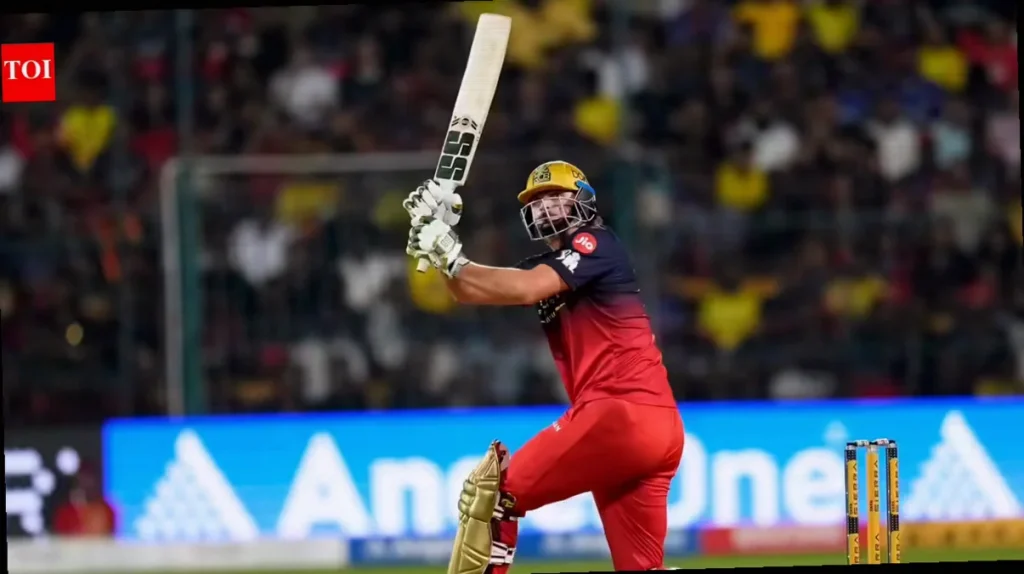
Run-scoring has become the dominant story in T20 cricket, and the IPL is at the centre of it. In last season’s Indian Premier League, teams managed to breach the 200-run mark a record 52 times. In the current campaign, that milestone has already been reached 11 times in only 13 matches, with a further 61 games still to be played—suggesting the trend is only strengthening.
From 200s to 300s: what the latest scoring explosion signals
The shift is visible not just in match totals, but also in how the game is being discussed at the highest level. During the 2026 T20 World Cup, broadcasters even debated whether India could cross the 300-run mark—an indication of how high scoring has become a mainstream expectation. That excitement was tempered later when India’s eventual champions faced a reality check, losing in Ahmedabad against South Africa in the Super Eight.
Closer to home, IPL 2026’s opening set the tone for the season’s aggressive batting. The defending champions, Royal Challengers Bengaluru, began with a successful chase: they hunted down a 202-run target in 15.4 overs at the Chinnaswamy Stadium in Bengaluru. The following match saw Mumbai Indians chase Kolkata Knight Riders’ 220-run target in 19.1 overs.
However, the next three fixtures offered a slight pause in the scoring surge. Those games produced a more balanced contest, with conditions providing a comparatively even contest between bat and ball.
Run rates keep climbing across IPL seasons
Over the last four years, scoring has also accelerated through consistently higher run rates. The IPL 2022 run rate stood at 8.54, before rising to 8.99 in IPL 2023. It then climbed to 9.56 in IPL 2024 and further to 9.62 in IPL 2025. With this upward trajectory, IPL 2026 is widely expected to follow the same pattern.
- IPL 2022: run rate 8.54
- IPL 2023: run rate 8.99
- IPL 2024: run rate 9.56
- IPL 2025: run rate 9.62
How often 200-plus totals are appearing has changed dramatically
The frequency of 200-plus totals has risen sharply over time. In the first ten seasons (2008 to 2018), there were 67 instances of totals above 200. In contrast, the next nine seasons—covering the period up to and including the ongoing edition—have already produced 207 such totals, which is roughly a threefold increase.
Even within that broader picture, the growth becomes clearer when breaking it into two halves. From 2017 to 2021, the first five seasons delivered 58 instances of 200-plus totals across 299 matches. Since 2022, in a similar match window, the number of 200-plus totals has jumped to 159—an increase of about 2.74 times.
Debate over balance: Shamsi raises concerns, Jayawardene pushes back
With scores trending upward, the question of whether T20 cricket remains a balanced contest has come under renewed discussion. In a free-flowing conversation, Shamsi voiced strong criticism of the imbalance he believes is emerging in modern cricket, especially in the shortest format.
His stance was that batting has become overwhelmingly favoured and that this reduces the entertainment value of the contest. He compared the situation to scenarios in other sports where fairness is compromised: in boxing, a fight where one competitor has an advantage by being allowed to punch freely while the other is limited; in football, a match where one side is given a goalkeeper while the other is not. The underlying message was that such conditions would not feel fair or entertaining, and that a similar imbalance is handicapping bowlers in many T20 games.
Jayawardene, however, disagreed and did not view the issue as a major concern. He described the matter as complex, pointing out that multiple factors shape outcomes. He noted that in countries like Australia, wickets can be good but grounds are larger, which changes how teams play and how often they can score freely.
In the IPL context, Jayawardene argued that venues are typically smaller and pitches often suit batting, which naturally makes six-hitting easier. He also suggested that the standards defining par scores have shifted over time in T20 cricket: he said that around 180 is often considered par, even under tougher conditions it is close to 160, and on better surfaces it can rise to 200.
Despite acknowledging batting-friendly conditions, he maintained that bowlers are still executing well. In his view, the skill levels among bowlers remain high, and the situation should not be treated as a major problem.
- Shamsi believes batting dominance has made T20 cricket less entertaining and argued that bowlers are being handicapped.
- Jayawardene said the question is complicated and that venue size and pitch characteristics play a major role.
- Jayawardene suggested par in T20 is often about 180, can be around 160 in tougher conditions, and may reach 200 on better tracks.
- He added that bowlers are executing well and his view is that it is not a major concern.
The discussion took place ahead of Jayawardene’s team’s match against Delhi Capitals at the Arun Jaitley Stadium in New Delhi. With scoring patterns continuing to intensify, the debate over whether T20 remains a fair duel between bat and ball looks set to run alongside the season’s rising run totals.
