
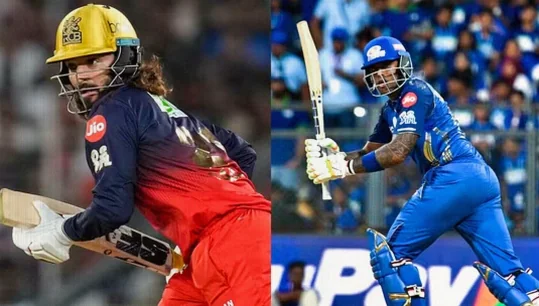
If India’s next men’s T20 group were assembled purely from IPL 2026 form, it wouldn’t be a continuation of the past. It would be a deliberate break from what selectors have carried in memory—reputation, rank, and established roles would carry far less weight than one brutal question: who actually turned IPL 2026 performances into a T20 place?
Key takeaways
- Evaluated strictly on IPL 2026 output, only six players from India’s previous major T20I squad are considered to carry over: Abhishek Sharma, Ishan Kishan, Axar Patel, Rinku Singh, Mohammed Siraj and Varun Chakaravarthy.
- The proposed 15-man India T20 squad built from IPL 2026 form is led by Rajat Patidar as captain, with Vaibhav Sooryavanshi, Abhishek Sharma, Ishan Kishan, Shreyas Iyer and Shubman Gill among the key names.
- Vaibhav Sooryavanshi’s inclusion is framed as selection-room disruption: 776 runs, 72 sixes and a strike rate close to 238 in IPL 2026.
- Hardik Pandya is left out in favour of Nitish Kumar Reddy, based on IPL 2026 all-round comparisons (Nitish: 302 runs and eight wickets vs Hardik: 206 runs and four wickets).
- Krunal Pandya is preferred over Washington Sundar for the spin-all-rounder role because his IPL 2026 returns include both batting and bowling, with an economy around 8.4.
- Bhuvneshwar Kumar is treated as the bowling core, highlighted by 28 wickets with an economy under eight—described as the standout Indian fast-bowling case of the tournament.
From last squad to an IPL-only rebuild
India’s earlier major T20I squad had Suryakumar Yadav as captain and Axar Patel as vice-captain. The group also included Abhishek Sharma, Sanju Samson, Ishan Kishan, Tilak Varma, Hardik Pandya, Shivam Dube, Rinku Singh, Jasprit Bumrah, Arshdeep Singh, Kuldeep Yadav, Varun Chakaravarthy, Washington Sundar and Mohammed Siraj. The squad note also referenced that Siraj replaced the injured Harshit Rana ahead of the T20 World Cup.
But when the lens is narrowed to IPL 2026 alone, only six from that set are said to survive the cut: Abhishek, Ishan, Axar, Rinku, Siraj and Varun. Everything else is treated as a one-season audition, with the idea that one IPL can erase the protection typically given by seniority or past international credit.
The 15-man India T20 squad picked on IPL 2026 evidence
The IPL 2026-based squad of 15 is:
Rajat Patidar (captain), Vaibhav Sooryavanshi, Abhishek Sharma, Ishan Kishan, Shreyas Iyer, Shubman Gill, Dhruv Jurel, Rinku Singh, Nitish Kumar Reddy, Krunal Pandya, Axar Patel, Bhuvneshwar Kumar, Mohammed Siraj, Anshul Kamboj, Varun Chakaravarthy.
First-choice XIV and bench
The first-choice XI is listed as:
Vaibhav Sooryavanshi, Abhishek Sharma, Ishan Kishan (wicketkeeper), Rajat Patidar (captain), Shreyas Iyer, Rinku Singh, Nitish Kumar Reddy, Krunal Pandya, Bhuvneshwar Kumar, Mohammed Siraj, Varun Chakaravarthy.
The bench is: Shubman Gill, Dhruv Jurel, Axar Patel and Anshul Kamboj.
Why the XI looks confrontational: roles over names
The boldest element in this XI is Vaibhav Sooryavanshi—not only because he makes the squad, but because he is immediately placed into the playing eleven. His IPL 2026 isn’t described as a gradual breakthrough that asks for patience; it’s portrayed as a selection case that forces the door open. His tournament returns are given as 776 runs, 72 sixes and a strike rate around 238. In this framework, that is treated as a direct T20 argument, not a development narrative.
His entry also changes how India’s top order is imagined. Instead of one aggressor paired with a backup plan, the argument is that IPL 2026 evidence allows two left-handed destructive options to start together and set the tone from ball one. That is where Abhishek Sharma fits into the plan.
Abhishek’s IPL 2026 is cited as 563 runs at a strike rate above 204, including 43 sixes. The description also connects his batting to bowling value—something considered vital in international T20 cricket, where every selection spot must justify itself without the Impact Player safety net. The emphasis is not only on starting fast, but on keeping the XI aggressive while still maintaining tactical flexibility.
Ishan Kishan is placed at number three. His IPL 2026 is described as 602 runs with a strike rate above 182, and he is also used as the wicketkeeper in the XI. Dhruv Jurel is identified as the second wicketkeeping option within the squad, with his IPL 2026 form tied to a “great season” for Rajasthan Royals.
Captaincy goes to Rajat Patidar. This is where the selection logic is said to diverge most from conventional hierarchy. Shubman Gill is noted as having had a massive season and finishing among the tournament’s biggest overall impact players, yet the XI is not built around the most recognisable names in isolation. Instead, it is presented as role-balanced, with Patidar viewed as the captain who combined title-winning leadership with high-impact middle-order hitting.
Patidar’s IPL 2026 numbers are given as 501 runs at a strike rate above 193, including 42 sixes, and the narrative credits him with leading Royal Challengers Bengaluru to the IPL title. His contribution is framed as “batting violence and leadership consequence” arriving in the same season, which is presented as difficult to ignore in an IPL-only selection exercise.
Shreyas Iyer is then slotted into the XI ahead of Gill. The reason is explained not as Gill failing, but as India’s top three being already fixed by Vaibhav, Abhishek and Ishan. The logic continues that Gill’s best cricket comes at the top of the order, and pushing him down would be a structural compromise. Iyer is therefore used to shape the XI at number five, with his IPL 2026 returns described as 498 runs at a strike rate close to 170—positioned as composed, pressure-resistant middle-order output that the XI’s balance requires.
Rinku Singh is treated as the finisher. The text references Rinku’s role for KKR as a brilliant hand and a meaningful contribution to a turnaround by the franchise during the season.
Hardik left out, Nitish takes the symbolic spot
Nitish Kumar Reddy is used to replace Hardik Pandya, and this is labelled the most symbolic shift in the exercise. Hardik’s reputation is acknowledged as still carrying real weight in ordinary selection conversations, but IPL 2026 is presented as not extending him the same credit. His given tournament figures are 206 runs at a strike rate around 138 and four wickets at more than 11 per over.
Nitish’s IPL 2026 is stated as 302 runs at a strike rate above 171, along with eight wickets. On that season-only evidence, the younger all-rounder is framed as the winner, described as not being particularly close.
Spin all-rounder choice: Krunal over Washington
Krunal Pandya is selected as the spin all-rounder ahead of Washington Sundar. Washington is acknowledged for batting contributions, but the argument says his bowling role was too limited to justify selection when sharper options were available elsewhere. Krunal’s IPL 2026 is described as 226 runs, 14 wickets and an economy around 8.4.
The international T20 point is underlined again: in this framework, the second spinner cannot be merely decorative. Krunal’s two-way output is presented as stronger evidence for selection than Washington’s overall tournament profile.
Axar Patel remains in the squad as cover, with the text highlighting his leadership, left-arm spin and batting depth. However, the first XI nod goes to Krunal because his IPL 2026 contribution is portrayed as fuller and more clearly defined.
Bowling spine built on IPL 2026 form
Bhuvneshwar Kumar becomes the bowling spine in this XI. His IPL 2026 is summarised as 28 wickets with an economy below eight, and he is described as the standout Indian seamer of the tournament—by a notable distance. The piece stresses that this is not nostalgia, but form: in a squad chosen only from IPL 2026, Bhuvneshwar is not sentimental inclusion but an automatic one.
Mohammed Siraj keeps his place on new-ball value, with 19 wickets and consistent Powerplay impact described as “bite.” Varun Chakaravarthy is retained as the mystery-spin option for middle overs, valued for the control and different angle he provides alongside finger-spinning all-rounder types.
Anshul Kamboj completes the 15-man list. His economy is flagged as a legitimate concern, yet the text argues that 21 wickets and his death-over strike value are difficult to ignore within a selection exercise built entirely on what players actually did.
Who misses out from the previous squad (and why)
Suryakumar Yadav is listed as the headline omission from India’s last major T20I squad, not as a judgement on career quality but as a one-season verdict. The claim is that his IPL 2026 output does not surpass Patidar, Shreyas Iyer, Ishan Kishan or the younger top-order contenders making their cases this year.
Sanju Samson is also left out because India are already carrying both Ishan and Jurel. The explanation given is that three wicketkeepers is too many, and Jurel’s usefulness lower down the order gives him the edge in a narrow selection call.
Tilak Varma is left out because the middle order is portrayed as already crowded with stronger IPL 2026 cases. The reasoning says Patidar and Shreyas outscored him, while Jurel adds finishing and keeping value that Tilak cannot match.
Hardik Pandya misses due to Nitish’s superior all-round season, again on both sides of the ball.
Shivam Dube is omitted because his batting did not separate him from the competition, and his bowling contribution was not enough to compensate for that gap in batting impact.
Jasprit Bumrah’s exclusion is explained as purely tied to the “harsh logic” of the exercise. The text notes four wickets across 13 matches, arguing that even the best fast bowler in the world cannot be carried into an IPL-performance-only squad on that kind of return.
Arshdeep Singh is dropped because his wickets came with an economy problem severe enough that Siraj, Bhuvneshwar and Kamboj each offer stronger IPL 2026 cases.
Kuldeep Yadav is omitted because Varun is described as offering a more convincing mystery-spin fit for this season based on evidence.
Washington Sundar misses because the combination of Krunal and Axar is said to provide more complete spin all-round cover than Washington achieved across the tournament.
Who gets selected—and the single-season rationale for each
The piece then reiterates the selection logic for key picks:
- Vaibhav Sooryavanshi: chosen because he produced the most destructive batting season by any Indian in the tournament.
- Rajat Patidar: selected for combining title-winning leadership with elite middle-order hitting, with no other player offering both in the same way.
- Shreyas Iyer: picked because the XI needed a natural middle-order batter, and he filled that role cleanly.
- Shubman Gill: included because 732 runs cannot be ignored, even though role balance keeps him on the bench.
- Dhruv Jurel: retained because he solves the keeper-finisher problem better than the alternatives.
- Nitish Kumar Reddy: chosen because India are described as needing a seam-bowling all-rounder, and his IPL 2026 is portrayed as sharper than Hardik’s by every measure.
- Krunal Pandya: selected because his season delivered real batting and real bowling, rather than being framed as only one aspect with a gesture toward the other.
- Bhuvneshwar Kumar: picked because he was the best Indian bowler of IPL 2026—stated as a definitive conclusion.
- Anshul Kamboj: included because wickets still count in selection, even when economy raises questions.
Overall, the argument is that this squad would not be safe, not sentimental, and not designed to protect old certainties or reward names that stopped producing. Instead, it is said to reward the players who bent IPL 2026 hardest, and if that single-season rule were truly the only logic, India’s T20 reset would begin with Patidar leading, Vaibhav opening, Gill waiting patiently on the sidelines, and established reputation losing its grip—narrowly, but clearly.
