
T20 cricket has always made it hard to pin down a neat link between what a bowler does and how the match turns out. Once wickets start tumbling, batters don’t wait for permission—they attack with intent, forcing bowlers to keep reinventing themselves just to stay competitive. In that environment, even the “right” line and length can be swallowed by the batter’s plan.
IPL 2026, however, has shown a different leaning: bowlers who can hold a longer Test-style length for long spells are being rewarded. Anshul Kamboj, Kagiso Rabada and Bhuvneshwar Kumar sit at the top as leading wicket-takers, with Jofra Archer and Mohammed Siraj close behind. Ehsan Malinga and Jamie Overton represent the group still leaning on shorter, more non-traditional patterns, but the season hasn’t produced a clear picture of pure T20 specialists dominating the wicket charts.
Quick facts: what’s happening with length bowling
- Top wicket-takers: Anshul Kamboj, Kagiso Rabada, Bhuvneshwar Kumar.
- Close behind: Jofra Archer and Mohammed Siraj.
- Other notable names: Ehsan Malinga and Jamie Overton.
- Powerplay length bowling (6–8m) this year: average 31.93 and economy 7.91.
- Powerplay length bowling (6–8m) last year: average 43.69 and economy 8.29.
- Share of “good length” balls: 36%–38% in powerplay, 23% in middle overs, 12%–11% at the death.
- Defended length balls in powerplay: 11% last year, 9% this year.
- Slog/efficiency change: strike rate improving from 169 to 213.
Why the new-ball length has looked sharper
The real improvement appears to come from old-fashioned length work, especially early on. In the powerplay, balls pitched around the 6–8 metre window have delivered noticeably better returns this season, with both the average and economy dropping compared to the previous year. That suggests teams are getting real payoff from sticking to a fuller, steadier approach rather than reaching for constant novelty.
Yet the data also points to a key nuance: it’s not as if teams are suddenly bowling a larger portion of “good lengths.” The proportion stays broadly similar—36% to 38% in the powerplay, 23% during the middle phases, and a slight shift from 12% to 11% at the end. Swing and seam haven’t surged either, with the share of higher seam or higher swing deliveries remaining close to what it was before.
Conditions aren’t dramatically different either. The venues are the same, the ball hasn’t changed, and batter reactions haven’t been transformed overnight. Even when it comes to defending, the powerplay has slightly dipped: last season teams held back 11% of length-ball scoring in that phase, and this year it’s 9%. What has improved is not the volume of slogging, but the efficiency—strike rate has moved from 169 to 213.
Is there a clear reason—or is it planning?
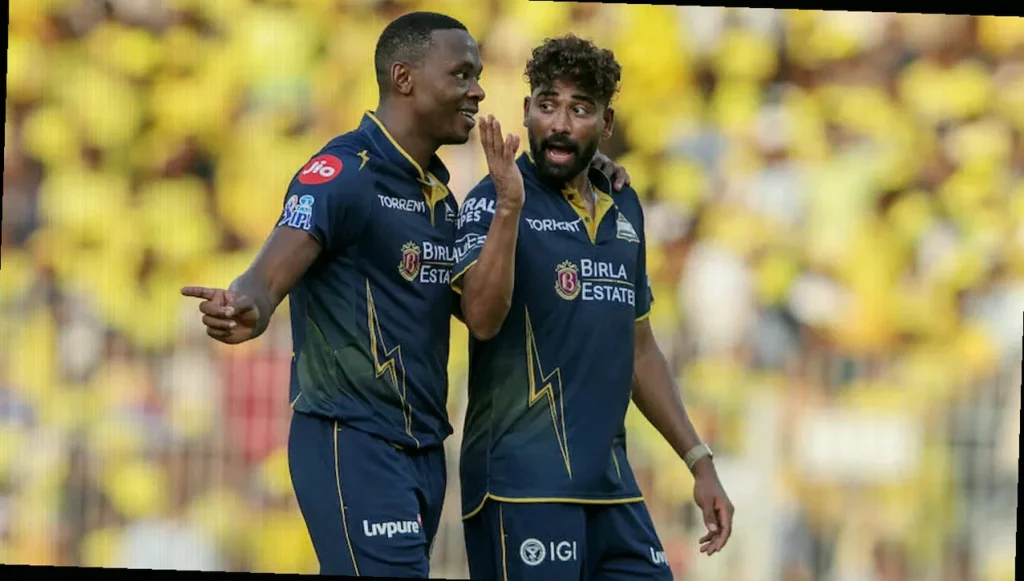
There’s no single, clean explanation for why Test-match-style spells have been more effective this year. The most likely driver is team planning and intent, with franchises choosing to commit early rather than changing direction later. The Gujarat Titans approach stands out in that regard: both Siraj and Rabada have bowled through the powerplay repeatedly, and Rabada’s workload in that opening segment is at its highest this season.
Rabada has taken 13 of his 18 wickets in the powerplay. Chennai Super Kings have leaned on a similar philosophy with Anshul Kamboj, using him in a way that mirrors that commitment to length and sustained spells. Before injury cut in, Khaleel Ahmed also struggled to trouble batters consistently on length balls, posting a strike rate of just 64 off those deliveries.
Bhuvneshwar and Hazlewood have long been associated with targeting good lengths, and Lucknow Super Giants have tried to match that template. Prince Yadav, and Mohsin Khan whenever he has been available, have looked to operate in the same lane—backing the idea that discipline early can still produce wickets even when the innings is moving fast.
Where are the classic T20 specialists?
On the flip side, there aren’t many traditional T20 wicket-producers showing up in the same numbers this season. Harshal Patel, once a steady presence among the leading wicket-takers, has hardly featured this year, and Matheesha Pathirana has been absent as well. Prasidh Krishna—often associated with hard, shorter patterns—has only managed to play half the campaign.
Harshit Rana, another similar type of bowler, has also been sidelined with injury. And it hasn’t been a vintage year for the “funky” ball: there has been no moon ball, no back-of-the-hand slower ball, and no knuckle ball making a noticeable impact.
Frontloading as the season’s operating system
What ties it together is a sense that teams are operating on a belief that the link between bowling quality and match outcomes weakens as the innings progresses. If that’s the underlying mindset, then the strategy becomes clear—frontload the best bowling spells, then keep faith that something will come later through reverse swing, spin, or whatever the pitch offers at that stage.
Gujarat Titans have started with six overs from Siraj and Rabada on a surface that already looks helpful, and then continued with the same approach even after the conditions changed. Even when the old ball arrives, the Test-length plan hasn’t stopped delivering: Jason Holder—again a bowler who targets that longer length—has taken ten wickets in five matches.
One reason teams may be leaning on this method is the changing grip available to spinners. When pitches don’t offer much purchase, variation becomes less potent, and the window to make a meaningful impact may shrink. In those scenarios, the “best time” to strike often shifts toward the new ball—when bowlers who have trained for that role can apply pressure with a steadier, longer spell.
Still, this shift hasn’t slowed the overall scoring rate. Bowlers remain heavily dependent on batters’ intent and efficiency, and that hasn’t become easier to manage. If anything, the batters are continuing to improve—more confident in their decisions and more willing to take risks early and often.
