
NEW DELHI: India’s T20 dominance has become the sport’s talking point, and the IPL has played a major role in reshaping how the game is played and marketed. For years, the tournament’s batting-friendly reputation helped power India’s march to back-to-back T20 World Cup titles—built on an approach that thrives on big totals and flat tracks.
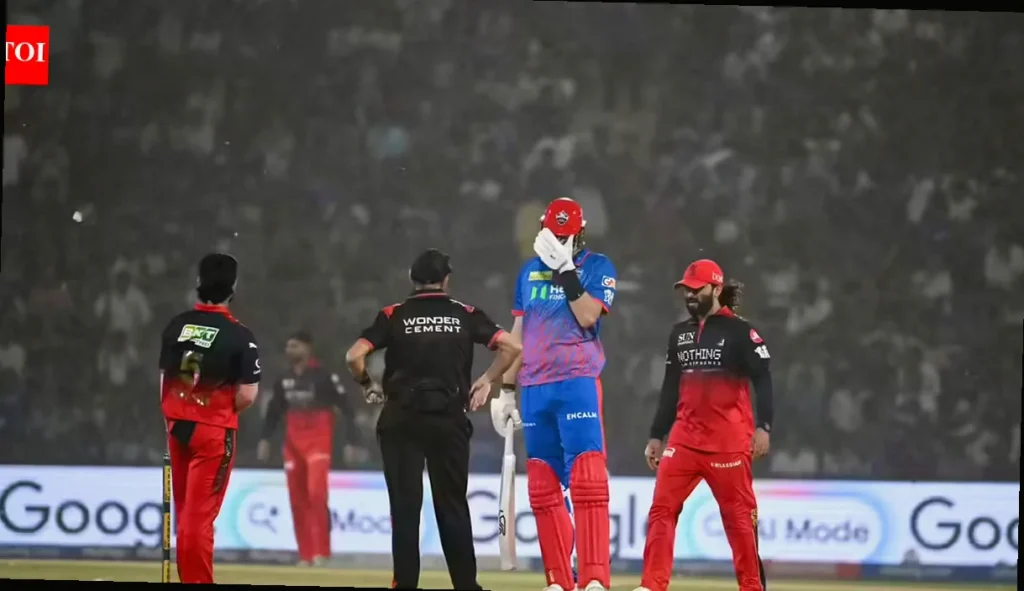
But this IPL season has started to ring an alarm bell. Monday’s clash at the Ferozeshah Kotla between Delhi Capitals and Royal Challengers Bengaluru offered a blunt reminder that when conditions tilt even slightly toward the bowlers, batters can lose their nerve fast.
Quick facts
- Match: Delhi Capitals vs Royal Challengers Bengaluru at the Ferozeshah Kotla
- Key contributors with the ball: Josh Hazlewood and Bhuvneshwar Kumar
- Delhi Capitals at one stage: 8/6 in 3.5 overs
- Powerplay low for the IPL: 13/6
- Delhi Capitals finished with: 75
- Additional examples this season: Lucknow and Chennai, involving Mohammed Siraj, Kagiso Rabada and Jason Holder
- Looking ahead: ODI World Cup in 2027 in South Africa; next T20 World Cup in 2028 in Australia and New Zealand
Delhi Capitals slipped to 8/6 within 3.5 overs and wrapped up the powerplay on a record IPL low of 13/6. From there, they struggled to recover and ultimately limped to a total of 75, turning what should have been a batting contest into a lesson on risk management.
It’s not easy to accept in a format driven by big-hitting narratives, but the message is clear: ball can dominate bat when the surface offers even modest assistance. The same theme has appeared elsewhere in the league, including matches in Lucknow and Chennai where batters found it harder to impose themselves.
Lucknow and Chennai send the same message
Chasing or posting 160 has been particularly difficult in Lucknow this season. In Chennai on Sunday, the CSK batting unit was also held in check by Mohammed Siraj, Kagiso Rabada and Jason Holder, showing that the problem isn’t limited to one venue or a single type of wicket.
Importantly, these grounds haven’t turned into disaster zones. They have been normal, regular surfaces—just with enough movement or grip for bowlers to expose any technical cracks. When that happens, even well-set batters can be forced into uncomfortable options, and the margin for error shrinks sharply.
Over the last two years, India’s white-ball cricket has been played mostly within the subcontinent, where pitches are often more predictable for strokeplay. That pattern is about to change: the next ODI World Cup is scheduled for 2027 in South Africa, and the following T20 World Cup is set for 2028 in Australia and New Zealand.
With that timeline in mind, India’s planning group will need to pay attention beyond the highlight reels of high-scoring matches. Challenging batting conditions are still relatively uncommon in T20 cricket inside India, but the rare moments like these can serve as useful warning signs.
Former national selector Devang Gandhi stressed that low-scoring games should not be dismissed as an anomaly. “It’s important that these lowscoring matches are not discouraged. The curator must not be under pressure if his surface has produced a low-scoring game here and there. The selectors see how batters adapt to challenging conditions,” he said. “Look at Virat Kohli—how well he batted in similar conditions. I’m sure the selectors have an eye out for that when they plan for the future.”
The concern is real, especially because India’s recent trips have already shown what’s coming. Performances on spicy Australian pitches and on turning surfaces in India have been widely discussed, and the uncomfortable truth is that these environments are likely to become the norm as the team travels over the next two years.
After Monday’s heavy defeat, Delhi Capitals captain Axar Patel faced the questions and responded with a measured message. He noted that franchises run programmes across the year and that uncapped players choose the drills they want to prioritise, but he insisted the foundation matters most. “One should focus on technique and the foundation of batting. You can’t sustain power-hitting if you don’t have a strong foundation,” Patel said.
There is also a broader structural angle to the debate. Since the IPL expanded into a 10-team competition, bowling line-ups have been diluted. Teams have fewer established international quicks available, and more inexperienced Indian bowlers end up getting repeated opportunities.
Deep Dasgupta, a former India wicketkeeper turned broadcaster, argued that this shift must be considered when judging a batter’s season. “One has to factor that in while judging a batter’s season. GT, RR, LSG and RCB look to have comparatively potent attacks. How batters are reacting to these bowlers holds the key since you will not get 250-plus conducive T20 pitches in SENA countries. The planning has to be for the ODI World Cup in South Africa,” he said.
For India’s next cycle across formats and continents, the takeaway from this IPL is simple: the ability to adapt in tougher batting conditions will matter as much as the ability to smash totals on flat decks. And with major tournaments scheduled in South Africa, Australia and New Zealand, the alarm bells raised by low scores in this season’s league may be early—rather than late.
