
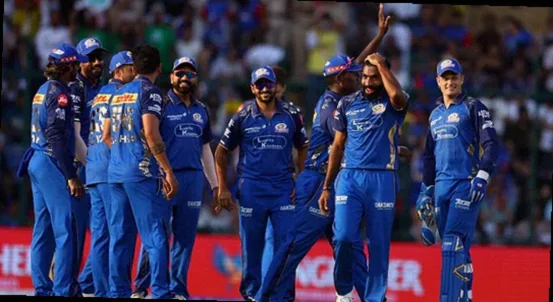
For a few seasons now, the IPL’s pecking order has been changing at a quick pace. The familiar dominance of sides like Mumbai Indians and Chennai Super Kings has looked less guaranteed, particularly going into IPL 2026 where both franchises have struggled to find rhythm. Consistency and sustained momentum, once their trademark, have been missing.
Years ago, walking into Wankhede to face Mumbai in their prime—or heading to take on Chennai in a high-pressure chase—often felt like the contest was tilting before the first ball. That “aura” wasn’t just talent; it was built on continuity, planning, and the ability to hit peak form when it mattered. Chennai, especially during MS Dhoni’s era, mastered the art of pacing a tournament, while Mumbai typically leaned on a settled group and proven match-winners.
That sense of inevitability is fading now.
Where MI and CSK stand
- Mumbai Indians are eighth in the standings.
- MI have won two matches and lost five.
- Chennai Super Kings are fifth in the table.
- CSK have won three matches and lost four.
Hardik Pandya’s captaincy has not delivered the kind of stability Mumbai would have expected, and the results reflect that. The team’s record—two wins and five defeats—has left them stranded in the lower half of the table. Chennai, meanwhile, have managed three victories but have also dropped four games, placing them at fifth as the season’s twists continue.
Playing field levelled by mega auctions
The mega auctions have narrowed the gap between contenders and pretenders, turning the league into a more even contest year after year. With squads breaking up every few seasons, even successful franchises are forced to rebuild, which reduces the safety net that history used to provide. As a result, the distance between a top team and one struggling has become much smaller.
The “new generation” of players also approaches the IPL differently. They have grown up watching it, so the league doesn’t carry the same psychological weight for them that it once did. Mumbai and Chennai no longer automatically intimidate opponents—because many of these cricketers have already witnessed those big outfits lose, and have seen their own heroes face setbacks. Still, they understand that they can challenge anyone, regardless of reputation or reputation-based pressure.
Match-ups, execution and analytics
IPL plans today are built around match-ups and data-driven preparation. Bowlers aren’t simply bowling fast; they are delivering specific balls with specific targets against particular batters. Teams study tendencies, isolate weaknesses, and keep applying pressure through repeated patterns. In that environment, even elite batters are not treated like unsolvable puzzles anymore—they are analysed like case studies.
When preparation reaches that level, “legacy” alone can’t steer outcomes. Aura might open doors early in a chase or create a slight edge in the field, but it cannot replace execution. The side that executes better, adjusts faster, and wins the key phases ends up dictating the result.
Collective display over star power
Earlier seasons often rewarded star-driven performances. A couple of big names could lift a team through difficult moments and carry them across the line. That model feels less effective now. The league demands contribution from every department—batting, bowling, and fielding—because one weak link can pull the entire unit out of sync.
The pattern was visible in a Thursday game where Mumbai Indians went down to Chennai Super Kings, with Sanju Samson producing the decisive highlight. Samson struck an unbeaten 101 off 54 balls, smashing 10 fours and six maximums while maintaining a strike rate of 187.04. His innings was the only instance where one player managed to break through the resistance posed by Mumbai’s opponents’ plans.
After the match, Hardik Pandya acknowledged the impact of that lone breakthrough. He said, “It’s just that Sanju played an outstanding knock. At the same point of time, their batters kept coming and kind of chipping in and got them to a decent total. I think more than a decent total on that track. For us to chase this down, we needed to have a good powerplay and the momentum had to be with us, but that could not happen.”
A new reality for franchises
With the pressure of historical expectations fading, franchises that once felt “outside” the aura can now seize opportunities. Punjab Kings and Rajasthan Royals are two examples highlighted in this shift: Punjab, under Shreyas Iyer’s captaincy, and Rajasthan, guided by Riyan Parag. Their progress reinforces the idea that aura isn’t permanent—it moves across franchises and even across individuals, depending on form and the collective balance of the squad.
