
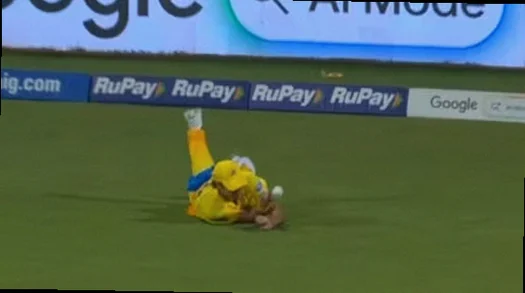
Chennai Super Kings (CSK) had pulled Sunrisers Hyderabad (SRH) into a chase that can tighten fast in the IPL. SRH were chasing 181, and although they still had batting in hand, the margin for error was shrinking. After 10 overs, they were 75 for 2, meaning 106 runs were required from the final 10 overs with the required run rate sitting above 10. In that scenario, even a single wicket could have swung the pressure sharply in CSK’s favour—especially because the team had options with its bowling in the closing phase.
The turning point: a missed chance at the exact moment
That pressure-relief arrived when Heinrich Klaasen became the centre of the contest. He was not yet fully in control of the chase, having reached 18 off 13 at the time. CSK’s opening looked promising because the opportunity came through the ball—Noor Ahmad had created it, and Spencer Johnson was positioned to finish the work. The catch was dropped.
It was a difficult chance, but in a chase where a playoff berth could hang on outcomes like these, moments involving the batter acting as the main barrier to progress are often decided by whether the chance is taken. The miss did more than add a line to CSK’s fielding tally; it reintroduced SRH’s most dangerous middle-overs hitter right when the chase was entering a higher-risk stretch.
From threat to momentum
Before the drop, Klaasen was still building. SRH’s plan required acceleration, but they also needed to avoid losing wickets that would force them into a rising equation—particularly with CSK’s spinners still in play. A wicket at 10.1 overs would have brought a new batter into the chase with SRH still needing 106 from the next 10 overs, and the game could have turned into a steadier climb for CSK.
Instead, Klaasen survived immediately and changed the rhythm. After the missed chance, he scored 28 runs off his next 12 legal deliveries, including a six and three fours. The chase did not end right there, but it became noticeably more comfortable: SRH shifted from a position where one slip could trigger panic to a situation where Klaasen had bent the required rate back towards a manageable zone.
Why the drop mattered: impact measured in base-value terms
The importance of the reprieve is easier to see when the incident is viewed as more than just a single fielding lapse. The sequence mattered—who was dropped, the stage of the chase when it happened, and the damage that followed after the batter got a second life.
- Spencer Johnson’s direct fielding penalty for the dropped catch was valued at ₹21.09 lakh in base value.
- However, the bigger swing came from what Klaasen did after surviving the chance. From the moment he was reprieved until he was dismissed, his additional scoring carried a base-value impact of ₹70.96 lakh.
- Taken together, the dropped catch and Klaasen’s punishment phase created a combined base-value swing of ₹92.04 lakh.
That combined figure should be read carefully. It does not suggest CSK “lost” ₹92 lakh in a literal sense, nor does it claim a direct, monetary outcome. The point is that the missed opportunity opened the precise chain of events that allowed Klaasen to deliver nearly one crore worth of base impact against CSK’s defence of 180.
The cricketing interpretation is even sharper than the money-style reading. CSK needed Klaasen dismissed before he could take ownership of the middle-to-death transition. Noor had manufactured the chance, but Johnson failed to complete the job. Klaasen then did what elite T20 batters often do: he converted the error into immediate punishment before the bowling side could recalibrate emotionally.
Klaasen’s reprieve and the chase’s final shape
By the time Klaasen was eventually stumped for 47 off 26, SRH had already brought the chase close enough that the remaining work looked manageable. Ishan Kishan’s presence helped SRH keep moving towards the finish, but Klaasen’s survival after the drop was the hinge of the contest. Without the burst that followed the reprieve, the chase would have carried far more pressure into the final stretch.
CSK did not lose the match on one ball in isolation, and any serious understanding of T20 cricket avoids reducing outcomes to a single delivery. Yet the dropped catch stands out as the moment where CSK’s defensive structure opened up. It gave SRH oxygen, provided Klaasen with tempo, and transformed a chase that still had danger into one SRH could control.
Method note
This analysis applies a match-impact ledger base-value framework to estimate the effect of the missed catch and the runs Klaasen scored after being reprieved. The figure is not a literal representation of salary loss or a direct win-probability statement. It is a modelled measure of the missed chance and the punishment that followed. The model discussed here has been exclusively designed by the author.
