
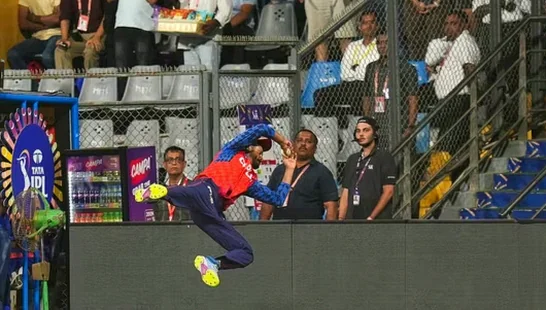
Shreyas Iyer’s dazzling boundary stop against the Mumbai Indians has sparked fresh admiration across the IPL, turning a single moment in the field into a broader talking point about how T20 cricket now demands far more from defenders on the ropes. Punjab Kings captain Iyer produced an acrobatic intervention during the team’s win over MI at the Wankhede, with his quick relay near the boundary helping finish Hardik Pandya’s dismissal. Jonty Rhodes—still regarded as the benchmark for high-end fielding—reacted to the effort in a way that connected it to the evolution he believes the modern game has brought.
Rhodes’ reaction shines a spotlight on modern boundary craft
Taking to X, Rhodes shared that watching Iyer’s athletic display made him reflect on how much fielding has changed since his playing days. He focused on the purpose behind the effort, noting that the boundary work was not only about making a spectacular stop, but about supporting a “team catch” scenario—exactly the kind of coordinated fielding T20 now rewards.
- Rhodes said he felt a renewed appreciation for the way fielding has developed since his retirement.
- He described the modern players’ boundary timing and awareness as a clear step forward from the approach in his era.
“Father” to “grandfather”: the message behind the praise
Rhodes then added a memorable twist to his post, using humour to underline the shift he sees in today’s game. For years, he felt comfortable being labelled as the “father of fielding.” But after seeing current athletes execute boundary saves with precision, he joked that it now makes him feel like the “grandfather of fielding.” The line wasn’t just a playful caption—it framed his belief that the sport’s format has rewritten what elite fielding looks like.
Why Rhodes believes T20 has reshaped fielding priorities
In the same post, Rhodes explained that during his career he mainly operated within the inner ring, where anticipation, pace of reaction, and direct hitting were the key weapons that could flip a match. When he moved into coaching, he said the environment at the time did not yet place the same emphasis on today’s boundary “hotspots.” His perspective, however, changed once he started working with franchises and witnessing the modern style up close.
- Rhodes said he spent 99% of his playing career fielding in the inner circle.
- He said that after becoming a fielding coach, there was initially no strong focus on the modern boundary hotspots.
- He added that his outlook shifted when he began working with Mumbai Indians’ setup and saw Kieron Pollard, followed by Glenn Maxwell, deliver “airborne saves” on the boundary.
Rhodes continued by describing what those boundary efforts changed in the coaching process. He said the focus moved beyond simply catching balls already beyond the rope. The work also became about preventing the ball from sailing for a six and forcing batters to take only minimal extra running—often limiting the batter to just one or two runs instead of turning the moment into a boundary feast.
Linking Iyer’s effort to the demands of impact cricket
Rhodes also tied Iyer’s boundary “catch and release” style directly to the pressures created by modern batting. He pointed to the way impact players and the attacking mindset have changed how batters can continue to press even when wickets fall. With teams regularly losing four to five wickets yet still sustaining aggression, Rhodes argued that bowlers now need fielders to back them up more than ever—making boundary interventions like Iyer’s the perfect example of that requirement.
Final nod to Ponting and the fielding culture around Punjab Kings
Rhodes ended his message with an additional reference to Punjab Kings’ leadership. He suggested that it should not be surprising to see such standout fielding feats when the head coach is Ricky Ponting, describing him as one of the great fielders of the game.
