
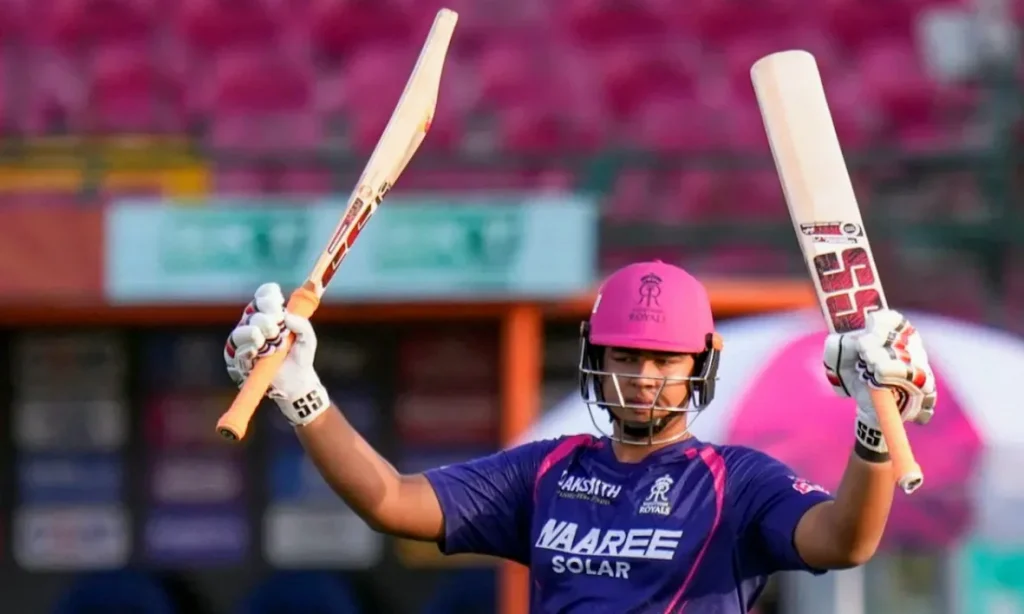
Former India cricketer Kedar Jadhav has urged fans to cool down the hype around Rajasthan Royals teenager Vaibhav Sooryavanshi, especially the constant talk of him becoming “the next Sachin Tendulkar.” While praising the 15-year-old’s early impact in the IPL, Jadhav argued that comparisons to legends can distort a young player’s growth and add unwanted pressure.
Quick facts
- Vaibhav Sooryavanshi is 15 years old and has been sensational for Rajasthan Royals and India U19.
- He is the fifth-highest run-scorer this season and Rajasthan Royals’ leading run-getter with 404 runs in 10 innings.
- His average is 40.40 with a strike rate of 237.64, including 1 century and 2 fifties.
- Sooryavanshi is the youngest player in IPL history.
- He has taken down top bowlers, including Jasprit Bumrah and Josh Hazlewood.
- Jadhav said fans should focus on what youngsters can become, rather than searching for a “next Tendulkar.”
Jadhav’s message comes as Sooryavanshi continues to make headlines with aggressive, fearless batting across competitions. The teenager has already caused problems for bowlers in both the IPL and India U19 cricket, and his domestic performances have added to the momentum. With 404 runs from 10 innings at an average of 40.40 and a strike rate of 237.64, Sooryavanshi is RR’s top run-scorer and sits fifth among the leading scorers this campaign.
Sooryavanshi’s rise has been paired with claims from sections of the game that he could be on the radar for India’s T20I setup at an early age. The discussion has also touched a notable milestone connected to Tendulkar, who made his India debut at 16; there were reports that Sooryavanshi could break the record of being the youngest Indian to debut internationally, which would mark another high-water moment for the youngster.
However, Jadhav believes the comparisons themselves are the bigger issue. Speaking in an interview, he said that nobody can match Tendulkar’s unique impact, and that it is unrealistic to suggest any player can be “in the making” of another Sachin. In his view, even if a youngster looks extraordinary, it does not mean the football has to be designed around recreating a legend’s path.
“Nobody can compare or even say that someone is another Sachin Tendulkar in the making,” Jadhav said, adding that Tendulkar was a master of his own craft and that no one can come near the contributions he made to the sport. He stressed that youngsters can be performing brilliantly, but the mindset of ranking them against a single all-time benchmark is where the risk lies.
Why Jadhav warns against “next Tendulkar” talk
Jadhav said legends are not defined only by numbers or records. In his assessment, what makes them stand out is the long-term work they delivered for the game—carrying the sport forward, inspiring generations, and leaving behind a legacy that cannot be replicated. He also suggested that Team India’s journey over the years has been different, because sustained excellence is measured across “20-25 years of consistent performances,” not just short bursts.
For Jadhav, the real challenge for any young talent is learning to handle pressure and expectations while still delivering when it matters. That is why he believes early comparisons can become a mental burden. “Let him play, let him grow,” he said, explaining that when a youngster is constantly labelled as a future legend, every innings turns into an exam and greatness starts being demanded every time they walk out to bat.
He also warned that the development process should not be forced into a script. If expectations are set too early, young players may feel trapped by the narrative, instead of focusing on refining skills step by step. Jadhav’s point was simple: comparisons may sound like praise, but they can create a pressure cooker for someone still learning how to manage the spotlight.
Beyond the storyline, Jadhav offered practical advice too. He urged Sooryavanshi to stay away from mobile phones and social media as much as possible to reduce distractions. The former all-rounder argued that social platforms can generate noise quickly, with praise and criticism arriving at the same speed, which can affect a teenager’s mindset unless they are careful.
Jadhav also encouraged fans to enjoy the kind of fearless cricket being played by young batters across formats right now. He emphasized that legends like Tendulkar cannot be “recreated,” and there is “only one Tendulkar,” making it wrong to expect another player to follow an identical route or deliver the same outcomes.
To underline his argument, he pointed out that the game itself has evolved significantly. Formats have changed, the way players prepare has shifted, and the nature of pressure is different today—meaning players will naturally look and develop in their own ways. That is why he called on fans to respect past greats for what they achieved while supporting current youngsters for what they are doing now.
Jadhav concluded with a clear message for supporters: don’t search for the next Tendulkar. Instead, look at what the present crop of players can become, because that is how the sport will keep moving forward—through fresh careers, not recycled expectations.
